PRACTICE: Information, tools and guidance for practitioners
Adolescence is a time of tremendous potential, growth, change and opportunity, which is why working with adolescents can be hugely rewarding. It requires knowledge, understanding and approaches, which are responsive to this unique and exciting developmental phase.

Navigate SAIL
Topics in this Section
What is adolescence – the stage not an age
Adolescence is the transitional period from childhood to young adulthood, coinciding with puberty, which is a gradual process, taking many years to complete. It is the second most significant phase of development, after infancy (between birth and age 3). There are no hard age definitions to adolescence, and it is recognised that this phase of growing up continues well beyond the age of 18 when many children’s services statutory responsibilities cease.
Adolescence is a distinct and unique developmental phase characterised by significant physical, cognitive and psychosocial changes. It can be a time of considerable risk as adolescents seek to make decisions independent of caregivers and take greater influence from their peers. Neurologically the reward centre of the brain is particularly sensitive, whilst the control centre- responsible for planning, prioritizing and impulse control- is underdeveloped. However, it is also a time of tremendous potential, growth, change and opportunity (WHO 2016), which is why working with adolescents can be hugely rewarding. It requires knowledge, understanding and approaches, which are responsive to this unique and exciting developmental phase.

As with every life stage, young people do not enter into adolescence as a “blank slate”. Even those without a history of involvement with statutory services will have prior experiences and exposures that will influence both biological, psychological and social aspects of their development. However, earlier experience does not necessarily pre-determine how young people progress through adolescence, due to the opportunities for change and reorganisation, through which resilience, recovery and development are possible. Well considered, developmentally appropriate support and scaffolding can help to maximise this opportunity, particularly for those young people who have experienced early adverse experiences. This includes exposure to environments, activities and interactions that bolster opportunities to thrive as young people explore, experiment, learn and grow.
In this section we will consider the developmental characteristics of adolescence and contextual influences to inform, support and enhance your work in helping London’s young people to navigate this opportune stage of development safely and to maximise the opportunities for resilience and growth.
What changes happen during adolescence?
Biological changes
Adolescence coincides with puberty and is marked by a number of physical changes, which include;
- Growth spurts in height, weight and body hair
- Sexual development as genital and reproductive organs mature.
- In females: Breast development and pubic hair growth and the menstruation cycle begins.
- In males: Testes enlargement and descent, voice changes and hair growth
- Skin changes, which can include pimples and acne and body odour
- Changes in hormone levels, required to enable sexual development. The types of hormones released is dependent on the biological sex of the young person and will determine the changes to the body. Intense fluctuations in hormone levels can impact on emotions, mood and behaviour.
The extent, timing and order of changes is unique to each individual. Making sense of what is happening to their bodies can be a time of excitement, uncertainty and/ or distress for young people. Having a trusted person to talk openly with about what is happening for them will help young people to navigate the many physical changes that they will be experiencing. There are helpful resources available to support young people, parents and professionals to understand and make sense of the physical changes that are happening.
Transgender and non-conforming young people may find the changes to their body, particularly distressing and de-stabilising due to the fear or actual development of secondary sexual characteristics that do not align with their gender identity. There are some helpful links for young people here and parents/ carers and professionals here.
Practitioner Note: For whatever reason, you might find it uncomfortable talking with young people about their sexual development. You may, therefore, find it helpful to rehearse some conversations with your peers or supervisors. The more often you lean into the uncomfortable the easier it gets. That way, when you come to talking with young people, you will be better placed to hold any discomfort that they may have.

Biological Changes – Useful Links
- Puberty and your body | Childline
- 24765_Supporting your Child to go through Puberty_4E.pdf
- Worried about your gender identity? Advice for teenagers – NHS
- Think your child might be trans or non-binary? – NHS
- What social workers should consider when working with LGTBQ+ people – Community Care
- https://www.childline.org.uk/info-advice/you-your-body/puberty/puberty-body/#:~:text=Your%20body%20changes%20shape%20during,spots%20or%20acne%20as%20well.
- https://www.barnardos.org.uk/sites/default/files/2024-10/24765_Supporting%20your%20Child%20to%20go%20through%20Puberty_4E.pdf
- https://www.nhs.uk/live-well/trans-teenager/
- https://www.nhs.uk/live-well/think-your-child-might-be-trans-or-non-binary/
- https://www.communitycare.co.uk/2022/02/01/what-social-workers-should-consider-when-working-with-lgtbq-people/
Cognitive development
The significant brain changes that occur during adolescence contribute to cognitive developments i.e. the mental processes that take place in the brain such as thinking, learning, memory and perception. This includes developments in;
- Executive functioning skills, which enable effective planning, organising, prioritising, problem solving and impulse control
- Abstract thinking. Moving on from just thinking about concrete facts to allow for thinking about possibilities, allowing for hypothetical and future thinking, considering multiple perspectives and potential solutions
- Mentalisation, which refers to the ability to understand the mental states of the self and others (Fonagy and Allison, 2011). This allows a child to begin to perceive and interpret the intentions and reasons behind the behaviour of others, and therefore to reflect on how other people think, which can help to navigate social relationships, which become increasingly more important (Williamson and Mills, 2022).
- Attention and memory; As the brain becomes more capable of taking on the complex tasks required to process, store and recall memories, the number and strength of memories peak during this life stage. Memories formed during adolescence are most likely to be recalled later in life, which is why every encounter matters for both now and the future.
- Critical thinking and moral reasoning. Young people begin to debate ideas and opinions and form new ideas of their own. They may start to question authority or challenge established societal, moral and political norms and issues. This willingness to question the status quo has meant that adolescents have been at the forefront of social movements for centuries and why involving young people in service design and delivery is critical to support practice improvement and innovation
These cognitive developments do not happen all at once and will develop differently in each individual depending on neurological, psychological, environmental and social influence. Creating opportunities to rehearse and refine these skills will support and nurture these news skills, which enable other aspects of psychosocial development that occur during adolescence.
Young people who have or are exposed to trauma and those who are neurodivergent may display cognitive differences and delay and this should be taken into consideration as you approach your work. The key consideration here is to use the intelligence about young people that exists from their parents and carers, trusted professionals, and of course from the young person themselves; what works for this young person and how should you change your approach?
What can I do to support cognitive development in young people?
- Find creative ways (e.g. song writing, art activities, visits to places of interest) to engage young people in discussion and debates about matters of interest and importance to them
- Encourage participation and contribution to support service design, review and delivery. This could be through advisory groups or opportunities for individual feedback.
- Praise well thought out decisions and reflect together about poorly made or unsafe decisions in a way that is not punitive or judgemental.
- Invite thinking about possibilities for the future. This might include talking through some scenarios [link to What would you do exercise] and encourage them to set and work towards goals.
- Manage expectations of ourselves and others; adolescence is a developmental period- young people will not always get it right, how we respond when they don’t provide an opportunity to support their learning and growth.
- Look to see if there is a communication plan or similar for young people with additional needs or who are neurodivergent, being able to know what works for them in terms of interaction and communication can add significant value.
Social development

Adolescence is a period of significant social change. Developing the skills and knowledge required to become independent is an essential task of adolescence. As young people seek independence from their family and/ or caregivers, peer relationships have greater influence, and they begin to explore romantic relationships and their sexuality.
An important stage of self-discovery begins as young people seek to understand and establish a sense of identity, developing their sense of self including their values, beliefs and goals and their place in their world.
Trusting and consistent relationships with adults are an essential aspect of both social and cognitive development in adolescence.
Peer influence
Social belonging
As the importance of social belonging intensifies and young people navigate new contexts and environments, they start to turn to their peers rather than their parents for companionship, guidance and protection.
A heightened sensitivity to rewards, particularly social rewards, peer acceptance and rejection make young people especially susceptible to peer influence, pressure and exploitation during this transitional period.
Helping young people to understand the potential influence of their peers on their behaviour and equipping them with skills to respond to negative influence. whilst having access to positive influences can help to mitigate risks and build valuable life skills that they can take with them as they transition through to adulthood.

Despite this orientation towards their peers and an increased desire for independence and autonomy, parents and caregivers continue to play an important role in guiding, influencing and keeping young people safe through this complex transition. Secure and supportive relationships with significant adults can provide a safe base through which young people can explore and learn through their new contexts and help to and nurture a positive sense of self. Every child needs an adult that is “irrationally crazy” about them (Bronfenbrenner, 1991). Parenting adolescents brings new challenges and opportunities. Very often parents and caregivers find themselves in need of new tools and perspectives to ensure that they are equipped with the necessary knowledge, skills and support to stay “irrationally crazy” and alongside their teenagers as they navigate this transitional, transformative developmental.
Safeguarding adolescents therefore requires a distinct approach to ensure that risks outside of the home are well considered alongside an understanding of the factors that may push and pull young people from their home and family environments during this transitional period.
Sexuality and romantic relationships
As young people move through adolescence, romantic relationships can become increasingly important and young people may begin to explore their sexuality. This plays an important part in the development of identity as young people begin to shape their personal values towards romance, intimate relationships and their sexuality(Stewart, Spivey, Widman, Choukas‑Bradley, & Prinstein, M. J. (2019) . Romantic relationships provide opportunities to experience emotional intimacy and develop interpersonal skills. Patterns that emerge during this developmental period can impact on the behaviours that are carried into adulthood.
Young people are likely to benefit from support and guidance from trusted adults, to develop interpersonal and regulation skills that can help to manage the new, unfamiliar and often intense social, emotional and sexual experiences that come alongside romantic relationships. For young people who are Neurodivergent, this may come with additional challenges as they cope with both this intense experience alongside a way of seeing the world that may be very different to their peers.
You may also be interested in exploring other related SAIL topics such as: Working with emotions and Appreciating neurodiversity, and considering children with Autism, ADHD and other additional needs or disabilities in your work
Sexually appropriate behaviour
There is a commonly accepted range of sexual behaviours that are considered typical for a child’s age and stage of development. Distinguishing between age-appropriate sexual exploration and potential warning signs of harmful behaviour can be challenging. Waltham Forest provides a helpful tool which may be helpful in setting behaviour within the context of expected sexual development.
If you are concerned about sexually inappropriate behaviour, then there are useful resources on the Lucy Faithful website. The AIM assessment is an evidence-based tool for professionals working with young people, to understand and assess sexually harmful behaviours in order to inform intervention. The AIM project is informed by the Good Lives Model, which offers a strengths-based approach to working with sexually harmful behaviour. There is more information about the Good Lives model here, where you can download a Good Lives plan to find ways to meet needs and set goals for living healthy living.
For children with delayed development or neurodivergence, sexually appropriate behaviour can be something that is challenging to negotiate, as for many people it relies on an understanding of what another person might be feeling through verbal and non-verbal communication. For instance, with some specific neurodivergences such as autism, non-verbal communication can be challenging to understand. It is important however that you do not shy away from addressing concerns, and work with parents, carers and the network around the young person to find what can help them express their sexuality safely.
If you are concerned about a child displaying Harmful Sexual Behaviour and they have additional needs, and specifically a Learning disability, it is recommended that you call the Stop It Now helpline
Sexually appropriate behaviour – Useful Links
https://www.lucyfaithfull.org.uk/advice/concerned-about-a-child-or-young-persons-sexual-behaviour
Concerned about a child or young person’s sexual behaviour – Lucy Faithfull Foundation
The AIM Project – The AIM Project
What is a Good Life and the Good Lives Model? – Shore
https://www.lucyfaithfull.org.uk/our-services/stop-it-now
Identity
Sense of self
A critical task of adolescence is to form a sense of self, a sense of identity through the process of self-exploration and self-discovery. To support a coherent sense of self- that feeling of sameness across different contexts, young people seek and require opportunities to explore different parts of themselves including their values, beliefs and goals. Exploring young people’s values and providing opportunities to align behaviours with these is a core element of the Your Choice Programme. There are some helpful tools taken from the Your Choice Resource pack here. [Link to values section Your Choice Resource Pack]
During adolescence young people are particularly sensitive to how they are perceived by others. Each and every encounter therefore provides an important opportunity to influence how the young person views themselves and contributes to the formation of their identity. Indeed, Urie Bronfenbrenner’s Ecological Systems Theory (1979) suggests that an individual’s development, including identity formation is shaped by the interactions and relationships between an individual and their environment. According to Bronfenbrenner’s ecological system theory there are many interconnected systems, which make up a young person’s environment and it is the interactions between these systems that will influence all aspects of development including the formation of identity.
Specifically, Bronfenbrenner suggest that there are five interrelated systems from immediate relationships to wider societal forces. These systems include;
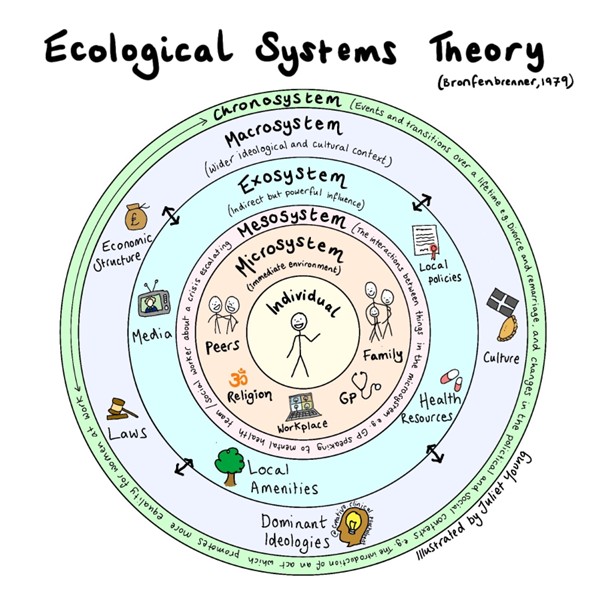
- The microsystem, which relates to an individual’s immediate environment. This includes someone’s immediate relationships and environments such as parents/ caregivers, siblings and friends.
- The mesosystem, which refers to the interactions between different parts of the microsystem, for example how parents and peers interact and/or how parents and teachers interact.
- The exosystem, which includes the wider social system, which doesn’t necessarily have any direct contact with the young person but influences the young person indirectly by impacting on those they interact with directly. For example, a parent/ caregiver’s workplace may impact on stress and time available for young person. The exosystem also includes local community services such as accessibility and availability of healthcare, parks, youth centres.
- The macrosystem, which encompasses broader societal ideologies, cultural norms, values, laws and government policies. For example, beliefs around gender roles can influence parenting styles and expectations of young person. The macrosystem influences the broader context that affects how all other systems function.
- The chronosystem, which relates to the dimension of time and how this influences development. It considers changes and transitions over time both in an individual’s own life and in the broader environment. For example, the impact of the Covid pandemic was felt across the World and will have impacted on how every individual interacted with all other part of their ecological system. In terms of the chronosystem, the timing of events in an individual’s life (i.e. what else might be happening for them internally in terms of development) and also changes over time are important and impact on other parts of the system.
Exploring alternative identities is considered to be a normal part of the identity formation process. It is therefore important that young people have an opportunity to realise their potential and learn through this developmental process, in a way that is not labelling, stigmatising or assumes a fixed pattern of behaviour.
Child First principles encourages individuals and organisations to respond to young people in a way that acknowledges their developmental stage and recognises their particular needs, capacities, rights and potential. Child First principles are guiding principles which originated from the youth justice system but are usefully applied in other aspects of adolescent safeguarding and family work. There are four guiding principles set out on the YJB website which inform a child first approach to working with young people;
- As children – prioritising the best interests of children and recognising their particular needs, capacities, rights and potential. All work is child- focused, developmentally informed, acknowledges structural barriers and meets responsibilities towards children
- Building pro social identity – promote children’s individual strengths and capacities to develop their pro- social identity for sustainable desistance, leading to safer communities and fewer victims. All work is constructive and future-focused, built on supportive relationships that empower children to fulfil their potential and make positive contributions to society.
- Collaborating with children – encourage children’s active participation, engagement and wider social inclusion. All work is meaningful collaboration with children and their carers.
- Diverting from stigma – promote a childhood removed from the justice system, using pre-emptive prevention, diversion and minimal intervention. All work minimises criminogenic stigma from contact with the system.
In applying and embedding these principles in your practice you are creating opportunities to nurture and re-enforce pro social aspects of a young person’s identity. At the same time acknowledging and responding to the developmental differences of children and young people, allows for the consideration of whole child opportunities for realising their potential.
Sense of Self – Useful Links
SOCIAL GRACES
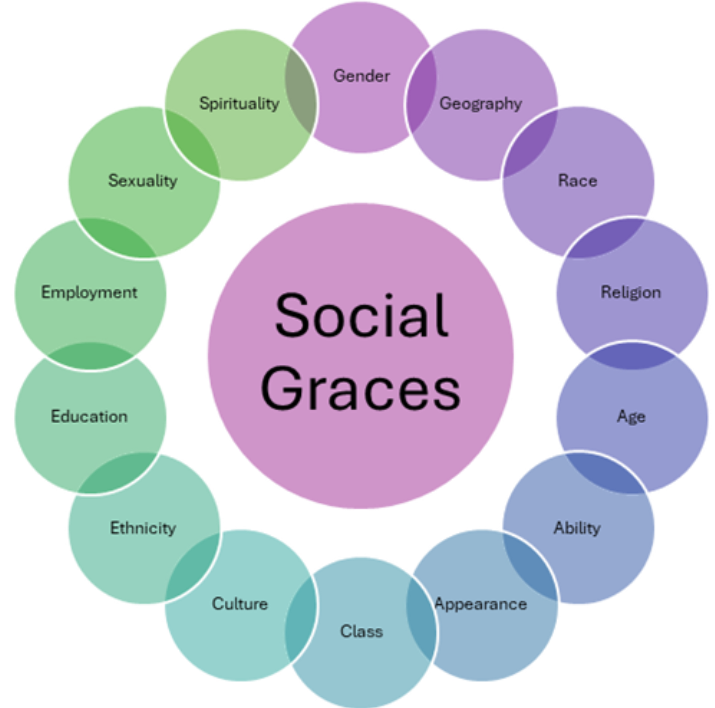
Social graces is a mnemonic developed by Roper-Hall and Burnham, which provides a useful scaffold to consider less visible and unvoiced aspects that influence personal and social identity.
The Social GGRRAAACCEEESS are; Gender, Geography, Race, Religion, Age, Ability (Physical, Intellectual, Social & Emotional), Appearance, Class, Culture, Ethnicity, Education, Employment, Sexuality (orientation & Expression), Spirituality.
Exploring the different elements that contribute to identity and the intersection between these can help to understand and build on aspects that are important to a young person and to understand how their graces may impact on their own thoughts, feelings and actions and that of others. As a starting point you could ask a young person and/or their family to rank each of the Social Graces in order of importance to them and seek opportunities for connecting and building on aspects most important to them.
Considering how social graces have impacted on their interactions with the world can provide an important opportunity to uncover experiences of inequalities, exclusion and discrimination.
As well as using the social graces to support an understanding of those individuals and families that we work with, understanding one’s own social graces can help to explore and identify power differentials to identify our own prejudice and privilege, which may be impacting on our work. Through Your Choice clinical supervision, practitioners are supported to consider the similarities and differences in social graces with the families that they are working with, to consider how this may be impacting on their work.
Research in Practice provide some useful exercises and activities, which you can use to explore social GRACES within your teams and in supervision discussions
Gender identity
Gender identity is different to sexual identity. Whilst sexual identity refers to who an individual is attracted to, gender identity is how someone describes their gender.
Gender identity is not the same as biological sex. Sex refers to physical and biological traits—such as genitals, hormones, and other body characteristics. At birth, a child’s sex is usually assigned based on these traits. However, a person’s gender identity may not align with the sex they were assigned at birth.
There are many ways in which someone may describe their gender. The most common terms are;
- Cisgender, which refers to someone who is the same gender as their sex
- Transgender, which refers to someone whose gender is different from their sex at birth
- Non binary, non-conforming, gender queer, gender fluid, which are gender identities that sit within, outside of, across or between male and female (Young minds, 2025)
Pronouns are the terms that we use to refer to someone as he/she/they. It is good practice to ask which pronouns young people use to describe themselves and refer to them in accordance with their preference. The pronoun “they” is a gender-neutral pronoun and may be used for people who are non-conforming or transgender. It may be important for you and helpful for young people to share your own pronouns.
The changes to the body that happen during adolescence can be particularly confusing and/or distressing for non-conforming and transgender young people, who are also more likely to experience injustice and discrimination, which can negatively impact on their mental health. A recent ruling by the Supreme Court, defined that within the Equality Act 2010 the legal definition of sex is biologically determined. Under the Equalities Act this means that;
- A woman is a biological woman or girl (a person born female)
- A man is a biological man or boy (a person born male)
This ruling has led to mixed responses, demonstrating that there is not agreement across society about how we define and respond to people who do not consider their gender to be defined according to biological determinants. It therefore seems more important than ever to ensure that young people who are exploring their gender identity have access to appropriate support and access to inclusive environments. There are some useful good practice guides available on the Anna Freud website.
It is important to note that young people may be working through their gender identity while dealing with other adversity, ensuring that one considers the whole gamut of Social Graces, including any additional needs or neurodivergence is important in helping them effectively navigate what can be a confusing and very intense time.
Sexual identity
During adolescence young people start to explore their sexual feelings and interests as they begin to form their sexual identity. There are many factors both within the individual and through their interactions with the environment, which influence sexuality development. This includes biological, psychological and social changes as well as political, spiritual, cultural factors.
With the rise in access and use of social media, content in relation to sex and sexuality has never been so readily available, which can be both helpful and harmful during this period of self-discovery. Increased access and exposure to harmful content can negatively influence perceptions and attitudes. Coming soon…..Please click on the link to section on online harms for guidance on keeping young people safe online.]
Young people may become curious or affirm their sexual orientation. There are many ways in which attraction to others is experienced and described, which may change over time. Some of the words used to describe sexuality are available here. Young people may feel confused or uncertain about how they feel, benefitting from opportunities to talk through their feelings with a trusted adult. This may be particularly important for those whose sexual preferences fall outside of societal norm of heterosexuality, who are more likely to experience disadvantage and discrimination as a result of their sexual orientation. This can negatively impact on their mental health. Check out the Young minds website, which has helpful information and advice to support mental health when young people are exploring their sexuality. On their website Young Minds provide useful information and advice for parents and professionals too.
Young people may become sexually active. Fumble provides some handy guides for young people as they begin to experiment sexually. Individualised advice can be sought at the local Sexual Health Clinical which can be found via the NHS website.
It is important to note that young people may be working through their sexual identity while dealing with other adversity, ensuring that one considers the whole gamut of Social Graces, including any additional needs or neurodivergence is important in helping them effectively navigate what can be a confusing and very intense time.
Sexual Identity – Useful Links
Sexual Orientation (LGB+) – The Proud Trust
YoungMinds | Mental Health Charity For Children And Young People | YoungMinds
Fumble’s content series: “Am I trans?” Translating sex, identity & relationships
Find a sexual health clinic – NHS
https://www.stonewall.org.uk/resources/list-lgbtq-terms
https://www.nhs.uk/nhs-services/sexual-health-services/find-a-sexual-health-clinic
Cultural sensitivity and humility – by Power the Fight
At Power The Fight we use the definition developed by Dr Melanie Tervalon & Dr Jann Murray-Garcia:
“Cultural sensitivity/ humility is a lifelong process of self-reflection, self-critique, and commitment to understand and respect different points of view, and engaging humbly, authentically, and from a place of learning. Individuals are encouraged to critically understand their own cultural assumptions, the cultural context in which they hope to operate successfully, and the ways in which institutional structures of power and privilege need to be reimagined to be more inclusive of all ways of being.”
Our 2020 TIP Report found that “[therapeutic services] are significantly impeded by a lack of awareness and knowledge of cultural difference and cultural contexts. This limited understanding and relatability were apparent in both the interactions between therapeutic practitioners and clients, and the structural power dynamics of therapeutic institutions themselves. Culturally disengaged approaches were seen to reduce the success of referrals through poor rates of engagement with therapeutic services and increase the risk of further harm on vulnerable and marginalised groups through misrecognition and misunderstanding.” (Williams et. al 2020)
Since we conducted this research, we have also see the impact that a lack of cultural sensitivity and humility can have on services beyond the therapeutic sector.

Representation Matters:
The TIP Report (2020) found that “For Black people in particular, trusting relationships with professionals relies greatly on representation and cultural sensitivity/humility, with young people and families much more likely to speak with practitioners who share or understand their ethnic background and culture.” (Williams et. al 2020)
Reflecting on the cultural representation within your workforce, or wider sector, is imperative as it can affect whether young people seek help, access support and see your professional role as a career option for their future. However…
Understanding & Trust Also Matter:
The TIP Report also found that practitioners from different backgrounds to those of the young people they are working with can also develop cultural sensitivity. “Trusted practitioners can deliver culturally competent therapeutic interventions. A therapeutic relationship requires trust, which is why young people and families belonging to groups that have been socially marginalised or historically harmed by institutions are unlikely to want to engage with services. This is especially likely if the intervention is seen to be culturally and visibly white and middle class. However, this research has demonstrated that overcoming these barriers is possible. There are many practitioners with unique expertise, shared experiences, or contextual understanding who maintain meaningful and effective therapeutic relationships with marginalised groups.” (Williams et. al 2020)
How can you develop culturally sensitive practice?
Self-reflection & self-critique: The foundation of cultural sensitivity relies on all of us as practitioners understanding and reflecting on our own cultural backgrounds. This includes the biases and assumptions we hold about those from cultures and backgrounds different from our own. Tools such as Social Graces (anchor to social graces section) (John Burnham, Alison Roper-Hall and colleagues,1992) and the Wheel of Power (Sylvia Duckworth) can help us understand on our own cultural identity, while reflecting on bias helps us to challenge any unhelpful beliefs and respond differently in the future. When reflecting on bias, don’t just focus on ‘conscious’ and ‘unconscious bias’, try to take it deeper to think about Anchoring, Bias Blind Spots, Inheritance/Intergenerational Effect, Outcome Bias and the Bandwagon Effect
Understanding and respecting different points of view: Cultural sensitivity encourages us to be curious and non-judgemental about those we work with (both young people, families and our own colleagues). In this way, cultural sensitivity aligns with other key characteristics of our professional practice.
Ongoing learning about the cultural context: No group or culture is a monolith and so it is important that, whether we share that cultural background or not, we keep an open mind and posture of learning about the unique experiences and beliefs of those we work with. Ongoing learning and understanding the reality that we can never know everything about a culture is key to developing cultural sensitivity and humility.
Reimagining institutional structures of power & privilege: Once you have begun reflecting, learning and understanding it is important to take action. Reimagining structures and systems can start small but it does require buy-in and commitment at every level, and a robust plan of how tangible change will be implemented. To plan the action you will take to embed cultural sensitivity you may want to answer the following questions with you team or service:
- What’s going well? In what ways are we already demonstrating cultural sensitivity?
- What small next steps could we take to build on this and become more culturally sensitive?
- What would it look like if we were a truly culturally sensitivity service/organisation?
In this video you can watch Ben Lindsay’s TED Talk on Cultural Sensitivity.
Cultural sensitivity and humility – Useful Links
Resources: TIP Report 2020 Video Summary – https://youtu.be/WbvRmpAMC-o
Ben Lindsay’s TED Talk on Cultural Sensitivity – https://youtu.be/TfIcEYAWqXs
Power the Fight have recently launched an online training platform. You can find out more here https://www.powerthefight.org.uk/what-we-do/training/
Adolescent brain development
Maturation
Over the last two decades, advances in technology and brain imaging have led to significant progress in understanding adolescent brain development.
Although the brain stops growing in size by early adolescence, there are significant structural and functional changes inside of the brain, which helps the brain to become more efficient. This maturation process continues through adolescence and into early adulthood up until the mid to late twenties.
The changes in the brain shape how young people think feel and behave. Understanding adolescent brain development can therefore help to understand young people’s behaviours and the choices that they make.

Structural and functional changes
Whilst the brain does not grow in size during adolescence, grey matter, which contains most of the brains neuronal cell bodies spikes in early adolescence, peaking around 15 years old. Through a process of synaptic pruning this then decreases. Synaptic pruning is the brain’s way of optimising its processing power by eliminating weaker or unused connections between neurons and strengthening the ones that are used more often- think use it or lose it! You can imagine how much quicker and easier it is to take a well-trodden path over an overgrown one. In the same way the brain needs to find ways to be efficient amongst a myriad of possible pathways.
At the same time that grey matter is decreasing, white matter volume increases. White matter is made of myelinated axons, which connects different parts of the brain. This allows for faster communication between brain regions, enhancing the communication network.
Reward system sensitivity
There is some evidence to suggest that during adolescence there is increased activity in the limbic system – which is often referred to as the “emotional brain”. This part of the brain plays a crucial role in regulating emotions, memories, motivation and behaviours that are essential for survival. As well as promoting survival through “fight or flight mechanisms, this region is also involved in pleasure and reward. Adolescent brains become particularly sensitive to rewards, amplifying the pleasurable feelings that come alongside reward- be it through food, social rewards or sensation and/or risk seeking behaviours.
Whilst this part of the brain is at its most sensitive, the prefrontal cortex, which is responsible for planning, organisation and impulse control remains under development. This coordination centre is the last area to mature, which helps to understand why young people are more likely to engage in impulsive, risky and sensation seeking behaviours and why they are particularly vulnerable during this stage. This includes a vulnerability to exploitation, where the physical, psychological and social rewards provided through the process of exploitation are likely to be particularly intense and pleasurable for young people.
Taken together, the sensitivities in the “emotional brain”, combined with the underdeveloped organisation centres explains why very often young people will feel before they think. It is, therefore, helpful to support young people’s emotion literacy and regulation strategies- see Working with emotions section [insert link].
If you’re interested in finding out more, there is a great TED talk by Sarah Jayne Blackmore, Professor of Psychology and Cognitive Neuroscience.
Individual difference
No two brains are the same.
Brain changes and development can happen to differing extents and at different rates depending on a number of factors, including neurological differences and/or environmental factors such as exposure to adverse or traumatic experiences. As noted by Coleman, (RIP, 2020) there is evidence to suggest that growing up in restrictive or deprived environments can contribute to delays in brain development.
Brain imaging studies indicate that trauma can impact on the development of several parts of the brain including the threat processing and emotion regulation systems as well as executive functions and memory. The threat processing system can be become overactive, meaning that the fight or flight response is easily activated resulting in hypervigilance. Development of the prefrontal context (the part of the brain responsible for planning, organisation and impulse control) may be delayed or underdeveloped impacting on decision making, impulsivity and its ability to regulate the threat processing system. Ultimately, the brains’ ability to calm itself when (easily activated) is disrupted. See further information in Working in Trauma Informed way section [to link]. Traumatic experiences can also contribute to high cortisol levels (stress hormone), which can impact on memory processing. This can lead to problems with learning, memory recall and difficulties in distinguishing between past and present danger resulting in flashbacks.
But the good news is, that there is evidence to suggest that even when exposed to adverse or traumatic experiences, the brain has a remarkable ability to adapt and recover. Therefore, creating safe, nurturing environments and providing appropriate support can be transformative in helping overcome challenges to support young people to flourish. In any event, supportive structures, encouragement and positive encounters and activities will help to shape the neural and behavioural pathways that forge during this formative, transitional and potentially transformative period.
For young people with Acquired Brain Injuries (ABI) there may be additional challenges. Whether they acquired their brain injury as a young child, or later on in adolescence, function around memory and consequences can develop very differently for some of these young people. This can also lead them to be more vulnerable to exploitation, as they may have a very different understanding of risk and reward than their peers. The charity Cerebra has a lot of resources and helpful factsheets for parents, carers and staff on dealing with various aspects of behaviour and emotions for children with an intellectual disability that may be the result of a brain injury.
Foetal Alcohol Syndrome Disorder (FASD) may be present when a child has been exposed to alcohol consumption in utero. Parents and carers report that it can be common in children who have been adopted or who are in care, but it may occur in any of the population, with some estimates putting it at around 5% of the population. Children who experience this condition may struggle among other things with impulse control, processing actions and consequences, social skills and may be particularly sensitive to criticism and raised voices. There are varying accounts across the world of how FASD correlates with involvement with the Justice system, but some findings suggest that there is a heightened risk if someone has the condition without support in childhood and adolescence.
It is important to know it may be difficult to diagnose FASD unless there is a definitive account of maternal alcoholic consumption while pregnant, but within the useful links section you can find resources on helpful ways of working with children and young people who may or are suspected to have this condition. There are also significant overlaps in presentation with other forms of Neurodivergence, and being professionally curious about what might be driving different difficulties for children is important when considering how to intervene.
Individual Difference – Useful Links
A Call for Greater Attention to Culture in the Study of Brain and Development – PMC
https://pmc.ncbi.nlm.nih.gov/articles/PMC9356540/#R121
https://pmc.ncbi.nlm.nih.gov/articles/PMC9356540/#R3
https://pmc.ncbi.nlm.nih.gov/articles/PMC9356540/#R94
https://pmc.ncbi.nlm.nih.gov/articles/PMC9356540/#R121
Acquired Brain Injuries (ABI)
https://cerebra.org.uk/wp-content/uploads/2021/07/Managing-challenging-behaviour-jul21.pdf
Foetal Alcohol Syndrome Disorder (FASD)
https://www.nhs.uk/conditions/fetal-alcohol-spectrum-disorder
https://www.fasdnetwork.org/resources.html
https://www.adoptionuk.org/fasd-hub-england-factsheets
https://www.sciencedirect.com/science/article/pii/S0160252717301073?via%3Dihub
Cultural influences on brain development
Little attention has been paid to cultural and ethnic variation to understand how cultural influences impact on brain development. For example, there is less evidence of heightened parent-child conflict, mood disruptions, and risk-taking behaviour, in non-Western cultures than Western cultures (Arnett, 1999; Mead, 1928; Schlegel & Barry, 1991).
It is not clear whether there are neurological implications or explanations for this, for example whether cultural stereotypes of adolescence impact on brain development through self-fulfilling prophecies via neural processing (Qu, Jorgensen, Telzer, 2020). There is increasing interest in this area. We will continue to update our pages with new and relevant information.
Cultural influences on brain development – Useful Links
Appreciating neurodiversity, and considering children with Autism, ADHD and other additional needs or disabilities in your work
Experiencing the world differently

There is variation in how every brain develops and this is why every individual experiences the world in their own unique way. Young people who are neurodivergent may experience and react to the world differently, in a way that is not “typical” of the dominant societal architype.
Adolescence is considered to be a critical period for young people who are neurodivergent as additional divergence from neurotypical development appears. This can include differences in cognition, attention, mood, learning and social interaction. Consequently, navigating the many changes that occur through adolescence can be particularly challenging for young people who are neurodivergent. As they become more independent and expectations from others grow, there may be increased demand on cognitive tasks such as planning, organising, adapting and regulating, which may be the very cognitive skills compromised by an individual’s particular neurodivergence.
Furthermore, the orientation towards peers and the skills required to establish and maintain reciprocal relationships can be particularly confusing. Social skills training can be beneficial for any young person and may be particularly helpful for young people who struggle with social processing and interactions.
Young people who are neurodivergent are likely to experience the ‘double empathy problem’. This is where they may struggle to identify and relate to the experiences of others, but others also struggle to empathise with the perspective of the neurodivergent young person. This is due to a breakdown in reciprocal communication, caused by contrasting experiences of the world. Therefore, those who are neurodivergent are particularly vulnerable to social isolation, being misunderstood and expected to exert additional effort to empathise through a neurotypical lens.
That said, it is important to remember that neurodivergence relates to variations rather than deficits in how different brains process, respond, interpret and experience the world. There are many strengths and skills that exist alongside the challenges and difficulties of being neurodivergent. Embracing an individual’s strengths and accommodating differences will enable and support neurodivergent young people to thrive.
For some young people who are Neurodivergent, their experiences and needs may reach a point where they are clinically significant. They may for instance be diagnosed with Autism, ADHD or another specific Neurodivergence. Only appropriately qualified health professionals, such as paediatricians, psychiatrists or specialist clinicians, can make formal diagnoses of Autism or ADHD. However, support should be based on a child’s individual presentation and needs, not dependent on a formal diagnosis.
This page, from the National Autistic Society explains more about the Neurodiversity movement, and Neurodivergence, and some of the specific expressions in Neurodiversity – for some advocates of Neurodiversity, the list is very broad – for some it is much more specific, we talk about it in these pages as a way of being as inclusive as we can to young people who see the world differently, whether or not a young person is diagnosed with a specific Neurodivergence.
It is vitally important that you consider a young person’s individual communication needs when considering any Neurodivergence, and to note that communication and social cues may look different to a child who is ‘Neurotypical’, but also different to other children who might be diagnosed with a similar Neurodivergence.
Here are some quick tips for considering how one might need to structure a direct work session for a young person who is Neurodivergent, this is not a definitive list, and note the invitation to ‘consider’ rather than ‘do’, as noted above all young people are different, and it shouldn’t be assumed that what works for one child with a particular sort of Neurodivergence works for all – please see the resources at the end of this section for more detail:
- As already mentioned, use the expertise of a young person’s parents, carers and professionals (if safe to do so) who already know them to ascertain how best to communicate. Ensure on first contact with them you are clear on who you are and why you are there.
- Relational Practice, as discussed elsewhere in SAIL, is perfectly possible with young people who are Neurodivergent; what it looks like to build empathy and rapport may just be slightly different.
- Consider whether making efforts to sustain eye contact is helpful, some young people who are Neurodivergent, and specifically young people with Autism might find this very uncomfortable
- Think about your environment. Consider whether a young person might need an activity to keep their hands or body busy, or be negatively responding to sensory stimuli such as smell or sound.
- Consider when you have your sessions. Sometimes seeing a young person earlier or later in the day can mean they are better able to concentrate on what you are saying.
- Consider whether the use of metaphors and similes in direct work will be helpful for them. Sometimes speaking plainly and directly is preferred.
- Young people may ‘stim’ during conversations, which are often characteristed by involuntary movements or noises – these are usually nothing to be concerned about; Claire’s talking head below talks about this.
- Some young people may stim with more extreme behaviour such as hitting themselves, or banging their head on a table or wall. This article gives some tips of how to manage self-injurious stimming:
- Particularly when getting to know a young person, consider whether comments you perceive as ‘rude’ or ‘disrespectful’ might simply be a different way of communicating. As you build a relationship with a young person, you may get a better understanding of what they mean when they phrase things in certain ways, and what will be helpful for them in terms of how you respond.
Below are some videos from London’s Parent Carer Forum talking about some tips from their experience of structuring a session with a neurodivergent young person:
Experiencing the world differently – Useful Links
Specific neurodivergence
Please note that this section is subject to ongoing input from experts by experience and by specialism, and the content will continue to evolve.
Below are some guides to specific types of Neurodivergence that are more common, and may be helpful to your practice:
Autism:
https://www.autism.org.uk/advice-and-guidance/what-is-autism
https://www.nhs.uk/conditions/autism
https://www.autism.org.uk/advice-and-guidance/topics/resources-for-autistic-teenagers
Attention-Deficit Hyperactivity Disorder (ADHD):
https://www.nhs.uk/conditions/adhd-children-teenagers
Demand Avoidance:
We have been asked to mention ‘demand avoidance’, sometimes called ‘Pathological Demand Avoidance’ or PDA by some experts by subject and experience, as a form of Neurodivergence that at the time of writing is being experienced and described more by parents and professionals. This article explains a bit about what it is, what might be helpful for professionals, parents and carers, and where it currently fits in wider Neurodiversity:
https://www.autism.org.uk/advice-and-guidance/topics/behaviour/demand-avoidance
PDA Society – Pathological Demand Avoidance
Specific neurodivergence – Useful Links
Autism
https://www.autism.org.uk/advice-and-guidance/what-is-autism
https://www.nhs.uk/conditions/autism
https://www.autism.org.uk/advice-and-guidance/topics/resources-for-autistic-teenagers
ADHD
https://www.nhs.uk/conditions/adhd-children-teenagers
Demand Avoidance:
https://www.autism.org.uk/advice-and-guidance/topics/behaviour/demand-avoidance
Neurodiversity, safeguarding and exploitation
The link between Neurodiversity, safeguarding and exploitation is complex. Under Keeping Children Safe in Education (KCSIE), adults must remember that while neurodivergence can affect communication and behaviour, this must never prevent us from recognising or acting on possible safeguarding concerns.
Neurodivergent children may find it harder to disclose harm or be heard; professionals working with children must therefore take extra care to ensure their voices are understood and that professional curiosity is maintained.
Part of working with a young person who may be at risk in these areas might be considering with the professional network how Neurodivergences such as ADHD or Autism might affect how they see the dangers other adults see around them and what specialist help across health, education and social care might be necessary to help them thrive. This is best done alongside them, as well as with the parents, carers and professionals who know them well.
Neurodiversity, safeguarding and exploitation – Useful Links
Other additional needs and Special Educational Needs & Disability (SEND)
Please note that this section is subject to ongoing input from experts by experience and by specialism, and the content will continue to evolve.
There is a huge amount that can be written about various different physical and learning needs young people may have which might affect their sessions with you. At the most basic physical level, a condition like Sickle Cell Anaemia or Diabetes may significantly affect mood and energy at school, particularly if it is a condition they struggle to manage. Even a mild learning or communication difficulty may prove a source of intense frustration as a young person struggles either to understand the behaviour of their peers, or communicate their views, or both. If you are aware a young person has a condition, or a disability, the best thing you can do as a professional is research it, and respectfully ask the young person and those who know them how it affects them if at all (it may not).
It is vitally important to ensure you work with professional curiosity to understand what this condition means for them, rather than working to preconceived notions and stereotypes, while also acknowledging that for some young people it is a fairly incidental part of their life, and for others it forms a significant part of their identity.
You may also be interested in exploring other related SAIL topics such as: Professional Curiosity.
Speech, Language and Communication Needs (SLCN) and criminal justice – hidden difficulties and opportunities to support
Difficulty in clearly communicating what is happening for you, and articulating it in ways that others understand is a significant risk factor in safeguarding. When a child has difficulty expressing themselves, it leaves them more open to being abused and exploited. It also means that they might use behaviour to communicate if they feel they are unable to make their fears or frustrations known verbally. While this is more known and accepted for children who are – for instance – non-verbal, for children where there is a less obvious communication need, some of their support requirements may be hidden
In education, most of the curriculum is taught through language (both spoken and written), meaning that accessing and succeeding in education is often difficult for those with Speech, Language and Communication Needs (SLCN). It makes sense then, that SLCN are, as well as Autism, one of the most common reasons children are supported and referred for Education, Health and Care Plans in London.
Some surveys found around 70% of children known to youth justice services have Speech, Language, Communication Needs (SLCN).
It should be no surprise then that in the youth justice population, it is estimated that a significant proportion of children have SLCN. Some surveys found around 70% of children known to youth justice services have SLCN. Depending on the survey and the setting, it has sometimes been a higher percentage. However, unfortunately, it is rare (research found only 5% of children) that these needs are identified prior to children coming in contact with the justice system.
This poses a useful challenge for professionals in how they communicate with children known to Youth Justice Services, but also whether more effective identification and support earlier on in their journeys might divert children away from this pathway. Considering how to support these young people may be a vital part of helping them towards safety.
Speech, Language and Communication Needs (SLCN) and criminal justice – hidden difficulties and opportunities to support – Useful Links
Transitions into adulthood for children with Neurodivergence, Additional Needs and Disabilities and potential cliff edges of support
Please note that this section is subject to ongoing input from experts by experience and by specialism, and the content will continue to evolve.
A common experience for young people, and parents and carers with additional needs is a significant mismatch between support given pre and post 18. Adults Social Care thresholds are sometimes very different to Children’s Services thresholds, and young people who receive a service under 18 may not qualify for any support post-18, or only qualify for support that is much more limited.
Services also legally shift from being proactive and assertive in managing safeguarding risk, to services which consider safeguarding, but have to do this work much more consensually with young adults unless they legally do not have capacity to make decisions through significant disability or mental illness; the amount of young adults this applies to is small.
This presents a safeguarding challenge for young people who may have significant input and services keeping them safe until their 18th birthday, when they may then face a cliff-edge of support. Good practice guidance suggests that children who may transition to adults’ services should have transitions work starting between the ages of 14-16 – resource issues often make this challenging to implement.
As a practitioner, one of the questions that is important to ask if you are dealing with a young person who has additional needs at 15 or 16 is what the plan of support will be post-18. This may require research and advocacy with adults’ health and council services (whether statutory or not) early to ensure the relevant assessments are undertaken and referrals made. It may also be about ensuring the young person is being prepared on how to self-advocate, or access advocacy and access the right services themselves, or that their family is empowered to support them.
There are however models of good practice developing in London considering ways to more effectively support young people into young adulthood, and services that are increasingly also bridging this gap, these are explored in the Transitional Safeguarding section linked below.
Leaders and managers should consider what they can do to bridge gaps and build understanding between services.
You may also be interested in exploring other related SAIL topics such as: Transitional Safeguarding
Working with emotions
Emotions experienced by young people
The significant biological, psychological and social changes that occur during adolescence can help to explain the intense and fluctuating emotions experienced by young people during this time in their development, which can also be closely felt and impact on those around them.
The changes that are happening (both noticeable and unnoticeable) to a young person’s body and social contexts can be a time of mixed emotions and a source of stress. The brain changes [link to neuro section] that are happening mean that the “emotional brain” is more easily activated, whilst the control centre of the brain (the prefrontal cortex), which is responsible for planning, organising and managing impulses remains under construction and is the last part of the brain to develop. This means that young people are likely to feel emotions strongly, without support from the prefrontal cortex to control how they respond and react to these emotions. This can be compounded for young people who have been exposed to adverse and/or traumatic experiences, who consequently have easily activated fight or flight responses.
Working with emotions, both that of young people and their networks including professionals has been commonly referenced as an important area for Adolescent Safeguarding. In preparation for this resource, practitioners, managers, leaders and policymakers noted that working with emotions was important to them. Within this section, we consider the importance of emotional awareness, literacy and regulation and provide some practical tools taken from the Your Choice programme. We will also consider the importance of acknowledging and responding to our own emotional responses- as individuals and systems, triggered by our work with adolescents.

What do we mean by emotions?
Emotion is a commonly used term, but hard to define given its abstract nature.
In SAIL we refer to Emotions as an internal state, that is an automatic, unconscious physiological reaction to an external or internal event or situation. Often the term emotion is used interchangeably with the word “feeling” and we will do so in SAIL. However, by way of introduction to the topic it is helpful to understand the distinction between the two terms. Whilst emotions are considered to be those automatic unconscious reactions to things happening around us, feelings on the other hand relate to the conscious awareness and the way that we describe those emotional responses. That is, how we make personal sense of our emotions, which will be influenced by many factors including previous experiences, cultural backgrounds and current circumstance. During their early development a child will often look to the adults around them to make sense of the bodily responses they experience triggered by an event. For example, during a thunderstorm a child might be startled by the sound of thunder (the event), which causes their heart to beat faster (emotion). If someone around them reacts to their bodily response by hiding behind a pillow, stating that they feel scared (feeling) then the child begins to make associations between what is happening in their bodies (emotion) and how they describe this to themselves and other (feelings).
Emotions are a normal part of what it is to be human and can range from pleasurable to painful experience. Each of us will experience emotions in our own way- we all have them. Finding ways to help young people and their networks to name, understand and respond to their own emotional experiences will support their psychological health during adolescence and beyond. Being able to understand and respond to our own emotional experiences triggered through our work, often dealing with big emotions, is important for our own wellbeing but also provides an opportunity for learning and modelling through co-regulation.
What good are our emotions?
Emotions give us information, communicate to and influence others and motivate and prepare us for action. They provide a signal that something in our environment is happening.
Our emotions often show in our facial expressions, body language and tone of voice. This helps to communicate to others how we are feeling, which may impact how they respond to us. For example, if we are feeling sad, then this may be evident in a downturned mouth, lowered eyelids, a drooping lower lip and you may notice tears in the eyes or rolling down the face. This may prompt others to comfort you.
Emotions also motivate and prepare us for actions. For example, if you are presented by a threat in your environment (either internally or externally) then your bodily responses will likely prepare you to respond by raising your heart rate- sending blood pumping to your muscles in order to fight or flea from the threat. In addition to the well-known “fight or flight” responses, the freeze and fawn responses are also common in the face of a perceived threat. This means that an individual may freeze and become immobile in order to avoid fight and potential harm. Alternatively befriending, appeasing or helping the threat may avoid conflict and harm. This is referred to as the fawn response, which can help to understand how exploitative relationships develop and are maintained.
The fight, flight, freeze or fawn responses are grounded in Darwin’s evolutionary theory, which suggests that these responses have been key to survival of the human species. By helping young people to understand the adaptive function of emotions, it can help them understand in a non-judgemental way, how and why they respond in certain situations.
However, Darwin’s theory may not be culturally relevant for some young people and their families. There is no one size fits all to help someone understand their inner experiences and it is important to consider context and culturally relevant and responsive approaches taking into account interests, beliefs, neurodiversity and communication styles, which may be similar or different to your own.
The importance of individual difference

It important to acknowledge that identification and interpretations of facial expressions are not universal and may be impacted by individual difference including cultural norms, exposure to adverse and traumatic experience and/ or neurodivergence. Therefore, it may be helpful to find ways to support young people to recognise emotions (in themselves and others). Using pictures cards with labelled facial expressions or playing a game of Guess Who- using facial expressions to identify characters in the game can provide interactive ways to identify and talk about how different emotions can present in ourselves and others.
Young people who have been exposed to trauma, particularly interpersonal trauma such as abuse, neglect or exposure to violence are more likely to experience a hostile attribution bias. That is, a tendency to interpret the actions of others as hostile. For example, if someone bumps into them, they will assume that this was done deliberately with an intention to cause harm. This hostile interpretation means that the “fight or flight” responses are more easily activated, with a reactive, aggressive response more likely.
Young people who are Neurodivergent may also misread other social cues, or perceive changes to routine as threatening in ways that may be unclear to adults or young people who are Neurotypical. It is important if you know or suspect that a young person is neurodivergent that you try and work out with them and their network what some of the trigger points for anxiety or hostility might be so that you can work around these, either by removing triggers, or helping them navigate, manage and understand discomfort that may be unavoidable.
Helping young people to understand how earlier experiences may have impacted on how they understand and respond to their environment can help them to recognise and intercept patterns of behaviour. That said, the context of young people’s live, particularly those within Adolescent Safeguarding services, may well find themselves in hostile and dangerous situations and so their interpretations of situations may indeed be accurate and necessary to keep themselves safe. Therefore, supporting young people to identify indicators of safe and unsafe situations is an important aspect of your work.
Emotions in ourselves
Working with big and fluctuating emotions in others can trigger our own emotional responses and reactions. Furthermore, exposure to other people’s trauma, increases the risk of negative effects of vicarious trauma. Therefore, in order to help others it is so important to pay attention to and invest in our emotional wellbeing. In doing so, this can enable you to co-regulate with the young person if they are dysregulated, providing valuable opportunities to model appropriate emotional awareness and regulation skills. In Your Choice, coaches are encouraged to regularly rehearse the tools and techniques for themselves- not only to support them in their practice but to help them to prioritise their own wellbeing too.
Access to reflective supervision, which allows you to consider not only what you may be bringing to your work but also the impact on yourself is a necessary and important practice priority. It can be challenging to prioritise reflective spaces amongst the demanding and busy workloads often dominated and impacted by crises. However, ensuring that there is dedicated space to reflect and invest in ourselves and each other can bring greater perspective and effectiveness, motivation and sustainability in our work to support young people, families and communities in need.
Understanding and regulating emotions
Working with adolescents and with families that may have a history of traumatic experience(s) means that you are likely to be dealing with big and fluctuating emotions. Finding ways to help young people (and their networks) understand their emotions and feelings [link back to earlier section what do we mean by emotions] can help them to respond to them in a way that is helpful and not harmful.
Emotion regulation refers specifically to the skills that we can use to reduce the intensity of emotions so that the “rational part of the brain” can engage and enable healthy and safe responses that are aligned with an individual’s values and aspirations.
The first step in effectively managing emotions is learning to recognize and name them. In the Your Choice Programme, practitioners are encouraged to work with young people and their networks to find creative ways to help young people to recognise their inner experiences, their bodily responses and name their feelings using their interests to engage them in meaningful exploration. Noticing what is happening in their bodies may be particularly challenging for young people who are neurodivergent. Some young people may not be aware or indicate that they are feeling overwhelmed and can become skilled at masking their inner turmoil (particularly those with Autism) until such a time that they are in a more familiar environment, prolonging a meltdown or shutdown.
Therefore, it is important to find creative ways of helping them to understand what is happening in their bodies.
Below are some tried and tested techniques that you may wish to
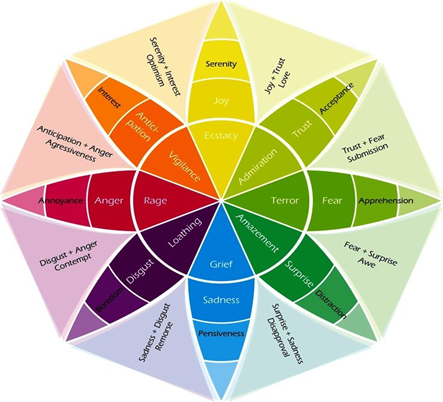
Name it to tame it
The name it to tame it technique is a great example of a simple but effective technique, noticing what is happening internally can help to create a distance and reduce the intensity of an emotion. This requires young people to be able to express how they are feeling. Plutchik’s wheel of emotion provides a useful resource describing a range of different feelings. It also shows how different emotions relate to each other and the varying intensities in which emotions can be felt. For example, ranging from apprehension to fear to terror.
The wheel of emotion (Plutchik Wheel of Emotions, 1980) provides a visual aid, which could be gamified or used to prompt conversation to help to develop emotional literacy and awareness.
Here are some suggested prompts you might want to include;
- which of the feelings do you feel the most?
- which feeling do you prefer?
- which feeling don’t you like?
- what do you notice in your body when you are feeling (name a feeling)?
- how would I know if you are feeling (name a feeling)?
- what are you doing when you are feeling (name a feeling)?
- which feeling do you find difficult to manage?
- what helps when you are feeling that way?
As young people become better able to name the emotion, encourage them to start to name emotions (in their head or out loud) as they notice them. When you are together say what you see to help them to recognise the emotion and validate the emotion. For example, “I can see that you’re upset. I can understand why losing your phone would upset you”. Validating emotions can be a helpful response in itself. Even if you may not agree with or understand how someone (including yourself) is feeling, acknowledging the emotion can help to reduce its intensity so that they can start to regulate and respond in a safe way.
Techniques taken from Your Choice
Your Choice is a pan-London programme using CBT to empower young people to work towards their goals and aspirations to support their safety and wellbeing.
Understanding and responding to emotions is often referred to as emotion regulation. Trying out and practicing different emotion regulation techniques is an important life skill and can be particularly helpful for young people given their developmental stage- with the malleability of neurological and behavioural pathways and the intensity in which they are likely to experience emotions during this period.
In Your Choice, practitioners are encouraged to work with young people and their networks to find creative ways to help young people to recognise their inner experiences, their bodily responses and strategies that help when they are feeling overwhelmed by an emotion, drawing on a young person’s interests to engage them in meaningful exploration. For example, a young person who enjoys football, would be encouraged to consider how they would be feeling during a penalty knockout, what they would notice in their bodies to help them understand and respond to the feeling. They might also find it helpful to try out some football drills that offer intensive exercise, which is a simple and effective emotion regulation technique.
Grounding techniques can help to take the focus away from our internal worlds including thoughts, memories and images. Here are some techniques from the Your Choice programme that you might like to try.
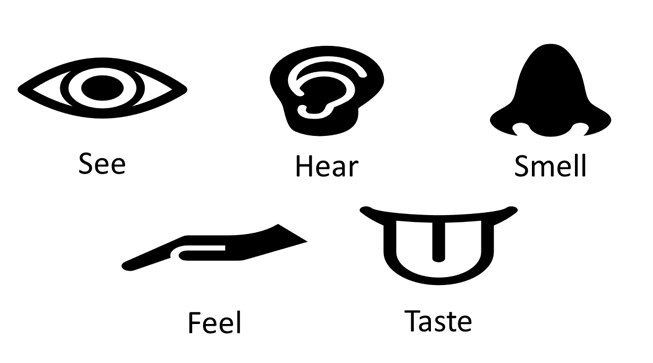
- Take 5
Take 5 is a quick technique that can be used anywhere as it simply requires you to name 5 things that you notice for each of your senses.
There is no one technique that is superior in regulating emotions – what works well will be a very personal thing. Young people should be supported to try out a range of techniques, adapted in a way that makes most sense for them. Once they have found something that feels helpful for them it is important to practice these techniques as often as they can. This will not only support their overall wellbeing but will also mean that they are accessible to them when they need them most.
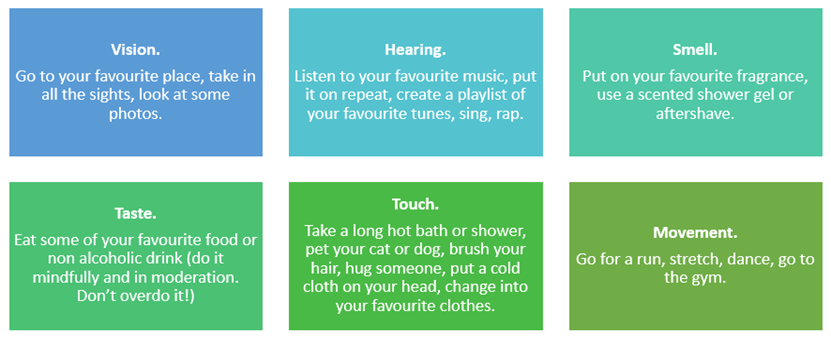
2. Six Sense Self Sooth
This exercise helps to find ways to comfort and nurture oneself in a healthy and safe way.
3. TIPP
When emotions are overwhelming, and you are not processing information, it can be helpful to TIPP the body chemistry.
- T Temperature. Splash your face with cold water or place a cold pack on your eyes or cheeks. Hold for 30 seconds.
- I Intense exercise. This can help to calm the body down when it is revved up. Do some intense aerobic exercise, even if for 10-15 minutes. This will help to burn off the physical energy. You could try running, fast walking, jumping jacks, dancing weightlifting. Be careful not to overdo it though.
- P Paced breathing. Slow down your breathing. Use the hand method. Breathe deeply from the tummy, breathe out more slowly than you breathe in. Do this for 1-2 minutes.
- P Progressive muscle relaxation. Tense and relax each muscle group in turn (see progressive muscle script).
Great news! Your Choice is currently being accredited. If you’re interested in delivering Your Choice in your area please reach out to our Your Choice team .
Understanding and regulating emotions – Useful Links
Understanding young people and their mental health – in development
This topic within SAIL is still in development with colleagues and partners and will be coming soon!
If you’d like to directly contribute to this section then we’d love to hear from you – whether it be providing written content, sharing research, resources being part of the ‘Talking Head Series’ – you can read more about the ‘SAIL talking head’ series here!
Working creatively with young people
Maximising your own creative skills to engage safely
Engaging young people meaningfully requires you to draw on what you know and understand about adolescent development and what that means for each young person. It requires you to find ways to get to know each young person uniquely, to explore, ignite and nurture what drives them, their interests and their aspirations- building on their sense of self and autonomy.
Working with adolescents provides a great opportunity to utilize and maximize your own creative skills to ensure that you can engage and work with young people safely in a way that feels accessible, inviting and responsive to their unique needs and aspirations.
The biological, psychological and social changes that occur during adolescence requires thoughtful consideration for where, when and how you approach your work with young people – to work with their unique rhythms in order to maximize opportunities for reachable, teachable moments. Adopting a flexible approach may take you outside of your own comfort zone in order to meet the young person where they are at both physically (where appropriate and safe) and psychologically, including considering relevant factors around Neurodiversity, both for the young person, but also perhaps yourself. Balancing the needs of the young person versus your own professional capacities and capabilities is an important consideration to reflect on during supervision.
The Your Choice programme emphasizes the importance of working creatively to engage, motivate and support young people to engage in positive, pro social behaviours, aligned with their values, interests and aspirations.
Hear from Nana Bonsu, Director of Relational Practice in her video prepared for SAIL where she promotes the importance of creativity and new ideas in your practice.
Building on the existing therapeutic resources in multi-disciplinary adolescent services
.
Your Choice is a cost-effective framework developed for London’s practitioners supporting children affected by extra-familial violence and related harms.
It brings the principles of Cognitive Behavioural Therapy (CBT) to current best practice in violence-reduction and related partnership approaches. Your Choice fills a practice gap by moving beyond understanding why a child may behave in a certain way to providing tools and techniques to support their psychological health
What is the programme?
Your Choice builds on the existing therapeutic resources in multi-disciplinary adolescent services offered by each LA across London. Your Choice provides bespoke, cohort-relevant training in CBT techniques so that London LA’s youth practitioners can enhance their practice with practical CBT tools, whilst working within each local authority’s practice framework.
CBT is recognised as an effective intervention for a range of emotional and behavioural conditions associated with the use of violence. The programme makes CBT techniques available to children most affected by violence, through enhancing the skills of practitioners who build therapeutic relationships with them, which can lead to increased pro social behaviours and safety for these children. These tools and techniques can be adapted to incorporate approaches to speech, language and communication needs (SLCN), autism spectrum disorder (ASD) and learning disabilities (LD).
Whilst traditional CBT has sometimes been seen by some to negate systemic, relational and trauma-based approaches, this programme seeks to work with these wider understandings of the child’s personal / familial history and context and the systems of which they are a part. This means that the practitioner and the young person, using Your Choice tools and techniques, are able to work together to identify their interests and aspirations, which will spark the young person’s involvement and is built on during the intervention.
Why was Your Choice needed?
Children and young people most affected by violence are the ones who most need therapeutic support but are currently the least likely to get it. This is what Your Choice aims to change.
There are many cultural barriers that can impact on access to clinical services. This includes different cultural perceptions of mental health, lack of understanding of the devastating and negative effects of racism, under representation of global majority clinicians (Health and Care Professions Council, 2023) and stigma associated with mental health, which is more prominent amongst racially minoritised groups (Youth Endowment Fund, 2025).
YEF report that Black and Asian children and young people are less likely to access mental health services voluntarily through primary care and are instead more likely to access them via social care or the justice system (which are more likely to be compulsory) (p.28). This aligns with earlier findings from Power the Fight, who reported a preference amongst young people for talking to their youth workers instead of being referred to a therapist, highlighting the unique relationship young people have with frontline workers as trusted professionals (p.34 Power the Fight Therapeutic Intervention for Peace Report, 2020).
Young people in this cohort are therefore likely to benefit from opportunities, tools and techniques to improve their mental wellbeing delivered in a way that is accessible and available to them, delivered by those who are culturally curious, representative and/or familiar.
Who is the Your Choice programme for?
The core cohort for Your Choice is for any child aged between 11-18 years old who is assessed as medium or high risk of harm / vulnerability as a result of extra-familial harm and has been considered by a multi-agency panel (typically MACE / Pre-MACE).
Your Choice is one of the eligible programmes included in the Ministry of Justice Turnaround Guidance (Version 4) March 2025. Anecdotal feedback from practitioners is that the programme can also have a positive impact on children and young adults outside of these specific parameters.
Why is Your Choice cost effective?
Your Choice is a training and support programme for existing practitioners which has been designed to be flexible enough to be implemented within current working arrangements. It does require the support of a suitably qualified Clinical Lead who can be drawn from a variety of professional therapeutic specialisms.
Your Choice – Responsive by design
Your Choice was designed to support and enable accessibility, explicitly addressing cultural barriers and placing the individual and their cultural needs, aspirations and interests at the centre of the programme.
Your Choice – feedback and evaluation update
Feedback from the programme has been overwhelmingly positive, with different outcomes reported from across the system.
The Youth Endowment Fund funded an ambitious ‘randomised control trial’ (RCT), called The London Young People Study which measured the impact of Your Choice delivery against a Control: ‘Business as Usual’ with participation from nearly 1,500 children aged 11-18 across a wide range of adolescent safeguarding teams in 31 local authorities. The Full Efficacy Report is due to be published on October 31st 2025, using pre and post self completion surveys as a mechanism to measure change. The Full Efficacy Study followed a Pilot Report which supported a ‘green light’ for the evaluators to move into the RCT as a result of ‘promising’ findings of measurable change, with young people indicating improvements in mental health and feeling happier, more positive and purposeful.
This pan-London trial design required delivery in a range of delivery teams has provided an opportunity to see the potential across different outcome types: e.g. in the schools’ delivery model, children’s attendance, behaviour and focus improved; whilst in the Children Looked After model there has been a reported reduction in placement requirements, missing episodes and criminal exploitation and in the 1 06/05/2025 Youth Justice model more early revocations have been reported, so removing children from the criminal justice system. Additionally, there has been evidence of a positive impact on staff wellbeing and retention, with practitioners who are experiencing burn out and indirect trauma due to the severity of the cases they are working with, appreciating the clear framework and training, and benefits of the expert clinical supervision. Some authorities have seen this positive effect spilling over into improved retention, so helping continuity of work with children and families. Based on audits and local reporting, London’s Your Choice programme appears to have real potential to have a positive impact on the adolescent safeguarding landscape in London.
Your Choice – Useful Links
Find out more about the programme or email the Your Choice central team at LIIA at yourchoice@londoncouncils.gov.uk
Reminder! Your Choice is currently being accredited. If you’re interested in delivery your choice in your area please reach out to our Your Choice team .
Relational practice and mattering
Creating conducive conditions, by Luke Billingham, Youth worker, Hackney Quest & Researcher, Open University and Colin Michel, Founder and Director at Resonant Collaboration
There is widespread agreement among both researchers and practitioners that high quality relational practice with young people forms an essential foundation for effective adolescent safeguarding. But there is substantial professional uncertainty about what it means to ‘do’ relational practice well, and what it should involve.
The term ‘relational practice’ does not have an agreed definition (Lamph et al 2023). It is used to refer to several types of relationship: professional relationships in direct work with young people; how young people relate to themselves, to their multi-faceted identities and lived experiences (Davis and Marsh 2022) to people, places, and agencies; and the relations between professional roles, organisations, and sectors. Improvements in each and all of these relationships can result in substantial benefits for young people’s safety.
We suggest that the capacities for attunement and analysis are central to relational practice, and are thus vital for adolescent safeguarding, whether practised in social work, youth work, youth justice, community development, or other professions in direct work with young people. These capacities enable practitioners to both connect with and assess young people’s situations, as well as to support the development of young people’s wellbeing and agency.
There are several constraining forces which can prevent relational practice from flourishing in adolescent safeguarding systems. Relational practice is demanding on those working with young people facing complex risks and harms. Practitioners can be expected to nurture and sustain these relationships with minimal practical guidance, while working within inflexible, excessive and/or conflicting procedures, with large workloads, and under considerable pressure. Managers can find themselves expected to narrow practitioners’ attention to risk management in work with young people. This can operate at the expense of attentiveness to relationships, and limit potential to support positive change in young people’s lives. For strategic leaders collaborating in multi-agency systems, the aliveness of relational practice with young people can sometimes get lost from view.
Practitioner development of knowledge, skills and confidence through reflective supervision and systems leadership can support relational practice to flourish. We put forward a framework to show how conducive conditions for relational practice can be fostered. The framework aims to guide practitioners, managers and leaders, and to support exploration of constraints on and enablers for relational practice within local areas.
Our aim is to strengthen the case for strategic leaders to create conducive conditions for relational practice to flourish in adolescent safeguarding systems.
>> To read the full article, click here.
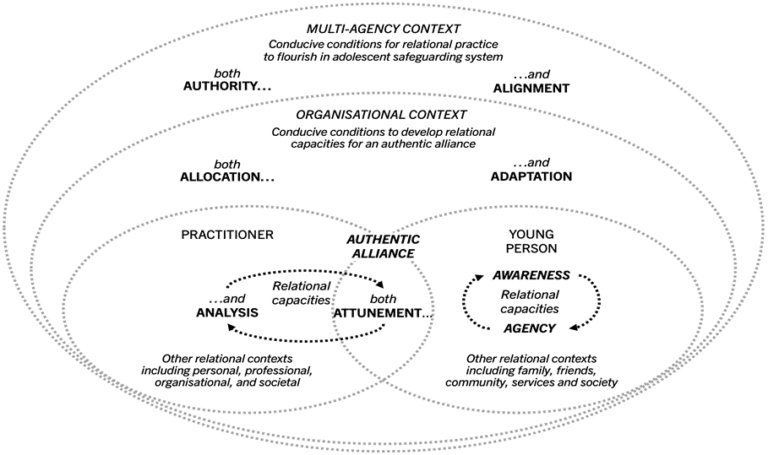
Creating conducive conditions – Useful Links
Mattering, by Luke Billingham, Youth worker, Hackney Quest & Researcher, Open University
“There are young men literally dying to be someone or something, anything but no-one and nothing” – Lee Dema, St Matthews Project, Brixton
We all want to matter: to be a person of significance and consequence in the world. Struggling to obtain a sense of mattering can be a highly important feature of young people’s lives, particularly in adolescence, as questions of identity, agency, status and belonging become hugely prominent and, for some young people, painful.
The questions of “Do I matter? To who and what, and how?” are social, psychological, existential, and political. How any young person considers those questions will be shaped by experiences in the past, present, and anticipated future, and affected by family, peer, neighbourhood, city, and global contexts. The complexity of mattering can make it a helpful conceptual tool through which to explore many different aspects of young people’s situations and emotional wellbeing.
We all want to be ‘someone’ – a person seen as significant by others – and we all want to be ‘something’ – to have some force or power in the world.
Lee Dema, St Matthews Project, Brixton
Psychologists tend to agree that, in order to have a strong a sense of mattering, you need to feel that you are important to other people, and that you have some influence on the world around you. Various terms have been used to denote these two components of mattering. Flett (2018 p 63) describes ‘a sense of being connected to other people’ and ‘a sense of agentic effectiveness’, whilst Prilleltensky (2014 p 151) refers to the two aspects as ‘recognition’ and ‘impact’. May (1998 p 35) wrote similarly of the need for both a ‘sense of significance’ and a ‘sense of power’. As Lee Dema puts it, we all want to be ‘someone’ – a person seen as significant by others – and we all want to be ‘something’ – to have some force or power in the world.
To develop this sense of significance, we need experiences which affirm our value to other people, and which demonstrate that our existence makes a difference to the world. Thus, as Elias and co (2025: 97) put it, mattering ‘does not develop from exhortation or wish’. You can’t just be told to matter: your sense of mattering derives from accumulated life experiences throughout your social ecology, including the effects of structural inequalities and harms (see SAIL section on structural harms).
The diagram below illustrates the ‘family’ of concepts that can be used to describe more granular aspects of social significance and agentic power – the two components of mattering. Apparent from this is the array of experiences which affects any individual’s sense of mattering: it can be diminished by experiences of indignity, misrecognition, disrespect, lack of belonging, and by perceived incompetence or powerlessness, for instance. It can be enhanced by experiences such as feeling honoured or influential – as well as by experiences which could be harmful for the self or others, such as feeling dominant or achieving fame. The ‘quest’ to matter can be affected by and can drive both ‘pro-social’ and harmful acts.
Clearly, the two components of social significance and agentic power are tightly connected. If you enjoy considerable status within a particular social group, for instance, it will likely increase your influence on others within that group, and the extent of your agency in navigating it. If you have achieved a high degree of competence and mastery in how you affect a particular aspect of the world – by being an impressive artist of some kind, for instance – this will tend to increase the degree to which you are respected and recognised.
In Flett’s terms, an individual’s ‘overall sense of general mattering’ (Flett, 2018 p 7) is affected by their self-perceived significance within all of the various social settings that they experience. Mattering is therefore affected by social experiences which occur at various levels of social ecology: a person can feel that they matter to particular, identifiable others; to specific institutions or groups; to their local community; to their nation-state; or to the world (see Flett, 2022 p 16-20). You can feel that you matter in an the immediate, relational, interpersonal way, or you can have a more structural sense of (not) mattering – you may feel structurally devalued or marginalised due to your ethnic heritage, racialisation, gender, or sexuality, for instance. There is thus a link between a person’s internal perception of how much they matter and the structural factors which affect their interactional experiences and their social status within different social fields.
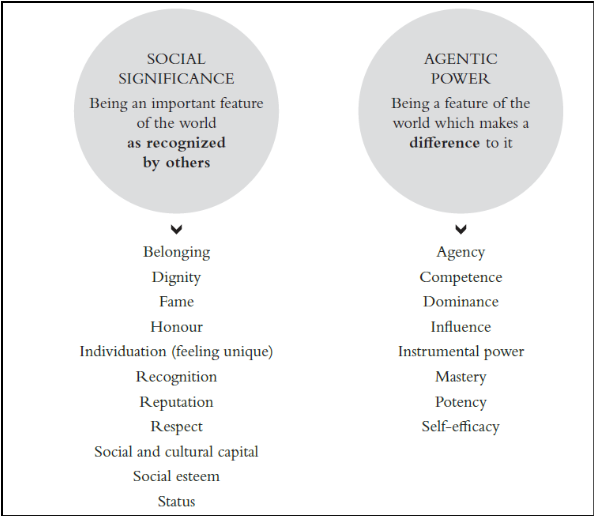
Scholars have found that the sense of mattering is universal across cultures, but the forms that it takes of course varies substantially across cultural contexts; affected by all ‘social graces’. Lee Dema’s quote at the outset of this section, for instance, highlights how the sense of mattering can be gendered: for young men, what it means to matter – to be ‘someone and something’ – is affected deeply by norms of masculinity. Young men can grapple with the question of what it means to matter as a man, sometimes with significant consequences for their lives, including for their risk of becoming a victim or perpetrator of harm.
The concept of mattering can thus prompt fruitful reflective questions for safeguarding professionals, such as:
- Within the complex social ecology of this young person’s life, where do they feel significant and consequential?
- Who matters to this young person, and who does this young person matter to? Who are they seeking to matter to, with what consequences?
- Where does this young person want to matter? Do they want to feel a significant part of their school, for instance, or have their emotionally detached from school? Within which peer groups do they want to have significance and influence?
- Which life experiences might have enhanced or diminished this young person’s sense of mattering? Does their sense of mattering seem secure and well-established, or might they be struggling with it? What might be the consequences if they’re feeling ‘desperate to matter’?
- If their sense of mattering seems ‘anchored’ in a particular relationship, group, or place, what consequences does this have for them – and for others? If a young person appears to be deriving their sense of personal value from a romantic relationship, for instance, how might this affect their vulnerability within that relationship?
Mattering – Useful Links
References
- Billingham L and Irwin-Rogers K (2022) Against Youth Violence: A Social Harm Perspective. Bristol: Bristol University Press
- Elias, M. J, Hatchimonji, D. R., Nayman, S. J. & Linksy, A. C. V. (2025) ‘ The Quest For Significance and Mattering in Education’, in A.W. Kruganski, I. Prilleltensky & A. Raviv (Eds) The Routledge International Handbook of Human Significance and Mattering, New York: Routledge, pp. 87-100
- Flett, G. (2018) The Psychology of Mattering: Understanding the Human Need to be Significant, London: Academic Press.
- Flett, G. (2022) ‘An Introduction, Review, and Conceptual Analysis of Mattering as an Essential Construct and an Essential Way of Life’, Journal of Psychoeducational Assessment, 40(1): 3-36.
- May, R. (1998) Power and Innocence, London: W. W. Norton & Company.
- Prilleltensky, I. (2014) ‘Meaning-making, mattering, and thriving in community psychology: From co-optation to amelioration and transformation’, Intervención Psicosocial, 23(2): 151-172.
Further reading and resources
Digital open-access version of Against Youth Violence chapter about mattering: https://bristoluniversitypressdigital.com/display/book/9781529214086/ch003.xml
Video of Against Youth Violence book launch: https://www.youtube.com/watch?v=s-Ccgf7MRr0
Blog connecting structural harm and mattering: https://mabdallah.substack.com/p/mattering-is-not-just-inside-peoples
Working with trauma – in development
This topic within SAIL is still in development with colleagues and partners and will be coming soon!
If you’d like to directly contribute to this section then we’d love to hear from you – whether it be providing written content, sharing research, resources being part of the ‘Talking Head Series’ – you can read more about the ‘SAIL talking head’ series here!
Working with parents, carers, family and wider networks
Safeguarding adolescents and working alongside parents
Safeguarding adolescents from exploitation and harm requires a whole-system approach. While risks often emerge beyond the family home, parents remain one of the most important allies in protecting young people. Working alongside parents can strengthen safety planning, disrupt exploitation, and ensure that safeguarding interventions are child- and family-centered rather than service-led.
This section is designed to support practitioners and multi-agency partners to engage parents more effectively in cases of adolescent or contextual safeguarding. Here you will find:
- Insights from parents on why partnership matters.
- Practical guidance on how to build trust and overcome barriers.
- Key national resources, frameworks, and toolkits.
- Examples of effective practice developed across London.
Together, these resources aim to equip you with the tools and confidence to make parents active partners in safeguarding their children.
Parent voice
Parents bring unique insight into the risks their children face beyond the home. Hearing directly from them highlights why practitioner–parent partnership is central to effective safeguarding.
In this short video, a parent shares their experience and demonstrates the difference it makes when professionals work with families rather than around them.
Multi-agency guidance: engaging parents in adolescent safeguarding
Adolescents can be at risk of harm in peer groups, schools, neighbourhoods, online, and in public places. These “extra-familial” contexts are central to exploitation and cannot be addressed by families alone. Yet parents, kinship carers, foster carers, and residential staff remain key allies in safeguarding young people. It is also important to recognise that not all families are in the same position to engage – many face their own challenges, and some may require tailored support or intervention to participate effectively in partnership work.
Research and practice consistently show that when parents are engaged as partners, interventions are more effective and sustainable (Palmer & Jenkins, 2013; Swindon Safeguarding Partnership, 2020).
Building trust with parents is not always easy, but it is essential. This guidance provides practical advice for practitioners across agencies on how to engage parents as partners in safeguarding. It sets out why engagement matters, principles to follow, barriers parents face, and practical strategies.
Parental engagement
Why parental engagement matters
• Protective factor – Parental engagement is nearly always protective. Parents and extended families can act as the ‘eyes and ears’ of professionals, spotting risk and helping to disrupt perpetrators through the intelligence they share (Swindon Safeguarding Partnership, 2020).
• Early warning signs – Families often notice sudden changes in behaviour—anger, secrecy, excessive phone use, disengagement from school—long before exploitation is confirmed. Parents in All of Us Were Broken (Missing People, 2020) described sensing something was ‘seriously wrong’ but not knowing it was exploitation until later. This highlights the need for practitioners to listen to and validate parental concerns early.
• Emotional impact – Parents affected by exploitation describe trauma, guilt, and isolation (The Cry of the Brave and Broken Hearted Parent, PACE 2019). They need support to process what is happening and clarity about their role in the safeguarding partnership.
• Contextual safeguarding lens – As Firmin (2017) argues, risks often occur outside the home, but families remain key to co-mapping and responding to those risks. Parents’ perspectives help bridge the gap between what happens inside the family and what happens in peer or community spaces.
• Peer support value – Group work in Hackney showed that parents benefit from connecting with others facing similar risks, reducing isolation and fostering collective vigilance (Contextual Safeguarding Blog, 2020)
Working with parents, kinship carers, foster carers, and residential care workers
Engaging parents, kinship carers, foster carers, and residential care workers requires sensitivity and a tailored approach. When young people live in substitute care, professionals often find that they present differently across environments — sometimes more settled, compliant, or routine-driven in care than they were at home.
While this may indicate progress, it can also create emotional tension and misunderstanding. Parents may feel that carers’ observations imply they were inadequate or to blame, while carers may not fully appreciate the complex histories, trauma, and challenges that families have faced. Residential care staff, who often work in structured environments with therapeutic frameworks, may also experience difficulty maintaining consistent communication with parents or understanding family dynamics that predate placement.
This is delicate, relational work that requires skilled facilitation and empathy. Practitioners play a vital role in bridging understanding across these caregiving relationships and ensuring that everyone involved remains focused on the shared goal of supporting the young person’s safety and development. This involves;
- Acknowledging emotional realities – validating the experiences and feelings of parents, carers, and staff without judgment.
- Scaffolding communication – creating structured opportunities for dialogue and mutual understanding between home and care settings.
- Maintaining shared focus – reinforcing that the young person’s wellbeing, safety, and identity remain the central concern.
- Joint participation – involving parents, carers, and residential staff in safety planning, reviews, and support networks.
- Repair and restoration – when relationships between families and professionals have been strained, providing restorative spaces to rebuild trust and cooperation.
Practitioners should see this not as coordination alone, but as relational safeguarding practice — helping adults around the child to work as a connected network of safety. The same principles that underpin effective engagement with parents — empathy, transparency, collaboration, and respect — apply equally to kinship carers, foster carers, and residential workers. However, approaches should always be adapted to reflect the specific care setting, the emotional context of each relationship, and the young person’s individual needs.
Principles of engagement
Working Together to Safeguard Children (2023) requires practitioners to build positive, cooperative relationships with parents and carers. Drawing on the Relational Safeguarding Model (PACE, 2014), contextual safeguarding research (Firmin, 2017), and national guidance (Beckett et al., 2017; Hackney Planning Guide, 2020), effective parent engagement is built on these principles:
- Relational partnership – Build trust and work collaboratively, not transactionally.
- Non-blaming stance – Avoid framing parents as ‘failed carers’; external risks are often beyond their control.
- Strengths-based approach – Begin with what parents are already doing well.
- Transparency and clarity – Use plain language to explain processes and expectations.
- Contextual literacy – Help parents understand risks in peer, school, and community spaces.
- Whole-family focus – Involve parents, siblings, and carers in safety planning, not just the young person.
- Trauma awareness – Recognise and respond to the emotional toll on parents and children (The Children’s Society, 2018).
Recognising complex family dynamics
While partnership with parents is a cornerstone of contextual and adolescent safeguarding, not all family contexts are straightforward. Some young people are pushed towards extra-familial harm because of adverse experiences within their families. Parents and carers may themselves be coping with acute challenges such as mental health difficulties, domestic abuse, substance misuse, or intergenerational trauma. These factors can make engagement and partnership work complex and, at times, resistant.
Practitioners should recognise that parental reluctance or resistance is often rooted in fear, shame, or feelings of powerlessness rather than unwillingness to protect their child. Establishing trust in these situations requires patience, empathy, and persistence.
It is also necessary to be clear that in some cases, parents or carers may be directly contributing to harm through neglect, emotional abuse, or active involvement in exploitative dynamics. In such circumstances, engagement strategies must be paired with clear safeguarding interventions to prioritise the child’s safety while exploring opportunities for change and family restoration where appropriate.
Practitioners should also acknowledge that the field of adolescent safeguarding encompasses multiple perspectives. There is value in maintaining this diversity of thought. Reflective practice and openness to different approaches allow professionals to hold complexity and adapt to the realities faced by children and families.
Common barriers parents face
Parents of exploited young people often describe:
- Blame and stigma – feeling scrutinised or treated as culpable.
- Isolation – believing they are facing this alone.
- Powerlessness – perceiving risks as outside their influence.
- Confusion – misinterpreting early behavioural changes as mental health or bullying.
- Conflicting advice – receiving inconsistent messages from agencies
Practitioner strategies
- Empathetic first contact – Approach with empathy and openness. Validate parents’ concerns and acknowledge their knowledge of their child (PACE, 2019). Working Together (2023) highlights the importance of respectful, cooperative engagement.
- Enable information-sharing – Parents hold vital safeguarding intelligence. The Supporting Parents to Share Information on CSE briefing paper (2016) outlines how parents can record concerning contacts, log behaviour changes, and share observations with agencies. Practitioners should provide clear, safe routes for parents to share this information.
- Use contextual tools – Tools such as What’s Happening / All Around Me and the Context Weighting Tool (Hackney, 2020) help parents and practitioners jointly identify risks across family, peer, and community contexts (Hackney Planning Guide, 2020).
Parents are not obstacles – they are essential partners in adolescent safeguarding
- Co-produce safety plans – Work with parents to develop realistic family strategies (e.g. safe routes, check-ins, trusted adults) that complement external disruption tactics (Beckett et al., 2017).
- Facilitate peer support and group work – Support parent networks and group work to reduce isolation and strengthen resilience. Examples across several London authorities show positive outcomes from parent groups and peer support networks.
- Provide advocacy & trauma support – Support parents in navigating systems, attending meetings, and accessing specialist trauma-informed services. Parents’ voices highlight the value of systemic family therapy and other therapeutic approaches that adopt a whole-family focus.
- Embed parents structurally – Evidence from PACE’s Lancashire projects shows that embedding parent participation in safeguarding teams improves trust and outcomes (Palmer & Jenkins, 2013; Shuker & Ackerley, 2017).
- Iterative review – Revisit plans regularly with parents, adapt to changing risks, and maintain consistent multi-agency messaging. Working Together (2023) requires agencies to embed continuous learning and family involvement in reviews.
Key message? Parents are not obstacles – they are essential partners in adolescent safeguarding. By validating their experiences, enabling them to share information, and co-producing safety plans, practitioners can strengthen both family resilience and system-wide responses to exploitation.
Parenting through adversity (11-18) practice guide
The Parenting Through Adversity (11–18) Practice Guide shows how evidence-based parenting interventions can transform outcomes for families facing multiple and complex challenges.
Families experiencing adversity – including poverty, substance abuse, or parental conflict – often face overlapping challenges such as strained family relationships, parental stress, and challenging adolescent behaviour.
The evidence generated that underpins this new Guide shows that parenting support can help to:
- Improve emotional wellbeing for children and young people to help reduce the likelihood of low mood, social withdrawal and anxiety
- Strengthen parental confidence and mental health, enabling parents to provide more stable, nurturing environments
- Reduce behaviours that challenge among young people by creating more stable and secure home environments in which children and young people can grow and develop.
Innovative practice examples in London
Practitioners need access to reliable, up-to-date resources when supporting children at risk of exploitation.
This section brings together national frameworks, toolkits, and specialist organisations as well as examples of practice from within London
Coffee with a Copper
Case Study: Building Trust Through Conversation
A 15-year-old boy known to the Integrated Gangs Unit for habitual knife carrying and hostility toward police attended a Coffee with a Copper session with his support worker and a local officer. The session focused on informal conversation — not enforcement — allowing them to discuss shared interests and everyday life. This open exchange broke down barriers and built mutual respect. A month later, when the boy was arrested for carrying a knife, the same officer helped de-escalate the situation using the trust built earlier. The incident ended safely, and the young person later re-engaged with youth support services.
Impact:
– Increased trust and communication between young people, parents, and police.
– Reduced hostility and fear of authority.
– Improved collaboration between families, practitioners, and law enforcement.
– Safer crisis de-escalation through relationship-based engagement.
About the Initiative
Coffee with a Copper is a community-based engagement model developed in Tower Hamlets to strengthen trust between young people, parents, and local police. It offers a relaxed, neutral space for conversation, helping to humanise both sides and rebuild confidence in safeguarding systems.
How to Implement
1. Partnership and Planning – Secure buy-in from Police, Children’s Services, and Youth Safety Teams.
2. Select Participants – Focus on young people and families with low trust or strained relationships with police.
3. Choose the Setting – Use neutral, community-based venues such as cafés, libraries, or youth hubs.
4. Facilitate Dialogue – Keep discussions curiosity-driven and solution-focused. Avoid enforcement topics.
5. Reflect and Review – Gather participant feedback and share learning to embed good practice.
Credit and Acknowledgement
Tower Hamlets Council (2024). Coffee with a Copper: Community Engagement and Safeguarding Initiative. Pioneered by Khalid Sugelle, Contextual Safeguarding Specialist, whose professional and lived experience informs his work engaging young people at risk of exploitation and violence.
Who’s in Charge?
Case Study: Rebuilding Confidence and Connection
A mother was referred to the Who’s in Charge? (WiC) programme to help manage her teenage son’s aggression and verbal abuse. She described feeling fearful, isolated, and powerless, unable to enforce boundaries or communicate effectively. Through facilitated sessions and peer support, she began exploring boundary-setting, assertive communication, and the effects of trauma on family relationships.
“I focused on one thing at a time — communication was my priority. Once I could get my view across and take his in, everything began to change. He still pushes boundaries, but there are no missing episodes now, and he always comes home before curfew.”
Impact:
– Increased parental confidence and wellbeing.
– Clearer communication and consistent boundaries.
– Reduction in missing episodes and risky behaviours.
– Improved family relationships and emotional safety.
About the Programme
Who’s in Charge? is a structured, therapeutic-educational programme supporting parents, kinship carers, and guardians managing challenging or violent adolescent behaviour. Delivered over six sessions (two per week for three weeks), it blends reflection, group discussion, and practical tools to help parents move from fear and guilt toward confidence and control.
How to Implement
1. Identify Participants – Parents, kinship carers, or guardians managing high-conflict adolescent behaviour.
2. Prepare Facilitators – Skilled in both safeguarding and therapeutic approaches.
3. Create Emotional Safety – Use neutral, inclusive spaces with clear ground rules.
4. Deliver Six Structured Sessions – Combine reflection, group exercises, and practical tools.
5. Embed Learning – Integrate insights into family safety planning and ongoing professional support.
Credit and Acknowledgement
Tower Hamlets Council (2025). Who’s in Charge? Parental Empowerment and Relationship-Based Safeguarding Programme. Delivered by multi-agency practitioners in partnership with Children’s Social Care and Early Help. Adapted for contextual safeguarding by Khalid Sugelle, Contextual Safeguarding Specialist.
Working with parents, carers, family and wider networks – Useful Links
Featured resources include:
- Contextual Safeguarding Implementation Toolkit – resources for working with families, tools for identifying extra-familial risks.
- PACE website – case studies and the Relational Safeguarding Model.
- Podcast: Parents’ Views on Contextual Safeguarding – Lisa Thornhill speaks with parents about their experiences.
- The Children’s Society – Trauma and Young People – guidance for parents and professionals.
- Missing People – All of Us Were Broken – family experiences of child criminal exploitation.
- Swindon CE Practitioner Resource – practitioner guidance on child exploitation.
Practice Tools and Resources
- The Children’s Society: Trauma and Young People
- Ivison Trust – We support families affected by child exploitation.
- Parenting Through Adversity (11–18) Practice Guide
References & Acknowledgements
- Beckett, H., Holmes, D., & Walker, J. (2017). Child Sexual Exploitation: Definition & Guide for Professionals.
- Department for Education (2023). Working Together to Safeguard Children.
- Firmin, C. (2017). Contextual Safeguarding: An overview of the operational, strategic and conceptual framework.
- Hackney Council & University of Bedfordshire (2020). Assessment and Intervention Planning Guide.
- Missing People (2020). All of Us Were Broken.
- PACE (2014). Relational Safeguarding Model.
- PACE (2019). The Cry of the Brave and Broken Hearted Parent.
- Palmer, T., & Jenkins, P. (2013). Parents as Partners in Safeguarding Children: An evaluation of Pace’s work in four Lancashire CSE teams.
- Scott, S., & McNeish, D. (2017). Supporting Parents of Sexually Exploited Young People: An Evidence Review.
- Shuker, L., & Ackerley, E. (2017). Empowering Parents: Evaluation of Parents as Partners in Safeguarding Children and Young People in Lancashire Project.
- Swindon Safeguarding Partnership (2020). Child Exploitation Practitioner Resource.
- The Children’s Society (2018). Trauma and Young People: A Guide for Parents and Professionals.
- Contextual Safeguarding (2020). Working with Parents to Address Extra-Familial Harm.
- Contextual Safeguarding Blog (2020). “You are caring about me, I’m caring about you…”.
- Supporting Parents to Share Information on CSE (2016). Briefing Paper – (PACE; copy available via PACE resources on request).
Reflective practice and supervision – in development
This topic within SAIL is still in development with colleagues and partners and will be coming soon!
If you’d like to directly contribute to this section then we’d love to hear from you – whether it be providing written content, sharing research, resources being part of the ‘Talking Head Series’ – you can read more about the ‘SAIL talking head’ series here!
Working with risk, vulnerability and meeting needs in context
Age of opportunity – adolescence as a distinct developmental stage
Adolescence is a time of tremendous potential, growth and change (WHO, 2016). Physical, social, psychological and neurological changes are a distinct part of adolescence, designed to prepare young people to take up a stable, independent role in society. It is a time of profound brain development (Anchor to Adolescent Brain development section) particularly in areas of the brain associated with decision making, impulse control and emotion regulation. During adolescence, the reward centre of the brain is particularly active and sensitive.
During this stage, the reward centre of the brain is particularly active and sensitive. This heightened sensitivity to reward, combined with the ongoing maturation of the brain regions responsible for planning and self control impacts on a young person’s ability to fully consider risks. At the same time young people are especially susceptible to the influence of others, taking greatest influence from their peers- whose own brains are also developing, which can increase the likelihood of engaging in risk taking behaviour and increase their vulnerability.
Adolescence is also considered to be a critical period in the development of identity. How we (personally, professionally and as a system) respond when a young person makes choices that increase their risk of harm- to themselves or others, can have a lasting impact on how they see themselves, how they think and how others will see them. If we define young people by their most difficult moments, without regard for context, their strengths or capacity for change, we risk stigmatising them. It is important to respond in a way that does not label young people but rather enables them to learn through their experiences.
Structural harm – beyond the individual by Luke Billingham, Youth worker, Hackney Quest & Researcher, Open University
‘Structural inequalities do not exist “out there”, but are part of our internal worlds, entrenched in the fine grain experiences of those on the margins… structural inequalities operate continuously in their lives, working to devalue these young people and inhibit the development of meaningful selfhoods’ – Bakkali 2019: 1317, 1329

The fundamental premise of ‘structural harm’ is that children and young people’s wellbeing is not only harmed directly by other people – they can also be harmed by institutions, policies, systems and social norms. If we only consider the risks or harms that young people encounter in their interactions and relationships with other people, we miss the ways in which their need fulfilment and subjective wellbeing can be undermined by factors which go beyond the actions of particular individuals.
To take an obvious example, children and young people can be harmed by their housing situation, if they live in overcrowded or poor quality accommodation, or experience multiple moves between temporary housing placements. Those housing issues are not the simple product of other people’s actions: though their causes will vary in each case, they are affected by, for instance, national and local policy regimes in relation to housing; the regulation of property development, renting and temporary accommodation; complex economic forces; and intergenerational and intersectional inequalities. Hence, if a child or young person’s wellbeing is damaged by their housing situation, this can be deemed a structural harm, as it derives from structural factors, not individual actions.
Other examples of structural harms could include poverty; systemic or institutional racism, misogyny or disablism; or injurious experiences in the Criminal Justice System, for instance. Designating something a structural harm of course involves professional judgement – both evaluating the degree to which it has harmful effects, and assessing the extent to which the harm derives from institutional, systemic or policy factors. The distinction between an interpersonal and a structural harm is not always clear-cut: an act of interpersonal physical violence committed by a man against a woman or girl, for instance, could in many cases be deemed both an interpersonal act and one which was affected by misogynistic societal norms, and thus driven, at least in part, by structural factors.
It is complex, therefore, to assess whether, why and how a particular experience of harm could be deemed interpersonal or structural. This does not diminish the value of exploring this question, however – it enhances it. Considering the potential impact of structural harms on children and young people encourages safeguarding professionals to take a more holistic view of the factors, forces and experiences which may be undermining a child or young person’s wellbeing.
The idea of structural harm can also support policy work aimed at improving young Londoner’s lives: if we are to enhance children and young people’s lives in our city, that does not just require us to attend to their direct interactions and relationships within and beyond their families, it also requires us to consider the harmful role of structural factors such as housing, poverty, and structural discrimination. These structural factors are often both harmful in themselves, and contribute to the precipitation of interpersonal harms. The latest developments in contextual safeguarding are drawing attention to this: both intra-familial and extra-familial harms can have both interpersonal and structural components.
In addition, the idea of structural harm can help safeguarding professionals to move away from an unhelpfully static notion of biographical ‘risk factors’, towards an exploration of the effects of structurally harmful experiences. Poverty, for instance, is not just a statistical fact which reduces opportunities or enhances generic ‘risk’ among those affected by it – in a profoundly unequal city such as London, poverty is not just a ‘deficit of goods’ but ‘a state of humiliation’ (Young 2007: 54).
Numerous scholars use the term ‘structural humiliation’ to describe the demeaning, belittling effects of structural harms (see e.g. Sayer 2005, Young 2007, White 2013). As Bakkali puts it in the quote which opened this section – structural inequalities are not just background factors ‘out there’; but affect young people’s ‘internal worlds’, altering the formation of their selfhood.
(In my book Against Youth Violence, co-authored with Keir Irwin-Rogers, we focus especially on the effects of structural harm on young people’s sense of mattering – see the SAIL section on mattering <here>).
In a profoundly unequal city such as London, poverty is not just a ‘deficit of goods’ but ‘a state of humiliation’
(Young 2007: 54)
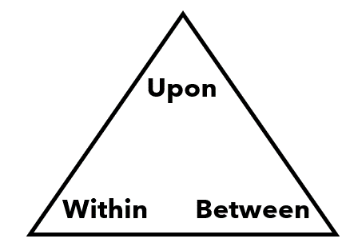
Structural harms which act ‘upon’ individuals and communities are often interwoven with both psychological tensions ‘within’ people, and interpersonal harms ‘between’ them – this ‘triangle’ of structural, intrapersonal and interpersonal harms has been referred to by some scholars as ‘triple violence’ (see e.g. Billingham, Gillon, Corbett and Fraser, forthcoming).
Wroe and Pearce (2022: 89) use the term ‘implosion of harm’ to describe the ways in which interpersonal violence or harm within structurally marginalised neighbourhoods can be entwined with the systemic and structural forces which damage the wellbeing of individuals and communities within those neighbourhoods.
Structural harms – Useful Links
References
- Bakkali, Y. (2019) ‘Dying to live: Youth violence and the munpain’, The Sociological Review, 67(6): 1317-1332.
- Billingham, L. , Gillon, F. Corbett, I. & Fraser, A. (forthcoming) ‘Triple Violence: Structural, psychosocial and interpersonal harm in Glasgow and London’
- Billingham L and Irwin-Rogers K (2022) Against Youth Violence: A Social Harm Perspective. Bristol: Bristol University Press
- Sayer, A. (2005) The Moral Significance of Class, Cambridge: Cambridge University Press
- White, R. (2013) Youth Gangs, Violence and Social Respect, London: Palgrave Macmillan.
- Wroe, L. and Pearce, J. (2022) ‘Young people negotiating intra- and extra-familial harm and safety: social and holistic approaches’, in D. Holmes (ed) Safeguarding Young People, London: Jessica Kingsley, pp. 83-110.
- Young, J. (2007) The Vertigo of Late Modernity, London: Sage
Further reading and resources
Digital open-access version of Against Youth Violence: https://bristoluniversitypressdigital.com/display/book/9781529214086/9781529214086.xml
Video of Against Youth Violence book launch: https://www.youtube.com/watch?v=s-Ccgf7MRr0
Podcast episode focused on Against Youth Violence: https://www.transformingsociety.co.uk/2023/02/09/podcast-how-should-we-respond-to-youth-violence/
Blog connecting structural harm and mattering: https://mabdallah.substack.com/p/mattering-is-not-just-inside-peoples
How to work with risk, vulnerability and meet needs
Child First
Applying Child First principles when working with risk and vulnerability is essential. A Child First approach does not mean overlooking or minimising a young person’s risks or vulnerabilities. Instead, it involves understanding these issues within the broader context of their development, experiences, and needs.
This perspective enables responses that prioritise safety, wellbeing, and positive long-term outcomes.
Working in a way that seeks to understand the whole child – their strengths as well as their needs – can increase self-awareness, support resilience, and foster a sense of hope.
You can read more about Child First in the Foundations section of SAIL.
Understanding risk
Understanding risk is a complex and dynamic process. It requires consideration of multiple forms of harm, including risk to self and risk to others, and an appreciation of how these can be interconnected.
For example, if there are concerns that a young person is carrying a weapon, practitioners should consider:
- the risk to others, including any specific individuals or groups, and
- the risk to the young person themselves, such as physical harm or the longer-term impact of involvement in harmful or criminal behaviour on their future opportunities and potential.
When a young person engages in harmful behaviour, it is important to look beyond the behaviour to explore what may be driving it. This includes examining push factors—pressures that increase risk—such as:
- substance use
- peer influence
- mental health difficulties
- parental mental health
- need for belonging
- financial pressures
Addressing the unmet needs that may underlie harmful behaviour is a key part of planning effective intervention with young people and their families/carers.
Equally important are the pull factors – influences that draw a young person away from harmful behaviour. These are often protective factors that should be strengthened through intervention, such as
- access to positive activities
- pro-social role models and supportive networks
- engagement in education, training, or employment
Assessing risk
Various tools can be used to collect, organise and interpret information about a young person’s risk, needs, and vulnerabilities. They can help to understand, specify and rate the likelihood of harm. These tools can range from quick to administer screening tools to more comprehensive structured risk assessments.
The exact tools used will be informed by the presentation of the young person and what specifically you are seeking to understand about their behaviour, circumstance, risks and/or vulnerability. Some may be evidence informed, others may be more rigorously validated. The specific tools used will also be dependent on the experience and role of the practitioner and the purpose of their involvement. For example a Child and Family Assessment will be completed when a child’s safety or welfare is being considered by social care. An ASSET Plus would be conducted where the young person is open to the Youth Justice Service. Where assessment tools are used to inform decision making (rather than sense making), it is important to ensure that validated tools are used, completed by appropriately trained practitioners and quality assured in accordance with local practices.
Whatever assessment methods are used, professional curiosity and judgement, supported through regular supervision and case discussion is integral to understanding what might be happening for a young person and ultimately what might be needed to promote their safety and wellbeing. It is important to be able to step back from what is in front of you to ensure that you are able to approach your curiosity in a well-considered, informed way, remaining alert to personal and professional blind spots or biases.
Screening tools
Screening tools are brief, structured instruments that can help to identify the extent to which a young person may be at specific risk. As they are designed to screen for the presence of risk factors, they aid understanding about “what” the problem may be, rather than helping to understand why the young person may be at increased risk. Screening tools are therefore most helpful to guide decisions about next steps including further assessment and appropriate support. The type of screening tools used will be dependent on your role, your organisation and the young person’s presentation. Some screening tools that you might come across in your work include;
- Child Exploitation Screening Tool- An example of the Risk and Harm Screening Tool used in Tower Hamlets can be found here
- Early Help screening Tool
- Mental Health Screening Questionnaire Interview for Adolescents (SQUIFA)
- Comprehensive Health Assessment Tool (for young people entering custody)
- Domestic Abuse, Stalking and Honour Based Violence assessment tool (DASH) Young person’s version can be found here
Structured Assessment Tools
Assessing risk, need and vulnerability among young people is complex. Approaches based solely on checklists, algorithms, or unstructured professional judgement cannot fully capture the dynamic nature of young people’s experiences.
Structured assessment tools such as the Children and Families Assessment and Graded Care Profile, offer a more robust approach. They provide practitioners a framework to gather and review information in a systematic, organised and consistent way, to inform analysis and support evidence based judgements.
Structured Risk Assessment Tools
Taking a structured approach to understanding risk and vulnerability helps practitioners identify:
- push factors (influences that increase likelihood of harmful behaviour) and
- pull factors (influences that reduce likelihood of harmful behaviour)
Structured risk assessment offers a framework that brings together evidence, analysis and professional insight to support balanced, child-centred decisions. These tools help identify both the likelihood and seriousness of harm and guide what actions are needed to keep the young person and others safe. The specific tools used will depend on the young person’s circumstances and the service supporting them. Whatever the context, it is vital that professionals share relevant information and work collaboratively towards a shared plan informed by the overarching assessment.
Commonly used structured risk tools for young people include:
- AssetPlus – used by the Youth Justice System in England and Wales for any young person open to Youth Justice services.
- SAVRY (Structured Assessment of Violence Risk in Youth) and SAPROF-YV (Structured Assessment of Protective Factors for Violence – Youth Version) – used to assess risk of violence or anti-social behaviour and identify protective factors.
- AIM2 – used to assess risk related to harmful sexual behaviour.
Specialist training is required to use these tools competently.
Forensic Child and Adolescent Mental Health Services (FCAMHS) can provide specialist assessments for young people who are at high risk of offending or who pose significant risk of harm to themselves or others. To find details of your local FCAMHS team, please click here.
Making sense of risk, need and vulnerability through formulation
Formulation is a structured method, which can help to embed a strengths based approach by moving beyond what a young person has done, to understanding what is happening and why. Through this ongoing collaborative process, information is taken from a range of sources, including the young person, their family or carers and professionals within their network and considered alongside relevant theory and evidence based knowledge. This can help to make sense of behaviour in a way that identifies push and pull influences and integrates both risk and protective factors. This can then meaningfully inform what needs to happen to reduce risks and build resilience.
There are several formulation models, that offer different frameworks for understanding a young person’s experience.
The 5 P’s formulation model provides a simple, accessible framework which can help to understand;
- What are we worried about?
- Why this young person?
- Why now?
The 5 key areas explored through the 5 P’s model are described in the table below;
| THE 5 P’s | DEFINITION |
| PRESENTING CONCERNS | CURRENT concerns or things people worry about. |
| PREDISPOSING | Factors that may have led to how the person thinks, feels and behaves currently or made them more vulnerable to experience these current difficulties (e.g. life events, attachment difficulties, neurodivergence). |
| PRECIPITATING | Factors that may trigger present difficulties or a behavioural response. |
| PERPETUATING | Factors maintaining problems once begun (e.g. poor relationships, limited coping mechanisms, unresolved trauma). These are sometimes the unintended consequence of attempts to cope with a problem (i.e. avoiding a certain area, smoking to manage stress.) |
| PROTECTIVE | Positive strengths and interests (e.g. supportive family, cultural influences) |
Collaboration and Shared Understanding
Involving the young person and those involved in their care is an integral part of the collaborative formulation process. The following diagram can be used to guide conversation and support a shared understanding of the young person’s experiences, the interplay between the different factors and what would be helpful to effect positive change. It can help identify not just risks and needs, but also the protective networks and relationships that can be strengthened to promote resilience.
It is equally important to consider systemic factors such as family, community, education and social environments that may be causing or maintaining difficulties as well as protective networks and relationships that can support intervention and build resilience. Recognising these wider influences ensures that interventions target both individual and contextual needs.
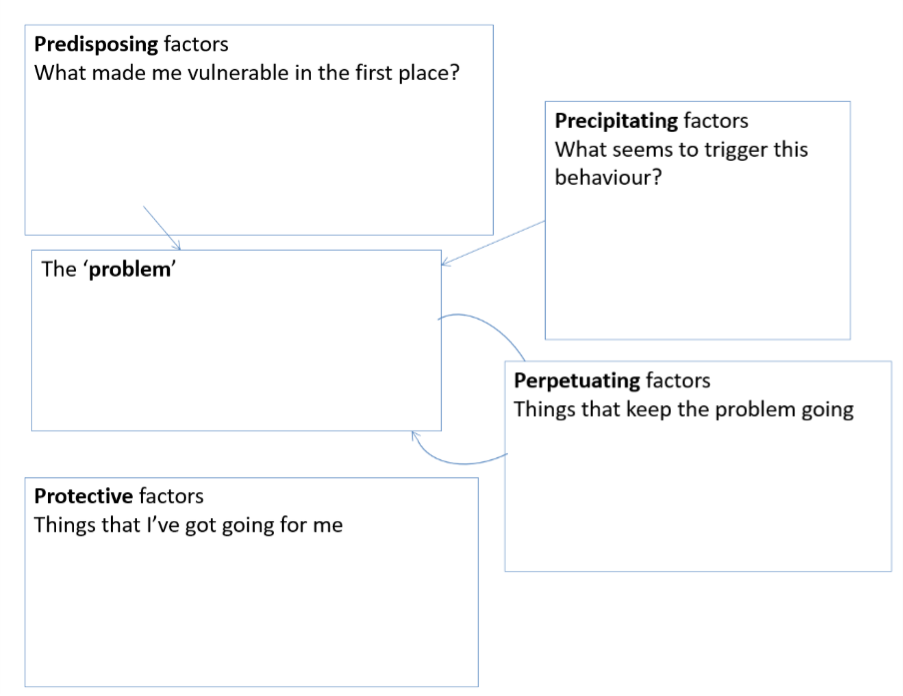
Alongside the young person’s perspective it is important to ensure that formulation is grounded in theory and evidence and developed through a reflective process. Formulations should therefore be considered and informed through supervision. Specialist formulation training is recommended to support effective integration of this approach into practice.
Talking about risk, vulnerability and need
Talking about risk and vulnerability in our work with young people can feel daunting for a number of reasons. Professionals may worry about unintentionally labelling a young person, undermining their strengths or contributing to a narrative that doesn’t see the “child first”. You might avoid talking about your concerns directly for fear of provoking a difficult emotional response or damaging your relationship with them.
However, involving young people and their carers in developing an understanding of their risks, needs and or vulnerability is an integral part of any assessment, formulation and subsequent intervention. These conversations can also provide an opportunity to strengthen your relationship, bring sense of relief, empowerment and hope for young people who may be feeling unsafe and stuck. Providing a safe, non judgemental space for reflection can help them to explore their situations, how they are feeling and opportunities to seek safety.
Top tips for talking with young people about your concerns;
- Make good use of supervision to consider your own feelings and plan and rehearse your approach
- Be curious and encourage young person to be curious about their experiences too. Trying to understand what is happening collaboratively can help to avoid blaming, labelling and stigmatising a young person
- Listen deeply to their perspective. This can help to unlock new ways of thinking about the problem and what would help to support safety.
- Be sure to identify and build on strengths. This can help to empower the young person and identify opportunities for a “way out” of unhelpful and/ or unsafe situations
- Help young person to understand how their concerns may impact on their own goals and aspirations
- Help them to understand concerns within the context of their development, contexts and circumstances
- Consider how to adapt your approach with consideration for their individual processing and communication preferences and needs
- Acknowledge and consider how a young person’s culture, beliefs, and social structures will influence how they perceive and respond to risk
Within the assessment and planning tools that guide you in your work with young people, there is likely to be an emphasis on incorporating the voice of the child. It is important to capture what the young person is concerned about alongside what is going well and what their wants and wishes are. The Checkpoint tool was developed as part of the London Young People Study to understand a young person’s perception of their risk and vulnerability. There is also a “by proxy” measure available that considers perceptions of those around the young person. Practitioners involved in the London Young People Study were keen to use the Checkpoint scale to open up conversations about risk and vulnerability with young people. This allows for consideration about where there might be alignment or differences in what the young person and the trusted adults around them were worried about. The Checkpoint scale can also be used as a measure to track changes and progress over time.
Making sense of risk need and vulnerability through formulation – Useful Links
Balancing a young person’s wishes with their best interests
Working with young people at risk requires a delicate balance between a young person’s right to participate and express their views with the duty to safeguard and promote their welfare. The Children’s Act 1989, the Working Together to Safeguard Children Guidance and the UN Convention on the Rights of the Child all stipulate that the Child’s welfare is the paramount consideration. However, these same frameworks emphasise the importance of the child’s wishes and feelings at every stage of assessment and intervention.
Prompts to support decision making
The following reflective questions might be helpful to consider when balancing the best interests of the young person with their wants and wishes;
What are the young person’s wishes?
- How have you tried to ascertain these in a way that aligns with the young person’s processing and communication preferences and needs?
- Why are these important to the young person?
Does the young person understand their situation and the choices available to them?
- For under 16s: Consider whether the young person is Gillick competent—that is, whether they have sufficient understanding and intelligence to fully comprehend the nature, risks, and consequences of the decision in question.
- Gillick competence (and the related Fraser Guidelines in healthcare settings) help determine when a young person under 16 can consent to their own treatment or decisions without parental involvement.
- For further information, see the NSPCC guidance on Gillick competence and Fraser Guidelines.
- For young people aged 16 and 17- does the young person have mental capacity in accordance with the principles of the Mental Capacity Act (2005).
- Mental capacity is both time and decision specific, which means that they may have capacity to make some decisions but not others, and this may change over time.
- Within the Act, capacity is assumed unless proved otherwise. This means that someone over the age of 16 can;
- Understand the information relevant to a decision
- Retain the information for long enough to make the decision
- Weigh up the information as part of the process of making a decision
Communicate their decision
- If a young person does not have capacity, any decision made on their behalf must be in their best interests, following the framework set out in the Mental Capacity Act.
- Where there are concerns that a young person is being exploited how does this impact on their understanding and ability to make independent and informed choices?
What is in the best interests of the young person?
- What tools, assessments or frameworks have you used to inform your judgement?
- Where might your own biases or blind spots influence your opinion?
- How have you used supervision to consider this?
- How have you involved the young person’s network (family, carers, and multi-agency partners) in developing a shared understanding?
- Where are there opportunities to align with the young person’s wishes whilst still prioritising their safety and wellbeing?
How will you communicate this to the young person?
- How can you explain the decision in a way that acknowledges the unique processing and communication needs of the young person?
- Who else can support young person to understand what is happening and why?
- How can you keep the conversation open, allowing for review and change as the situation develops?
Balancing a young person’s wishes with their best interests – Useful Links
For further information, see the NSPCC guidance on Gillick competence and Fraser Guidelines.
Supporting the workforce
Working with vulnerable young people who are at risk and engaging in risky behaviour can expose professionals to distressing and traumatic experiences. The impact of vicarious trauma can have a harmful and detrimental impact on individuals and organisations, from burnout to issues with workforce sickness and retention. It is therefore important to ensure that there is appropriate support for staff who are exposed to trauma through their work.
Looking Out for Yourself and Each Other
Different traumas can impact on people in different ways. A single traumatic event, a trigger linked to past experiences or ongoing exposure can have a profound impact on an individual’s wellbeing. There are a number of signs which may suggest that someone is affected by their traumatic exposures. This includes;
- Emotional changes including feelings of anger, irritability, sadness, numbness, detachment, compassion fatigue
- Cognitive changes including cynicism, pessimism, loss of hope
- Behavioural responses including withdrawal, avoidance, burnout, hypervigilance, difficulty maintaining professional boundaries
- Physical symptoms including fatigue, exhaustion, headaches, racing heart, sleep difficulties
Preventing and Responding to the Impact of Trauma
Caring for those who care for others is a professional and ethical necessity that sustains the quality of practice and ensures the best outcome for young people. There are a number of ways that individuals and organisations can help to prevent and respond to traumatic exposures to support staff wellbeing. This includes;
- Access to debriefs following critical or distressing incidents
- Opportunities for peer connection and support
- Reflective Supervision to consider the impact of work on self
- Appropriate workload management to enable appropriate work/ life balance
- Prioritising regular breaks and scheduling and protecting annual leave to support recovery and maintain wellbeing
- Building resilience through relevant training and opportunities for self care
- Access to employee assistance support or other counselling and wellbeing services
Adolescent harm – inside and outside of the home
Adolescent safeguarding is often thought of as the work of keeping young people safe outside of the home. The reasons for this are, in part at least, because as a discipline (or perhaps sub-discipline) it has emerged as a distinction from, and reaction to, traditional family-centric safeguarding which has been principally concerned with parents’ capacity to protect their children. Harms outside of the home often confound this child protection paradigm and have required the development of bespoke approaches to extra-familial safeguarding.
This interest in safeguarding outside the home has been supported by a re-conception of a range of behaviours / harms from being matters of individual teenage choice, such as substance misuse, offending, and sexual activity, to being increasingly viewed through a safeguarding lens. In doing so, activities of young people outside the home have increasingly come within the remit of child/adolescent welfare services (rather than being exclusively the preserve of community safety, public health or youth justice).
In the London Adolescent Safeguarding Oversight Board (LASOB) the multi-agency governance group for this work in London, we have always been keen to promote a rounded understanding that adolescent safeguarding requires attention to both the experiences of young people within their family homes and outside of them, recognising that the two are intimately linked. Harms in the home often act as push factors, which mean young people who have already had adverse experiences in the family are more vulnerable to further adversity outside of the home. Neglect, for example, is associated with a range of adverse outcomes such as offending and anti-social behaviour and substance misuse. A lack of parental supervision means some young people have less monitoring and / or care for their safety when they are outside of the home, and feeling uncared for at home can propel adolescents towards those who appear to care for them in what may become unhealthy and exploitative relationships.
Beyond this interplay between intra and extra familial harm, two other critical dimensions of adolescent safeguarding are recognised and given attention by LASOB. The first of these is the ‘system effect’ in inadvertently increasing the risk posed to young people through decisions made by professionals and interventions which follow (or don’t follow) from these. Examples of adverse systems effects are:
- School exclusions and part-time timetables which reduce the protective impact of education
- Placement moves which remove young people from supportive networks and place them in alien environments
- Incarceration in damaging, degrading institutions
- Removal or denial of support because of time limits, threshold decisions and resource allocation
- Multiple stop and search encounters which can undermine trust in the police and reduce young people’s reliance on police as a safeguarding agent
- Fractured pathways which lead to multiple referrals and stories re-told and traumatic experiences re-visited many times
Understanding our contribution within a safeguarding system, which can inadvertently reduce young people’s safety, is a key component of our role as reflective practitioners and systems leaders.
Our child protection system focuses on the role of parents and families, despite the fact we know structural factors such as poverty, class, race, disability and gender are critical mediators of harm, both within the home and as experienced outside the home.
The final dimension of adolescent safeguarding which is emphasised within the work of LASOB and promoted within SAIL is the importance of recognising structural (or social) harms. These are the forces acting on individuals which are beyond individual control. Our child protection system focuses on the role of parents and families, despite the fact we know structural factors such as poverty, class, race, disability and gender are critical mediators of harm, both within the home and as experienced outside the home. In this regard the distinction between intra and extra familial harms is somewhat redundant, as these structural forces and inequities impinge heavily on both contexts.
For a discussion of the relevance of structural harms to adolescent safeguarding see Luke Billingham’s piece on Structural Harms and ‘Young People Negotiating Intra and Extra Familial Harm and Safety: Social and Holistic Approaches’ Lauren Wroe with Jenny Pearce in Safeguarding Young People, Edited by Dez Holmes 2022. In this work Wroe and Pearce propose a holistic and structurally informed framework for understanding the intersections between intra-familial and extra-familial harm.
You may be interested in other sections within SAIL such as: Contextual Safeguarding, Safeguarding children who move across local authority boundaries, Multi Agency Child Exploitation (MACE) arrangements in London
Adolescent neglect by Nigel Chapman, Director of Children’s Services in Brent and Safeguarding Policy Lead for the Association of London Directors of Children’s Service

Adolescent neglect often goes unseen and unaddressed. A mistaken belief that teenagers are more resilient and more able to cope with neglectful parenting than younger children means that we too often fail to respond in ways which prevent or ameliorate the harm young people experience. While neglect rarely starts in adolescence, more often being a continuation and compounding of experiences from a much earlier age, the impact of neglect through the adolescent period can be profound and last long into adulthood. As research by The Children’s Society (2016) emphasises:
“Adolescents are not too old to be neglected, and for many adolescents the neglect that they experience is simply a continuation of their previous experiences. Adolescents do not grow out of being neglected. On the contrary, the impacts of their earlier difficulties are likely to worsen in adolescence.”
Neglect can take a number of forms – physical, emotional, educational, supervisory – often overlapping with each other and with other types of harms. Neglect for an adolescent can be particularly acute because of the recognition by the young person (which may be lacking in a younger child) that they are being neglected and the impact this has on identity formation and sense of self and self-worth.
The London Safeguarding Children’s Partnership has agreed a focus on increasing the profile, improving the identification, and raising the quality of practice in relation to neglect as one of its three key priorities. Within this work we are determined to ensure adolescent neglect gets the attention which it has historically lacked.
There are gaps in research into the lived experience of neglected adolescents and the impact and outcomes for these young people, as well as gaps in our practice responses. Neglect is often related to a range of other adverse teenage experiences, both of other harms within the home such as physical, sexual and emotional abuse, and extra-familial harms including exploitation, substance misuse and offending. Typically, it is the externalising behaviours which attract attention and a response, rather than underlying issues relating to neglect.
One of the mechanisms that the London Safeguarding Children’s Partnership will use to improve practice in relation to teenage neglect is through building resources and sharing expertise through SAIL and its communities of practice. The resources listed below provide an important starting point as a baseline for working with teenage neglect, but we want to build upon these to ensure we are confident that we are seeing neglect where it occurs and that we know how best we can respond in order to both prevent harm and to aid young people’s recovery.
Adolescent neglect – Useful Links
Luton SCB and The Children’s Society 2018, Briefing for Professionals on Adolescent Neglect and full report ‘Thinking About Adolescent Neglect’. Both reports provide an excellent resource for considering the multi-dimensional nature of adolescent neglect and the practice context for developing effective responses.
THINKING_ABOUT_ADOLESCENT_NEGLECT (1).pdf
BRIEFINGFORPROFESSIONALSONADOLESCENTNEGLECT.pdf
Understanding Adolescent Neglect: Troubled Teens, Phil Paws, The Children’s Society 2016. Primary research from TCS.
troubled-teens-executive-summary.pdf
Teenage Neglect: Systematic review, Royal College of Paediatrics and Child Health 2022. This review uses a ‘rapid review’ methodology to evaluate the scientific literature the self-reported features of adolescents aged 13 – 17 completed years who are experiencing any form of neglect including physical, emotional, supervisory, medical, educational or nutritional and / or emotional maltreatment (EM) published up until March 2022
Teenage neglect: systematic review – RCPCH Child Protection Portal
‘Young People Negotiating Intra and Extra Familial Harm and Safety: Social and Holistic Approaches’ Lauren Wroe with Jenny Pearce in Safeguarding Young People, 2022
Lauren Wroe and Jenny Pearce examine the relationship between intra-familial harm and neglect and extra-familial harm. In doing so they propose a holistic and structurally framework for understanding the intersections between intra-familial and extra-familial harm.
Working with domestic abuse
Domestic abuse and young people
Young people can experience domestic abuse in a multitude of ways. They can:
- Witness domestic abuse in the family home and may be directly victimised by the perpetrator of that abuse.
- They can also experience domestic abuse in their own intimate partner relationships.
- They may demonstrate harmful behaviours themselves, towards partners or family members
(Safe Young Lives : Young people and domestic abuse 2018, SafeLives)
Often young people will experience domestic abuse in more than one of these ways. NSPCC data shows that for those accessing specialist support who are in an abusive intimate relationship, 40% had also been a witness to domestic abuse, and 34% had been harmed as part of their exposure to domestic abuse. (NSPCC).
As the SAIL section on intra and extra familial harm makes clear there are also significant overlaps between domestic abuse (in all its forms) and other types of harms within and outside of the home. .
Young people experiencing domestic abuse within the family home
Experience of domestic abuse is identified as a form of child abuse in the Children Act 1989 (as amended in 2004) and since the passing of the Domestic Abuse Act 2021 children are recognised as victims of domestic abuse in their own right rather than just witnesses.
Domestic abuse can be a profoundly adverse childhood experience with both immediate and life lasting impacts. For information on the effects of domestic abuse on children and young people and the signs to look out for see: Effects of domestic abuse on children | Barnardo’s
SafeLives estimates that as children start primary school, there will be at least one child in every classroom who has lived with domestic abuse since they were born. The NSPCC estimates 1 in 5 children in the UK will ‘witness’ domestic abuse. Domestic abuse is the most common factor identified at the end of social work assessments for children deemed with 28% of assessments in London (between 2020-25) identifying domestic abuse as a factor. Domestic abuse was also the most common family characteristic found within Serious Case Reviews (Dickens et al, DfE 2022).

The cross-governmental definition of domestic abuse changed in 2013 to include young people aged 16-17 years old, giving young people the right to access domestic abuse services, previously only available to those aged 18 or older. These services have needed to adapt their offer to make it more accessible to young people. This development has been ongoing, to greater or lesser effect depending on service and geography, over the last decade.
The report by the Domestic Abuse Commissioner in 2023 Domestic-Abuse-Commissioner-Insights-Briefing-Children-and-Young-People-Subject-to-Domestic-Abuse-Oct-2023.pdf confirmed that there is still an urgent need for services to develop to meet the needs of young people over 16 years old. The report also recognises the need for better responses to meet the needs of younger children who are either victims through experiencing intimate partner abuse or through exposure to domestic abuse within their family home.
Relationship and sex education has been a compulsory element of the national curriculum since 2017. Educating children and young people about healthy relationships and what to do if they or their friends are in unhealthy relationships is a cornerstone of the prevention of domestic abuse and in supporting young people to report and address abusive relationships, including those they are exposed to within their family home.
Research indicates that high quality population level education with young people is urgently needed as both young men and women may not understand what constitutes a healthy relationship. The research project Boys to Men found that 49% of boys and 33% of girls aged 13 – 14 thought that hitting a partner would be ‘okay’ in at least one of twelve scenarios they were presented with. ANCHOR – See links to online harms, working with boys and young men, and working with girls and young women.
All police services are expected to deliver Operation Encompass, which provides notification to schools when a child has been exposed to an incident of domestic abuse which has involved a police call out. The Metropolitan Police are currently trialling IT solutions which will enable the service to undertake these notifications to schools with a view to rolling out Encompass in London in the course of 2026
Young people experiencing domestic abuse within the family home – Useful Links
Useful resources:
Safe Young Lives | Young people & domestic abuse – SafeLives
Children-and-Young-People-Insights-Dataset-2024-2025.pdf: data insights from 1850 children and young people accessing SaferLives services in the UK
Protecting children from domestic abuse | NSPCC Learning (including RSE resources for schools)
The impact of coercive control on children and young people | NSPCC Learning
To get help:
- Childline: call 0800 1111, or sign up so you can online chat and send messages (9am – midnight)
The police: if it’s an emergency, call 999. If you can’t speak, listen to the questions and tap or cough to answer. Press 55 to signal an emergency.
Young victims of domestic abuse in intimate partner relationships
Young people experience the highest rates of domestic abuse of any age group but are not as visible to services. The abuse is no less severe than for older victims but young people have vulnerabilities which are unique to their age group. They are also experiencing abuse in new ways, through technology and social media. Safe Young Lives data indicate that 94% of those accessing their services for intimate partner abuse were female. Safe Young Lives | Young people & domestic abuse – SafeLives
“When I was 15 I got into a relationship that would change my life… One day I was on the phone to a male friend, and my partner decided that it wasn’t okay for me to do that. That was the first time he hit me. After that it kind of just becomes a blur.” – Chantelle, young survivor (Safe Young Lives)
How Prevalent is it?
Several independent studies have shown that 40% of teenagers are in abusive dating relationship.
- Research from the University of Bristol and the NSPCC shows that 25% of girls aged 13-17, and 17% of boys, have experienced the use of physical force (pushing, slapping, hitting or being held down) in a relationship
- 72% of girls and 51% of boys had experienced emotional violence (most commonly “being made fun of” and “constantly being checked up on”).
- More than 25% of domestic violence cases involve technology-facilitated abuse of children
Overwhelmingly, young people keep these incidents within their peer group, talking to friends rather than to parents or carers or to other adults.
Extract from: Abuse in Teenage Relationships – Reducing the Risk
Research indicates a correlation between experience of abusive intimate relationships in adolescents and previous harmful childhood experiences (on the part of either the victim or perpetrator) and particularly exposure to familial domestic abuse. Intimate partner abuse also frequently overlaps with other adolescent harm types (see intra- and extra- familial harm). The advice from Young Lives is that:
“Those supporting young people will also need to have specialist knowledge of child protection issues such as child abuse and child sexual exploitation. They should also be seeking to build their skills, knowledge and confidence about newer ways in which young people are being abused, such as the use of social media as a controlling tool. Working with young people must take account of and support parents in their responsibilities to keep their child(ren) safe. Safe Young Lives – Young People and Domestic Abuse Spotlight
Young victims of domestic abuse in intimate partner relationships – Useful Links
Advice – LoveRespectLoveRespect : Provided by Women’s Aid and includes advice for 14-17 year olds and 18-24 year olds.
ttps://www.respectyps.org.uk/services/directory: Directory of services supporting young people experiencing abuse in relationships. The Children’s Society – Teenage Relationship Abuse
https://www.childrenssociety.org.uk/information/young-people/advice/teenage-relationship-abuse
Advice and guidance for young people on recognising and responding to abuse.
Reducing the Risk – Abuse in Teenage Relationships
Information and resources for professionals and young people on teen relationship abuse.
Disrespect Nobody: RSE / PHSE resources from Home Office and NCA campaign Disrespect Nobody, to support schools to prevent the onset of abuse in relationships by challenging attitudes and behaviours amongst young people in relationships.
PSHE resource – film aimed at 15-16 year olds.
Child and adolescent to parent violence and abuse (CAPVA)
CAPVA is also highly gendered, with mothers much more likely to be victims, and sons more likely to come to the attention of services.
As with other forms of abuse within the family, repeated harmful behaviour by children towards parents can have profound and life-long impact; this can be on parents, siblings, wider family and young people themselves. CAPVA is also highly gendered, with mothers much more likely to be victims, and sons more likely to come to the attention of services. Behaviours include physical violence, verbal abuse, behaviours that are emotionally and/or psychologically abusive, those which damage property and/or hurt parents financially and on occasion sexually harmful behaviour.
Defining CAPVA: “Respect uses the term Child and Adolescent to Parent Violence and Abuse (CAPVA) to describe the dynamic where a young person (8 years -18 years) engages in repeated abusive behaviour towards a parent or adult carer. Abusive behaviour can include physical violence; emotional, economic or sexual abuse; and coercive control. It may also include damage to property and abuse towards other family members, particularly siblings. https://www.respect.org.uk/pages/114-capva
The definition used in the London VRU commissioned ‘comprehensive needs assessment of CAPVA’ relies more heavily on the legal distinction in which only over 16 year olds can be considered perpetrators of domestic abuse (and therefore CAPVA) but nonetheless pays attention to the issue as it relates to children under 16 who engage in abusive behaviour towards parents.
It is important to note that there are disagreements as to how helpful it is to characterise and respond to CAPVA as a form of domestic abuse. For example the Understanding CAPVA report from the Domestic Abuse Commissioner notes:
Some similarities with domestic abuse between intimate partners, with CAPVA by young people aged 16+ currently included within the legal definition of domestic abuse in England and Wales. However, there is disagreement as to whether this is a helpful framework for understanding, with a number of important differences to acknowledge, particularly in relation to the differing power dynamics between parents/adults and children, that positive outcomes involve the avoidance of separation rather than the encouragement of it, and that solutions to the issue should be non-criminalising, recognising that abusive behaviours may not be so entrenched as with adults.
This review provides an excellent distillation of current understanding, challenges and responses to CAPVA – CAPVA-Rapid-Literature-Review-Exec-Summary-November-2021-Baker-and-Bonnick.pdf
There is no reliable research at a population level to indicate the prevalence of CAPVA in the UK but smaller studies and international research suggests that forms of CAPVA are likely to affect between 3-10% of families. Practice evidence suggest that those working with adolescents commonly encounter / uncover CAPVA in their work but this, nonetheless, often remains a hidden harm which is undoubtedly under-reported because of the complex dynamics and associated stigma in relation to harm from children towards parents.
In recent years programmes have been developed to respond to the identification of CAPVA as a significant issue in our adolescent and family safeguarding practice. The DA Commissioner’s review (cited above) provides a helpful comparison table on page 11 on five of the most well regarded and widely delivered CAPVA programmes in the UK: Non-Violent Resistance (NVR), Who’s in Charge?, Step Up, Break4Change, and the Respect Young People’s Programme (RYPP).
The 2022 London VRU CAPVA needs assessment provides a wide ranging analysis of the position in the capital, making a number of recommendations including for a London-wide CAPVA strategy which ensures a consistent approach to identification and provision of services.
Comprehensive needs assessment of Child/Adolescent to Parent Violence and Abuse in London
Centring on the needs of the young person and the wider family, pilot programmes have embedded specialist CAPVA practitioners in Family Safeguarding Services and launched workforce training to improve responses across local partnerships in Merton, Enfield, and Haringey. The VRU is capturing learning across boroughs, with interim findings showing improved confidence in responding to CAPVA. The final evaluation is due in November 2025.
Child and adolescent to parent violence and abuse (CAPVA) – Useful Links
Working with grief – in development
This topic within SAIL is still in development with colleagues and partners and will be coming soon!
If you’d like to directly contribute to this section then we’d love to hear from you – whether it be providing written content, sharing research, resources being part of the ‘Talking Head Series’ – you can read more about the ‘SAIL talking head’ series here!
Harmful sexual behaviour – in development
This topic within SAIL is still in development with colleagues and partners and will be coming soon!
If you’d like to directly contribute to this section then we’d love to hear from you – whether it be providing written content, sharing research, resources being part of the ‘Talking Head Series’ – you can read more about the ‘SAIL talking head’ series here!
Online harms
This section is in development and is subject to ongoing input from experts by experience and by specialism,. For now we are sharing some key resources.
The rapid proliferation of online platforms has led to significant concerns about online harms, particularly those affecting vulnerable populations, including children and young people. These harms range from exposure to illegal content to harmful content. The online world is constantly evolving, and whilst it harnesses a wealth of positive opportunities, hazardous content can contribute to or exasperate the exploitation of young people and violence experienced on and offline by young people.
Online Harms Training Opportunity for Trusted Adults
- The VRU’s free Online Harms Training is offered both online and in-person to professionals, parents, and other trusted adults who play a key role in supporting young people.
- The Social Switch Project, delivered by Catch 22, recognises the need to support those closest to young people in dealing with both harmful online behaviour and the real-life violence which can escalate as a result.
- Sign up for free training here.
Working with young people at risk of or experiencing exploitation
Practice with children and young people you believe are being exploited
In this section the different types and indicators of exploitation are considered. This section should be read alongside the pathways section, which details resources and services available to support young people at risk or experiencing exploitation.
Forms of exploitation are varied, complex, and continually evolving, and they may occur both in person and online.
There is further information about online harms here (anchor to online harms section) .
When someone builds a relationship with a child to manipulate them, this is known as grooming. It happens online and offline. The child may then be sexually abused, forced into labour, made to launder criminal money, or coerced into transporting drugs or stealing from shops. These are all types of child exploitation.
Young people can be targeted in the places that they visit such as fast food outlets, shopping centres and parks. They are forced to travel on trains, buses, coaches and use roadside services for rest stops. It can also happen ‘behind closed doors’ in hotels, salons, car washes or online through gaming platforms and social media.
It can happen anywhere and any child can be exploited. By learning to spot the signs and how to report them, we can keep children safe from this abuse (https://www.childrenssociety.org.uk/what-we-do/our-work/lookcloser).
There are five types of exploitation which are covered under the Modern Slavery Act including sexual exploitation, criminal exploitation, forced labour, domestic servitude, and organ harvesting.
Child criminal exploitation occurs where an individual or group takes advantage of an imbalance of power to make a child who is under 18 years old undertake criminal activity. This could be done through coercion, control, manipulation, or deception. The person might offer something the victim needs or wants in exchange or use violence or the threat of violence. The criminal exploitation of children can take many forms. Although county lines (see below) is the most common and well-known, criminal exploitation can also include other forms of criminal activity such as, forced theft, acquisitive crime, knife crimes and other forms such as shoplifting or financial fraud.
The Children’s Society uses a definition of child criminal exploitation from young people who describe it as “when someone you trusted makes you commit crimes for their benefit.” This definition conveys the key components of exploitation – a trusted person taking advantage of vulnerability to deceive, control, coerce, or manipulate children into criminal activity. In some cases, children are enticed to take part through manipulation and the promise of reward, and in other cases violence and threats of violence play a more direct role. Coercion and violence go hand in hand in cases of exploitation.
County lines is a term used to describe organised criminal groups or networks involved in exporting illegal drugs into one or more importing areas (within the United Kingdom), using dedicated mobile phone lines or other forms of ‘deal line’. The perpetrators are likely to exploit children and vulnerable adults to move and store the drugs and money through coercion, intimidation, violence, and weapons.
Child sexual exploitation is a form of child sexual abuse. It occurs where an individual or group takes advantage of an imbalance of power to coerce, manipulate, or deceive a child or young person under the age of 18 into sexual activity in exchange for something the victim needs or wants, and/or for the financial advantage or increased status of the perpetrator. The victim may have been sexually exploited even if the sexual activity appears to be consensual. It does not always need to involve physical contact; it can also occur through the use of technology.
Another type of exploitation which can occur is financial exploitation. This happens when someone is deceived or coerced into handing over monetary funds or assets. It can happen through fraud, blackmail, accumulating debts, or having money or property stolen. This includes situations where someone feels pressured into handing over money or property. Child financial exploitation can also occur when a child or young person is exploited through being made to withdraw money from a bank account that does not belong to them and told to transport that money to another party. Alternatively, a child might be made to store illegal funds in their bank accounts. This is a type of exploitation which can be prevalent online, happening through gaming apps and social media.
Typically, the common characteristics of child exploitation include violence, coercion, and intimidation. The involvement in exploitative relationships is often identified through the child or young person’s limited availability of choice, because of their social, economic, or emotional vulnerability. Furthermore, the child or young person does not recognise the coercive nature of the relationship and does not see themselves as a victim of exploitation.

Indicators of exploitation
Some signs and indicators that a young person or child who has experienced exploitation may present with include, but are not limited to:
- being seen in different cars driven by unknown adults or in taxis
- being in an abusive relationship, which can include physical and emotional abuse
- being seen with adults who are known or suspected to be involved in criminal activity
- being introduced to other children who are known to be or are suspected of being criminally exploited
- blocking friends or family on social media
- being forced to recruit and introduce other children to their exploiters
- truancy, exclusions, and/or disengagement from school
- anti-social or youth offending behaviour either as part of their exploitation or as a response to the traumatic events they are experiencing
- mental health challenges, like self-harm or struggles with eating disorders
- missing or not sticking to curfews
- unexplained injuries
- unexplained, sometimes unaffordable, new things, gifts, or money
- seeming secretive, withdrawn, aggressive, or emotional, or experiencing difficulty expressing their feelings and emotions, as a response to their exploitation and trauma
- going to unusual locations
- being seen at known places of concern
- moving around the country, appearing in new towns or cities, and going missing or being absent
Some of these indicators may be demonstrated through conversations with the child or young person, evidence submitted by the police, or insights shared by other professionals.
‘Push’ and ‘pull’ factors
For a child or young person, there can be a multitude of factors which can ‘push’ – or make them vulnerable to – exploitation, and others which might ‘pull’ them towards that exploitation.
This does not mean that every child or young person who experiences these factors is at risk of exploitation.
https://www.flipsnack.com/CA7CFEBBDC9/exploitation-practice-guide/full-view.html
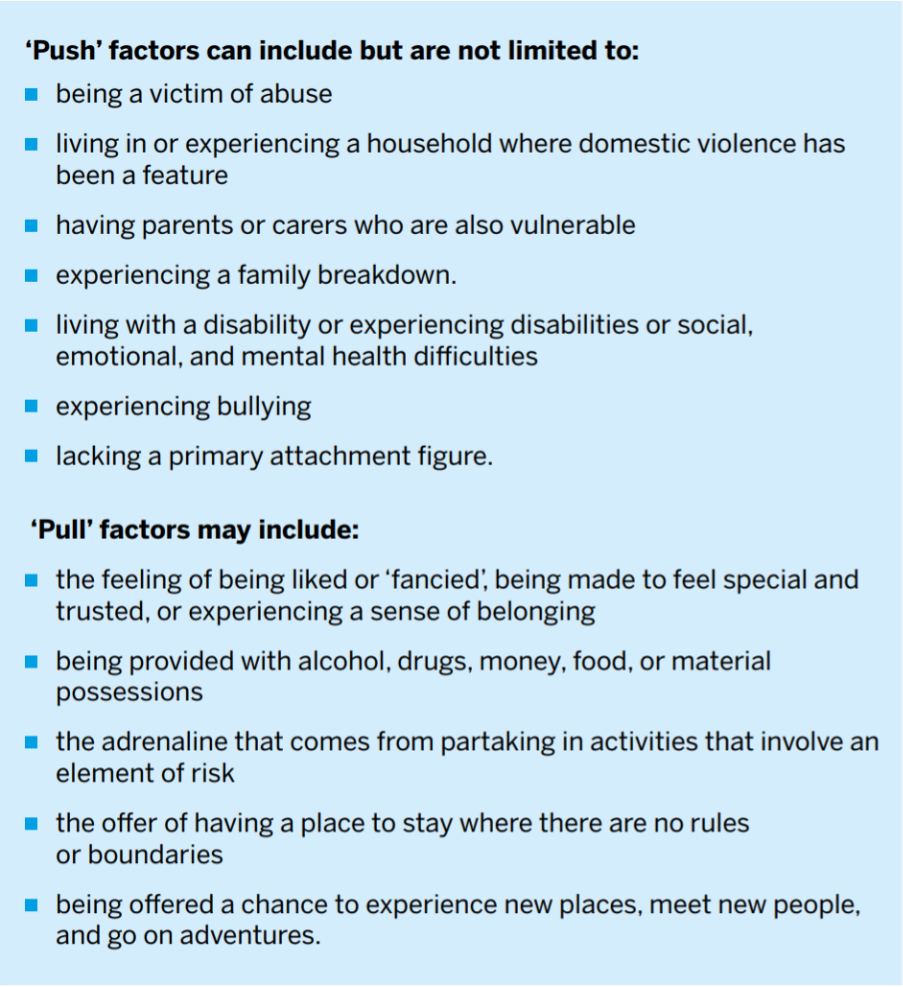
Signs of child exploitation
Ask yourself, is a child or young person:
- Travelling alone, particularly in school hours, late at night or frequently?
- Looking lost or in unfamiliar surroundings?
- Anxious, frightened, angry or displaying other behaviours that make you worried about them?
- In possession of more than one phone?
- Carrying lots of cash?
- Potentially under the influence of drugs or alcohol?
- Being instructed or controlled by another individual?
- Accompanied by individuals who are older than them?
- Seen begging in a public space?
https://www.childrenssociety.org.uk/what-we-do/our-work/lookcloser
County lines
What is County Lines?
‘County lines’ is a violent and exploitative form of drug distribution. A common feature of county lines is the exploitation of children, young people and vulnerable adults who are instructed to deliver and / or store drugs, and associated money or weapons, to dealers or drug users, locally or in other counties.
The UK government defines county lines as: “… a term used to describe gangs and organised criminal networks involved in exporting illegal drugs into one or more importing areas within the UK, using dedicated mobile phone lines or other form of ‘deal line’. They are likely to exploit children and vulnerable adults to move and store the drugs and money and they will often use coercion, intimidation, violence (including sexual violence) and weapons.” (Home Office, 2023)
This short video provides a helpful explanation of what County Lines is.
This next short video by the National County Lines Co-Ordination Centre provides some helpful information about how County Lines work, the impact they have on young people and who to report concerns to.
Forms and methods of exploitation
County lines exploitation can be perpetrated by individuals or groups of any gender or nationality and can appear unsophisticated or organised. It is typified by some form of power imbalance, which perpetrators use to force, coerce, groom and/or entice victims into county lines activity. They can employ several methods to do so, such as:
- offering an exchange – carrying drugs in return for something, such as money, clothes, drugs, status, protection or perceived friendship, a sense of belonging or identity, or affection;
- physical violence or threats of violence – used to intimidate and punish victims and their families and can involve weapons, including knives and firearms;
- abduction or kidnapping – sometimes victims are forcibly moved and held in a location away from home;
- emotional abuse or psychological coercive control – by manipulating, threatening, controlling or monitoring the movements of the victim;
- sexual abuse and exploitation – this can be experienced by all genders;
- blackmail – by forcing victims to commit a crime so they can hold it over them and threaten to report it if they do not comply;
- the use of social media, messaging apps, gaming sites and other online platforms – including marketplace websites and smart TVs to target and communicate with victims. These modes are used by exploiters to falsely build online trusted relationships, or to post fraudulent job adverts which seem legitimate, or to cyberstalk victims in order to groom, entrap and coerce them into county lines activity;
- “cuckooing” (also known as “forced home invasion”) – a tactic used by criminals, typically drug dealers, to take over the homes of vulnerable individuals, such as care leavers or those with addiction, physical or mental health issues, and use the property as a base for criminal activity. This is a common characteristic of the county lines business model and can occur in a range of settings such as rental and private properties, student accommodation, prisons, and commercial properties;
- coerced internal concealment (also known as “plugging”) – the practice whereby a child or vulnerable adult is controlled or coerced into concealing drugs internally as a method of transportation to avoid detection. Drugs or sim cards are usually concealed within a condom or similar packaging and inserted into a bodily orifice (rectum or vagina) using lubricant, or swallowed. You can find some useful resources in relation to working with coerced internal concealment here (anchor to pathways coerced internal concealment)
- debt bondage – a form of entrapment when a victim owes money to their exploiters and is made to repay their debt, either financially or through another means such as transporting drugs. The exploiter may groom the victim by initially providing money or goods which the victim will then be made to pay back. The exploiter may also deliberately manufacture a debt, for example by staging a robbery of drugs or cash in the victim’s possession in order to extort money from families or to ensure the victim will continue to perform tasks for them. The debt may also be inherited from parents and siblings; and
- financial exploitation – financial exploitation can take many forms. In this context, we use the term to describe exploitation which takes place for the purpose of money laundering. This is when criminals target children and adults at risk and take advantage of an imbalance of power to coerce, control, manipulate, or deceive them into facilitating the movement of illicit funds. This can include physical cash and/or payments through financial products, such as bank and cryptocurrency accounts. There are some useful resources here in relation to debt bondage and financial exploitation here.
Understanding the risks
When working with a suspected victim of county lines, have professional curiosity, keep a log of activity and save any evidence related to the exploitation, including items like train tickets and receipts from out of the area, as well as messages, images or videos online. Use reachable moments to connect with the vulnerable person and actively seek inputs from different professional perspectives to build a picture of the whole story.
Putting the victim first
When working with an individual suspected of being exploited by county lines, their activity may appear consensual and/or a personal choice, they may not recognise that they are being exploited and the distinction between victim and perpetrator may appear unclear. This may be the case especially for those transitioning into adulthood.
However, individuals who have been groomed and exploited into criminal activity have not freely chosen to be involved, cannot consent to being exploited and so should be seen as victims first and foremost.
It is also important to recognise that they are likely to have had traumatic experiences which they may have begun to normalise. You should consider responses from a trauma- informed perspective and take an approach that puts the child, young person or vulnerable adult first, including involving them in the safeguarding process and discussing next steps with them to build their trust.
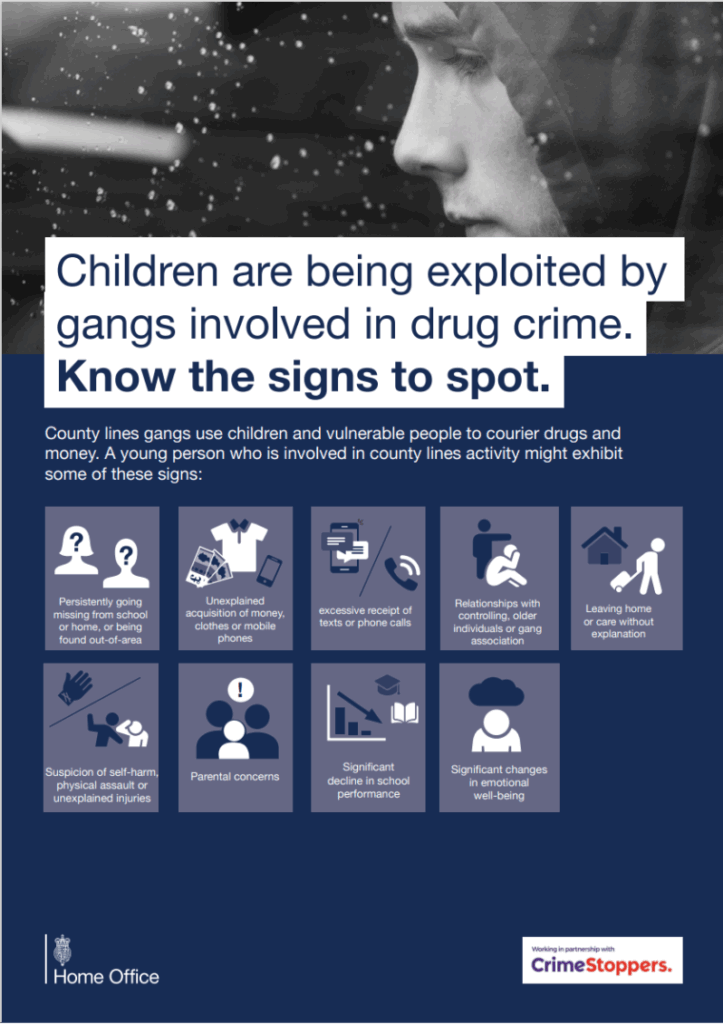
County Lines – Useful Links
Radicalisation, by Detective Superintendent Jane Corrigan from Counter Terrorism Policing in London
Prevent
Every year, around 7,000 people are referred into Prevent for initial assessment.
Each one of these cases is assessed by specialist officers and staff, who decide whether a vulnerability to radicalisation exists, what multi-agency support – if any – an individual might require, and how best to manage any risks that are identified. More than 31,000 cases have been assessed by officers since 2019, meaning our Prevent teams play an integral role in the fight against terrorism, as well ensuring the thousands referred each year are getting any support they need.
In around 65% of those 7000 cases, it is decided that other services such as mental health, education, policing, local authorities and others are better placed to support these individuals.
What is Prevent?
It can be hard to know what to do if you’re worried someone you know or are working with is expressing extreme views or hatred, which could lead to them harming themselves or others. Working with other organisations, the police protect vulnerable people from being exploited by extremists through a Home Office multi-agency voluntary programme called Prevent.
What is Channel?
If someone is referred to Prevent and it’s decided that there they are at risk of being radicalised, they may be offered support through the Channel programme.
Channel is a voluntary, confidential programme, which aims to safeguard individuals identified as vulnerable to being drawn into violent extremism or terrorist related activity. Referrals to Channel are consent based and assessed by a multi agency panel including the Local Authority, Police, Health and education professionals. The multi agency process aims to
- Identify individuals at risk
- Assess the nature and extent of risk
- Develop most appropriate support plan for the person concerned.
https://www.gov.uk/government/publications/channel-and-prevent-multi-agency-panel-pmap-guidance
What should I do?
Share a concern – Act Early visit – www.ActEarly.UK
Call the ACT Early Support Line on 0800 011 3764, in confidence, to share your concerns with our specially trained officers. The Support Line is open 24 hours every day.
Please note this phoneline is for the public, friends and family that may be worried about someone close to them.
Statutory partners (Local Authorities, Health or Education) should seek advice regarding prevent from the local safeguarding lead, the local authority safeguarding hub or fill out the National Prevent referral form.
Need training?
Prevent duty training: Learn how to support people susceptible to radicalisation | Prevent duty training or contact your local Prevent lead in your organisation.
Will I criminalise someone if I refer them to Prevent and they are managed on Channel?
It’s a voluntary, confidential, early intervention programme that supports people who may be at risk of being drawn into terrorism. Many types of support are available as part of Channel. These include support at school, in the workplace, for substance abuse and with specialist mentors, mental health key workers and doctors.
We work with all kinds of groups and organisations, in much the same way that partners come together to help people who’ve been groomed by gangs or involved in sexual exploitation.
Taking part in Channel doesn’t go on someone’s criminal record. It means getting the right kind of help for the person who needs support.
Signs of radicalisation
It can be difficult to spot some of the signs in children and younger people. This is because they are often associated with ‘typical teenage behaviour,’ which is why it’s important to consider the intensity of the behaviour you are noticing rather than any one sign.
What makes a young person’s vulnerable to being drawn into terrorism?
There are many reasons that can make a young person vulnerable to exploitation by extremists. This includes having a low self-esteem or a lack of belonging, or if they have been the victim of bullying or discrimination, which has left them feeling isolated.
Radicalisation can take place online, or face to face by someone they know including friends and family, or by contact with extremist groups. Sometimes curiosity can lead children or teenagers to seek out the groups themselves, or research information they feel supports their views.
Who can be vulnerable to exploitation by extremists?
Anyone can be vulnerable to radicalisation, regardless of their age, gender, ethnicity, religion, education or background. But there are some factors that can make some people more at risk of being targeted by radicalisers than others.
- Spending an increasing amount of time online and sharing extreme views on social media.
- Vulnerability to influence by extremists who seek to capitalise on a person’s mental health issues and exploit any instability
- Need for identity, meaning and belonging
- An obsessive or angry desire for change or ‘something to be done’
- Being influenced or controlled by a group
- Desire for status, need to dominate
- Looking to blame others
Serious violence
Introduction to serious violence
“Violence is preventable.”
Serious violence has a devastating impact on individuals, families, and communities. It cannot be viewed solely as a matter of individual behaviour or as an issue for the police and criminal justice system alone. Instead, it must be understood as both a safeguarding concern and a public health issue, requiring a coordinated, multi-agency response.
There are strong links between violence affecting young people and the harm and exploitation experienced through county lines activity, organised crime and being gang affected.
This section should therefore be read in conjunction with the Working with Exploitation section.
While serious violence can affect any young person, certain groups are at particular risk of exploitation and harm. The relationship between poverty, discrimination, and violence affecting young people are well-documented. A recent report by His Majesty’s Inspectorate of Probation identified that young people from particular ethnic backgrounds, looked after children, those with Special Educational Needs and Disabilities (SEND), and those not in full-time education are at greater risk of involvement in, or impact from, serious violence.
Responding to young people affected by violence
Efforts to prevent and respond to violence affected young people are supported by a range of local and pan-London governance structures, boards, and partnerships, all working collaboratively to improve outcomes for young people.
Pan-London Partnerships:
London Safeguarding Partnership
The London Safeguarding Partnership promotes proactive, cross-agency work to protect children from harm, including violence. The partnership includes senior leaders such as:
- Local Authority Chief Executives
- The Metropolitan Police Service Assistant Commissioner
- The Chair of the Association of London Directors of Children’s Services (ALDCS)
- The Chief Nurse for Integrated Care Boards
- Representatives from the Mayor’s Office for Policing and Crime (MOPAC)
- The Director of the Violence Reduction Unit (VRU)
London Adolescent Safeguarding Oversight Board (LASOB)
LASOB provides dedicated coordination and oversight of pan-London work to safeguard young people, including protection from serious violence. It reports directly to the London Safeguarding Children’s Partnership (LSCP) Executive.
Membership includes representatives from statutory services (Children’s Services, Youth Justice, Education, Housing, Community Safety, Police, and Probation), the VRU, MOPAC, and the Voluntary and Community Sector (VCS).
Violence Reduction Unit (VRU)
In 2019, the Mayor of London set up the first Violence Reduction Unit (VRU) in England and Wales. London’s VRU pioneers a partnership, public health, approach to tackling violence that is rooted in prevention and early intervention.
The VRU invests in interventions at key moments to keep young people safe in and out of school by providing help through youth work and mentors, and access to youth clubs and hubs. In London, working in partnership, it brings together services at a local level to coordinate delivery of prevention. The VRU continue to build and support effective partnerships with youth and community organisations, young people, the NHS, education, the police and local authorities across London. You can find out more about the VRU here.
Mayor’s Office for Policing and Crime (MOPAC)
Formed in 2012, MOPAC oversees the Metropolitan Police and leads on crime prevention and public safety across London. It is responsible for:
- Strategic oversight of policing
- Investment in crime prevention initiatives
- Commissioning services for victims of crime
- Convening partnerships to address complex safety issues and their root causes
Learn more about MOPAC’s work here.
NHS London Violence Reduction Programme
Launched in 2019, the NHS London Violence Reduction Programme demonstrates the NHS’s commitment to addressing violence as a public health issue. It supports health and care professionals to understand the drivers of violence and implement preventative approaches that improve access to health, care, and wellbeing services for those affected.
Key achievements include:
- Funding for three Integrated Care System (ICS) Vanguards
- Development of an In-Hospital Guide to Violence Reduction
- Creation of a Specialist Social Prescribing Pathway for Violence Reduction
- Collaboration with Mental Health and Trauma services to develop integrated care pathways within Major Trauma Centres
- Production of an e-learning resource on violence reduction with Health Education England
- Ongoing partnership with the Mayor’s VRU
London Vanguards
The London Vanguards work directly with communities to deliver psychological support to children and young people aged 0–25 who are affected by, or at risk of, violence.
Violence Reduction Academy
The NHS Violence Reduction Academy, part of this programme, gathers and shares knowledge to strengthen the evidence base for tackling violence.
Learn more about the Violence Reduction Academy here.
Local governance and partnerships
Under the Serious Violence Duty (anchor to serious violence duty), each local authority area must have a Serious Violence Strategy guiding local priorities and practice. Local governance structures, boards, and partnerships provide oversight and ensure that responses are tailored to local trends, needs, and resources.
These include:
- STROTH Meetings (as outlined in the MACE protocol 5th edition – forthcoming)
Quarterly strategic meetings that: - Monitor the effectiveness of multi-agency safeguarding responses to risks outside the home
- Allocate resources to address identified patterns, locations, or emerging risks
- Ensure that systemic learning informs prevention planning
- Violence affecting young people trends and practices should be reviewed at each quarterly meeting.
- Youth Justice Partnership Boards
Multi-agency strategic groups providing leadership and oversight of Youth Justice practice within each local authority.
Responsibilities include: - Developing and implementing the annual Youth Justice Plan
- Addressing serious violence, child criminal exploitation, and contextual safeguarding
At the individual level, local panels exist across London to oversee risks, tailored to local needs and structures.
- Local Safeguarding Children Partnership adolescent safety / violence reduction strategies and sub-groups
Safeguarding and multi-agency response
All concerns that a child may be at risk of, or experiencing, exploitation or violence must be referred to the Multi-Agency Safeguarding Hub (MASH), following standard referral protocols.
Exploitation and harm through violence must be treated with the same urgency as all other forms of abuse.
Children affected by extra-familial harm must receive coordinated protection, support, and intervention. They should be discussed at the Multi-Agency Child Exploitation (MACE) panel, which provides structured oversight to ensure agencies are working collaboratively and that interventions are effective.
The MACE panel:
- Ensures support is coordinated, purposeful, and young person-centred
- Identifies emerging concerns to enable early, multi-agency problem-solving
- Detects patterns across children or locations, uncovering hidden links between individuals or groups
- Broadens the understanding of the contexts in which harm occurs
It is strongly recommended that MACE panels are integrated with other multi-agency forums addressing related risks, such as violence affecting young people, missing episodes, harmful sexual behaviour, Channel Panels, and prevention panels. (Pan-London MACE Protocol, 2025.)
Serious violence duty
The Serious Violence Duty came into force in January 2023 as part of the Police, Crime, Sentencing and Courts Act 2022. Its purpose is to ensure that relevant public services work together to prevent and reduce serious violence. The Duty places several requirements on local areas, including the need to:
- Establish a local partnership arrangement to lead delivery of the Duty
- Agree a shared definition of “serious violence”
- Develop consistent data-sharing processes and analytical methods to inform a local Strategic Needs Assessment
- Produce a Serious Violence Strategy setting out how the Duty will be implemented locally
Duty Holders
The specified authorities within each local area are the organisations legally responsible for collaborating, planning, and delivering the requirements of the Duty. These include:
- Police
- Justice services
- Youth Justice
- Probation
- Fire and Rescue Services
- Local Authorities
Other Partners with a Duty to Cooperate
Additional agencies are required to cooperate with the specified authorities as needed. These include:
- Educational authorities
- Prison authorities
- Youth custody authorities
The Voluntary and Community Sector—including charities, faith groups, equality organisations, social enterprises, and housing associations—should also be regarded as key partners in supporting delivery of the Duty.
Serious violence duty – Useful Links
Pre-occupation with violence – in development
This topic within SAIL is still in development with colleagues and partners and will be coming soon!
If you’d like to directly contribute to this section then we’d love to hear from you – whether it be providing written content, sharing research, resources being part of the ‘Talking Head Series’ – you can read more about the ‘SAIL talking head’ series here!
Working with children who go missing
Children who go missing
The Police receive over 20,000 reports of children missing from home or care in London each year. Many of these children will already have been identified as vulnerable by schools, children’s services or the police.
Children may go missing because they feel unhappy, unsafe, or unheard at home or in a placement (push factors) or because they are being pulled toward something or someone that appears to offer safety, excitement, love, or belonging (pull factors). These can overlap, and in many cases, both are present.
Some children will go missing multiple times but each missing episode must be recognised as a safeguarding concern in its own right.
Children go missing for many reasons, and each episode should be understood in context.
- It may signal unhappiness, conflict, or instability within the home or placement.
- It may suggest coercion or grooming by peers, adults, or exploiters.
- It can reflect mental distress, loneliness, or trauma.
- It can also indicate a search for autonomy, control, or belonging in the face of vulnerability.
- It may reflect typical adolescent exploration: a young person “spreading their wings” and wanting to the freedom of going somewhere or doing something outside of the ordinary spending longer than planned with friends or wanting to a sense of freedom.
Children who go missing are at heightened risk of exploitation, violence, and other forms of extra-familial harm. Even where the motivations appear neutral or developmental, missing episodes should still be approached with professional curiosity. They offer a valuable insight into the child’s world and an opportunity to strengthen the connections and spaces that keep them safe.
Every missing episode must be treated as an opportunity to understand, not to blame.
Working together when a child is missing
The aim is to reconnect before we escalate. This communicates to the child that they are valued, cared for, and missed.
Safeguarding missing children is a shared responsibility.
Contacting the police should not be the automatic first step unless there are immediate fears for the child’s safety. If there are immediate concerns for the child’s safety, police should be contacted by dialling 999.
Before reporting a child as missing, every reasonable effort should be made to make contact and bring them home safely. The aim is to reconnect before we escalate. This communicates to the child that they are valued, cared for, and missed.
Examples of reasonable steps include:
- Phoning or messaging the child several times using all known numbers or social media accounts.
- Contacting friends, relatives, or trusted adults they are close to.
- Visiting or calling at known addresses, parks, youth clubs, or other places the child is known to spend time.
- Asking other young people in the home, school, or placement if they’ve heard from them.
- Checking travel cards, ride-share accounts, or location-sharing apps if appropriate and with consent.
- Reviewing recent conversations or events that might give clues to where they are or why they left.
If, after this, the child cannot be reached or their safety is uncertain, then the police should be contacted as outlined in the Philomena Protocol and using MPS Online facility.
When contacting the police, provide a clear summary of what has already been tried and any information gathered through these efforts.
When a child goes missing, the emphasis should be on:
- Acting with empathy, curiosity, and persistence.
- Maintaining care and responsibility throughout the episode.
- Sharing information and updates promptly with police and professionals.
- Avoiding unnecessary criminalisation.
This approach, including use of the Philomena Protocol, is fully aligned with the Children’s Homes (England) Regulations 2015, the Supported Accommodation (England) Regulations 2023 and Ofsted’s requirements under both the SCCIF and the ILACS inspection framework.
Ofsted has confirmed that structured, proactive safeguarding of this kind are acceptable and consistent with regulatory expectations, as they strengthen risk assessment, missing from care responses, information-sharing and coordinated action to protect children.
This reflects Ofsted’s core ILACS principle that risks, whether within the family or in the community must be clearly understood, dynamically assessed and effectively managed to improve children’s safety.
Working together when a child returns
Children should be offered:
- A Prevention Interview/Safe and Well Check (takes place within 24 hours and the responsibility of the Police) – to check safety and identify immediate risks.
- A Return Home Interview (offered within 72 hours and the responsibility of Local Authority Children’s Services) – to explore the reasons, relationships, and contexts behind the episode.
The timescales reflect statutory guidance, but particularly with the Return Home Interview timing should never take precedence over meaning. The most important element is that the conversation feels safe and is purposeful. A rushed or badly timed discussion may meet a procedural requirement but fail to support the child emotionally or practically.
Practitioners should therefore use professional judgment, in consultation with their line manager, to agree when and how to have the conversation. If the child is tired, angry, distressed, or simply not ready, it is better to delay briefly and return at a moment when they can engage meaningfully.
These are not interrogations or compliance exercises; they are acts of care. The purpose is to understand, not interrogate or extract information. Practitioners should focus on the child’s voice, preferred method of communication, and chosen trusted adult.
Where possible, these preferences should be discussed and recorded as part of the Safety Plan before an incident happens so that when the child does return, the conversation happens in a way that gives the child some degree of control and builds trust rather than tension.
The Safety Pan should be reviewed, updated and shared appropriately in the light of these discussions.
Safety planning

For children who go missing or are at risk of going missing, a Safety Plan should be created collaboratively with the child. This should:
- Identify early warning signs and triggers.
- Agree safe adults and safe spaces.
- Clarify how the child prefers to communicate when they feel unsafe.
- Include actions for carers, police, and professionals.
Safety plans should be living documents. They should be regularly reviewed and shared across the people who are supporting the child especially following missing episodes. All the information gained needs to be considered, contextualised and included in the revised safety plan.
Every missing episode should be seen as an opportunity to better safeguard for the next time or (even better) to prevent it.
Signs and indicators
Practitioners should remain alert to patterns that may indicate risk of exploitation:
- Regular or escalating missing episodes.
- Sudden changes in mood, appearance, or friendship groups.
- Unexplained money, gifts, or new possessions.
- Withdrawal from education or trusted adults.
- Association with older individuals or new peer networks.
- Anxiety about returning home or placement.
- Evidence of grooming, control, or fear.
Repeated or prolonged missing episodes must be referred to the Operational MACE for multi-agency review and oversight. Intelligence gathered through these processes should also inform Strategic Risk Outside the Home (STROTH) meetings to identify wider contextual patterns, locations, or perpetrators of concern.
Missing children are telling us something
When a child goes missing they are telling us something through their absence.
The way we respond speaks far more clearly to them than our words ever could.
We know that adultification bias can reduce empathy and lead to inconsistent safeguarding responses because we perceive children as more resilient or more culpable than they are. Similarly, neurodiverse children can be seen as non-compliant.
Return conversations, safety planning, and professional discussions should all actively consider how identity, culture, and lived experience might shape both the child’s behaviour and professionals’ perceptions of it.
Our responses should be grounded in empathy, curiosity, and an active awareness of identity and bias.
You might also be interested in: Helping Young People to be Safer
Missing – Useful Links
Navigate SAIL
SAIL Disclaimer
SAIL is a collaborative effort. It draws on the work of many researchers, writers, and practitioners across disciplines and perspectives who have generously contributed their time and permitted us to link to their work.
You’re welcome to use and build on these resources but please credit SAIL or the original authors.
We want SAIL to be shaped by its users. We see diversity of perspective underpinned by dialogue and discussion as essential to progress. As a living resource in a rapidly evolving field there will be gaps, variations, and evolving interpretations. Inclusion does not equal endorsement.
We welcome clarifications, corrections, and contributions to keep it growing. Please get in touch using the contact details provided.
Get In Touch with the SAIL Team
SAIL guidance aims to bring together the principles and practice that, as statutory safeguarding partners, we believe should underpin the work of agencies in London. Anything that helps multi-agency practitioners work better with and for adolescents will be included in this digital resource. It will continue to move with the times as new research and evidence of what works continues to emerge.
If you’d like to directly contribute to SAIL then we’d love to hear from you – whether it be providing written content, sharing links to other resources and websites or being part of the ‘Talking Head Series’ – you can read more about the ‘SAIL talking head’ series here!