Category 2. Impact for children with special educational needs and disabilities
This category includes examples of practice that are making a positive impact on outcomes for children and families with special educational needs and disabilities.
Sponsored by the London SEND Steering Group
Practice Spotlight Navigation Panel:
Practice Spotlight 2026 – ‘New & Emerging Practice’
Summary of 2026 submissions
The Impact for Children with SEND category received a strong and varied range of submissions, demonstrating innovative, collaborative and inclusive approaches to improving outcomes for children, young people and their families across London.
A notable theme was supporting key transitions, whether helping young people move successfully into secondary education or preparing them for adulthood. Kingston & Richmond’s Education Inclusion Project, Barnet’s Joint Transitions Tracking Panel, and Enfield’s Preparing for Adulthood programme, all demonstrated the value of coordinated planning and targeted support.
Building inclusive practice, strengthening workforce confidence and sharing specialist expertise across schools and services, were also the focus of several submissions. Hounslow’s Special Sponsorship Model, Sutton’s Autism Leads in Schools, Hammersmith & Fulham’s Joint Communication Team and the Royal Borough of Kensington and Chelsea’s Confident Communicators programme, all highlighted how investing in professional knowledge can improve outcomes for children and young people with SEND.
Collaborative and whole system approaches also featured strongly. Brent’s Bridging Systems, Kensington & Chelsea and Westminster’s SEND Service’s Improving Outcomes, alongside Enfield’s Preparing for Adulthood and Barnet’s Joint Transitions Tracking Panel, demonstrated how education, health and care partners can work together to deliver more coordinated support for children, young people and their families.
Participation, belonging and opportunity, in particular helping children and young people engage more fully in their education settings, and communities, was showcased by several boroughs. Hounslow’s Westbrook Short Break Residential Service, Camden’s Paid Work Experience programme, Newham’s Pioneering Digital Youth Work Through Virtual Reality and Merton’s Mini Musicians project all provided creative ways for young people to build confidence, relationships and skills.
Several projects illustrated the importance of early intervention and prevention. Hounslow’s Mainstream Inclusion Partnership for Early Year Foundation Stage, Hillingdon’s Transforming Practice for Autistic Children, Wandsworth & Richmond’s Group Work offer, and the Bi-Borough’s Confident Communicators programme all demonstrated how timely support can prevent challenges from escalating and improve long-term outcomes.
Across all submissions, there was also a clear commitment to inclusive practice and innovative approaches to engagement, whether through specialist support, music-based interventions, digital youth work or employment pathways. Collectively, these submissions highlight a growing focus on strengthening inclusion, widening opportunities for children and young people with SEND.
Kingston & Richmond Achieving for Children – Education Inclusion Project: Supporting Primary to Secondary School Transition
Summary of project: A targeted Youth Justice prevention initiative providing one-to-one, trauma-informed support during the transition from primary to secondary school, aimed at reducing the risk of permanent exclusion.
Key Contact: Katherine Adams
katherine.adams@achievingforchildren.org.uk
Read about this practice
Setting the Scene: the context and problem you are solving
In 2021, the Youth Crime and Safety Partnership conducted a multi-agency deep dive review of children subject to court orders to better understand pathways into offending and identify missed opportunities for early intervention.
Key findings included:
- Behaviour was frequently linked to unresolved trauma, often insufficiently addressed, particularly within school settings.
- Opportunities for earlier intervention were missed due to fragmented service involvement, family instability, and poor information continuity.
- There was a clear gap in access to sustained, trauma-informed support at an earlier stage.
There were a number of recommendations made for Early Help, Social Care, Education, Police, Community Safety and Health, including a project to develop targeted early intervention for primary-aged children at risk of exclusion, particularly those experiencing additional vulnerabilities such as domestic abuse.
How: what you did and how it was delivered to meet the identified need
The Education Inclusion Project identifies pupils in Years 5 and 6 at risk of permanent exclusion, using exclusion data and cross-referencing with Children’s Social Care and SEND services. The project primarily supports boys with social, emotional, and behavioural needs, alongside broader vulnerabilities including family breakdown, domestic abuse, racial inequities, and familial links to the Youth Justice System.
Each child is assessed using Child First and Signs of Safety frameworks, incorporating input from the child, family, school, and relevant professionals. This enables the development of a coordinated, holistic intervention plan spanning the transition into secondary education.
Delivery is led by a specialist Youth Worker across Kingston and Richmond, providing intensive one-to-one support in school, at home, and in community settings. The approach is trauma-informed, relationship-based, and non-judgemental, focusing on:
- Identifying behavioural triggers
- Building emotional resilience, confidence, and self-esteem
- Supporting positive relationships and pro-social behaviour
- Improving engagement with education through tailored strategies and reasonable adjustments
The project also facilitates multi-agency collaboration to ensure continuity of support and appropriate educational placements, including access to specialist provision where required.
Impact: evidence of the difference it has made to children and families
Between September 2024 and March 2026:
- 49 referrals were received; 19 children met criteria and received targeted support.
- 741 one-to-one sessions were delivered across school, home, and community settings.
Intervention focus areas included:
- Self-esteem and confidence (19/19)
- SEN support (19/19)
- Behavioural triggers (19/19)
- Safety planning (19/19)
- Problem-solving and conflict management (19/19)
- Attendance and suspension reduction (18/19)
Outcomes:
- 18/19 children avoided permanent exclusion.
- 17/19 improved school attendance.
- 8/19 transitioned to appropriate specialist secondary provision.
- 18/19 reported improved wellbeing.
- Only one child from the first cohort experienced an exclusion in secondary school.
Next Steps: what you are doing next to develop or expand this practice
Future development includes expanding the model to support children beyond Year 7, particularly those in secondary education who are at risk of exclusion, disengagement, or non-attendance.
Evolve: advice you would give to others seeking to replicate your model
Utilising the partnership to identify a concern for children who may be over represented in the system enabled a commitment from partners to engage in a multi-agency deep dive. This then ensured that there was strategic buy-in to the recommendations and any resource commitments required to deliver new projects. Using data to inform interventions can be powerful for securing buy-in at times of restrained resources.
A key learning is the importance of amplifying the child’s voice. Providing consistent one-to-one support enables children to feel heard, strengthens trust, and improves engagement with education. Advocacy also supports children to develop self-advocacy skills and build more positive relationships with school staff.
Given the strong link between school exclusion and entry into the Youth Justice System, early identification of SEN, appropriate adjustments, and access to suitable educational settings remain critical protective factors.
London Borough of Barnet – Joint Transitions Tracking Panel
Summary of project: The Joint Transitions Tracking Panel exists to ensure coordinated planning and oversight for young people aged 14 and above with complex physical, learning, or mental health needs as they prepare for adulthood.
The panel brings together key professionals across children’s and adult services to:
- Identify young people who require transition planning early.
- Monitor and track progress of transition plans.
- Facilitate timely referrals to adult services.
- Promote multi-agency working to ensure a holistic transition for the young person.
- Escalate concerns or service gaps to strategic leads.
Key Contact: Hannah McNally
Read about this practice
Setting the Scene: the context and problem you are solving
Transitions planning was taking place across different parts of Family Services, but the system had developed into a complicated and sometimes convoluted landscape. Two separate panels operated with different processes and expectations, which made the pathway harder for practitioners to navigate and created variability in how and when children were identified for transitions support.
The way practitioners accessed information or understood the transitions offer often depended on individual knowledge rather than a clear, unified framework. As a result, children and families had different experiences across the system, not because of poor practice, but because the structures in place did not consistently support shared oversight, early planning, or coordinated multi-agency involvement.
This created an opportunity to streamline processes, strengthen clarity, and build a more equitable and accessible approach for all children approaching adulthood.
How: what you did and how it was delivered to meet the identified need
To address this, I worked with key stakeholders from learning disability services, adult mental health, children’s social care, education, voluntary sector partners, and relevant health professionals. Together we developed a single, accessible multi-agency panel for presenting young people approaching transitions.
I created a referral pathway through LCS so that children could be formally recorded, tracked, and reviewed. This structure enabled Power BI to draw accurate data directly from LCS, creating new opportunities for understanding need and future planning.
Leaders across services supported the approach, and merging the two pre-existing panels removed confusion and streamlined practitioner access.
Alongside this, I developed an offer for social work teams to consult directly with the transitions lead for advice, information, and support.
Impact: evidence of the difference it has made to children and families
Bringing the two panels together strengthened workforce confidence and improved the consistency of transitions planning across Family Services. Practitioners now have a single, clear route to request support, present cases, and access guidance.
The LCS referral system ensures that children are tracked appropriately, enabling Power BI to pull meaningful data to inform demand forecasting and resource planning.
The multi-agency involvement has improved collective understanding of need and supported earlier identification of young people requiring complex planning.
Leaders’ backing of the approach helped embed the changes, and practitioners report improved clarity, better information sharing, and increased support with transitions decision-making.
Next Steps: what you are doing next to develop or expand this practice
Next steps include developing or adding to the current QA framework to monitor panel activity and ensure consistent quality of practice.
We aim to review the Power BI data regularly, strengthen representation from Adult Mental Health services, and examine progress for children who have already been to panel to understand the impact on outcomes.
We also plan to explore how the panel contributes to managing budget pressures through improved forecasting and planning.
A key priority is to broaden the panel’s offer further and widen its scope to ensure all relevant children approaching adulthood are identified and supported.
Evolve: advice you would give to others seeking to replicate your model
For others seeking to replicate this model, the core ingredients for success are strong multi-agency relationships, clear leadership support, and a simple, accessible process for practitioners. Establishing a single, unified panel and embedding an electronic referral system ensures transparency, reduces duplication, and enables effective tracking.
Start with known cohorts, test the system, and refine as you go. Prioritise workforce development to close knowledge gaps, and use data to drive improvement and future planning.
London Borough of Brent – Bridging Systems, Improving Outcomes: A Virtual School SEND Model for Children with EHCPs
Summary of project: Transforming outcomes for looked-after children with SEND through a dedicated specialist role that bridges systems, removes barriers and ensures the right support is in place at the right time.
Key Contact: Michaela Richards and Rebecca Vassallo
mailto:michaela.richards@brent.gov.uk
Read about this practice
Setting the Scene: the context and problem you are solving
Looked after children with SEND are among the most vulnerable learners and often face significant barriers to accessing and sustaining suitable education. Brent identified a recurring challenge in securing appropriate provision for looked-after children with Education, Health and Care Plans (EHCPs), particularly those placed out of borough. Responsibility for coordinating support was often fragmented across services, resulting in delays, inconsistent challenge, and difficulties ensuring that schools and local authorities responded effectively to complex needs.
Over several years, different approaches were trialled, including allocating SEND responsibilities within existing teams. However, these models lacked dedicated capacity and clear accountability.
To address this, Brent Virtual School created a dedicated SEN Advisory Officer role in March 2025, embedded within the Virtual School and focused exclusively on looked-after children with EHCPs. The role provides specialist expertise, coordination and direct support to schools and professionals, creating a single point of accountability and ensuring children receive the right support, in the right place, at the right time.
How: what you did and how it was delivered to meet the identified need
In response to challenges in securing and sustaining education for looked-after children (LAC) with EHCPs, Brent Virtual School developed a dedicated, integrated SEND model. Previous approaches, delivered through wider 0–25 services or as an additional responsibility, led to fragmented ownership, delays and limited capacity to challenge, particularly for children placed out of borough.
To address this, a dedicated SEN Advisory Officer role was established within the Virtual School (March 2025, made permanent within six months due to impact). The role holds a distinct caseload of complex EHCP learners, leads on PEPs, and acts as a single point of coordination and accountability across schools, social care, carers and multiple local authorities, providing direct, practice-led support.
The model combines strategic oversight with hands-on intervention through five key elements:
1. Direct observation and intervention
In-school observations are followed by clear, strengths-based strategies, reviewed iteratively with schools. For example, a child (GM) initially disengaged from learning showed full-day engagement within six weeks following targeted intervention.
2. Between-PEP support
Ongoing, bespoke guidance enables schools to test and refine strategies in real time, ensuring all reasonable adjustments are explored before placement decisions are made.
3. Robust challenge and system navigation
Consistent, evidence-based challenge to local authorities, particularly out-of-borough, has reduced delay and improved decision-making. In one case (HT), this directly led to securing an appropriate placement.
4. Assessment to address data gaps
A bespoke assessment offer provides baseline attainment data for children out of education, informing reviews, placement decisions and targeted support.
5. Integrated, needs-led approach
The SEN Advisory Officer acts as a key contact for professionals, supporting complex processes such as tribunals and ensuring education remains central to care planning.
Impact: evidence of the difference it has made to children and families
This model has delivered both system-level improvements and tangible impact for individual children.
Quantitative and system impact:
- Quicker progression to appropriate placements, particularly for children placed out of borough, due to strengthened challenge and clearer evidence
- Reduced drift in decision-making, with more timely escalation through statutory processes
- Improved quality of education planning, with SEND needs more clearly articulated within PEPs and annual reviews
- Increased confidence and capability within schools to support complex SEND needs
Individual impact:
- In the case of GM, targeted intervention led to a rapid improvement in engagement, with the child able to access learning following implementation of strategies
- In the case of HT, coordinated challenge and partnership working resulted in a confirmed education placement after a period of delay
- In complex cases such as GH, the service has supported resolution of tribunal-related issues, ensuring correct processes were followed and placement stability achieved
Practice impact:
- Schools report that observation reports and follow-up support have enabled them to reflect on and adapt their practice, rather than defaulting to escalation
- Professionals have greater clarity on what constitutes reasonable adjustments, leading to more consistent and equitable decision-making
- Social workers increasingly seek advice proactively, indicating trust in the service as a central, expert resource
Next Steps: what you are doing next to develop or expand this practice
Brent is now focused on embedding and scaling this model to maximise impact.
Key next steps include:
- Extending the model to support children with a social worker and those in kinship care, in line with the expanding strategic role of Virtual Schools
- Further developing the assessment offer to ensure more children have robust baseline data to inform planning and decision-making
- Aligning the model with emerging national reforms, including the Children’s Wellbeing and Schools Bill, particularly around inclusion and multi-agency working
For other local areas, this model demonstrates the importance of building a system that is both replicable and flexible, allowing for consistency while responding to individual need.
Evolve: advice you would give to others seeking to replicate your model
Create clear ownership and accountability: SEND support for complex cohorts must sit with a clearly defined role, not as an additional responsibility across teams.
- Prioritise practice-led intervention: observing children in context and providing practical strategies has significantly greater impact than advisory input alone
- Integrate services, don’t duplicate this reduces fragmentation and improves outcomes
- Use challenge constructively: confident, evidence-based challenge to local authorities and schools is essential to reduce delay and secure provision
- Invest in relationships: trust with schools, social workers and partners is key to enabling
early intervention and shared ownership
Earlier investment in a dedicated SEND role within the Virtual School would have accelerated impact and reduced time spent navigating fragmented systems. Establishing this clarity of purpose and function from the outset is critical.
London Borough of Camden – Paid work experience reducing re-offending & building self worth
Summary of project:
Key Contact: Michelle Homer, Hayley Mullen, Mark Booth, Natalie Hobbs
Read about this practice
Setting the Scene: the context and problem you are solving
We were not making progress to reduce the percentage of children not in education, training or employment in the YJS. Children had complex and often difficult educational histories, with no confidence in their ability to succeed, seeking financial gain through offending. We connected with Inclusive Economy colleagues and sought permission from our YJS board to develop bespoke paid work experience placements for our children that would offer LLW and an opportunity to develop their skills, experience and confidence.
How: what you did and how it was delivered to meet the identified need
We sought approval to invest in our own coffee roasting business that we had full control over. Michelle sought out smaller grass roots organisations within the borough that would take YJS children on placement. We connected with Inclusive Economy colleagues to obtain funds to pay wages from social value contracts and other revenue arrangements designed to support our most vulnerable residents. We engaged children open to YJS to ask them what kind of work experience placements they would like and what support they may need. We delivered training to employers on safeguarding, and established partnership agreements on working arrangements. We organised initial visits with the child and the employer to ensure a good match, sharing EHCP/comms passports to enable adapted support. We set out plans of how the child will take small steps, reviewing regularly to enable plans to be adapted as confidence grew. Children continue to be supported by their Connexions advisor whilst on the programme for succession planning and next steps once the placement is completed.
Impact: evidence of the difference it has made to children and families
We have conducted an internal evaluation which is on the YJB resource hub, highlighting that so far 1/22 children (4%) have reoffended, evidencing profound impact. Children also reported positive changes in confidence and pro-social identity. 60% of the children who engaged were Global Majority and 100% of these children were in Education, Training or Employment (ETE) at the review stage.
Link to the evaluation report: https://yjresourcehub.uk/paid-work-experience-for-youth-justice-service-experienced-children-2020-25-project-summary-camden-youth-justice-service-november-2025/
Next Steps: what you are doing next to develop or expand this practice
Michelle is developing more connections with businesses the local authority has contracts with to offer up placements. We have a new one with a mechanics placement who service the Camden vehicles.
We are working with Inclusive Economy to have the provision (funding opportunities, follow on apprenticeships etc) raised in procurement boards to enable continued revenue via extracting social value from contracts. We are also exploring other funding possibilities such as concession contracts.
We are seeking to identify funding for the smaller grass roots organisations that often have a great fit for our children but struggle to sustain long term support due to staffing and increased admin time as they try to grow their offer in the community.
Evolve: advice you would give to others seeking to replicate your model
Engage Inclusive Economy colleagues from the start. Connect and collaborate on how YJS/CLA funding for ETE opportunities can be prioritised in terms of extracting social value.
Have this as a service priority and connect it to wider strategic priorities where possible to enable buy in from other key stakeholders.
London Borough of Enfield – Preparing for Adulthood: a multi-agency approach to guiding children and young people
Summary of project: Coproducing preparation for adulthood guidance for families, education, health and social care services to prepare children and young people for adulthood at every age and stage, ensuring a holistic approach to planning, monitoring and target setting that strengthens engagement and progress.
Key Contact: Maria Mulvihill-Higgs
Maria.Mulvihill@enfield.gov.uk
Read about this practice
Setting the Scene: the context and problem you are solving
Enfield Council recognises the importance of preparing all young people for adulthood, especially those who require additional support, and has maintained a focus on Preparation for Adulthood (PfA) in Education, Health and Social Care for several years.
As part of Enfield’s successful bid for Delivering Better Value funding from the DfE, PfA was identified as a discrete workstream, through which a number of focus areas were identified to evolve Enfield’s Preparation for Adulthood offer aligned to the SEND partnership strategic priorities to provide a more holistic offer. In order to inform the PfA development work, scoping was carried out across families, young people, Education, Health and Social Care services, and a number of issues were identified:
- Parents and young people recognised that services focused on Preparation for Adulthood from the age of 14 onwards but expressed concern that, in many cases, there was little discussion of adulthood before this point, leaving some with anxieties around a process which seemed to be too short.
- PfA was inconsistently delivered across educational settings in Enfield, with many primary and Early Years settings delivering ‘life skills’ which were not linked to future goals and secondary and FE settings discussing PfA as part of the Annual Review process from the age of 14 upwards. Many educational settings expressed a desire to strengthen their PfA practice but required guidance and support in doing so.
- PfA support and processes were largely aimed at children and young people with an EHCP, though parents and educational settings all identified that many young people on SEN Support and those without SEN needs would also benefit from a more consistent approach to PfA.
In response to scoping and data analysis, the SEND partnership identified a priority focus of developing ‘PfA curriculum guidance’ with the aims:
- To support educational settings with the delivery of preparation for adulthood skills, to ensure all children & young people are prepared, supported to build the knowledge, skills and confidence and achieve their full potential when transitioning from education to adulthood.
- To support curriculum delivery consistency and progress monitoring across education settings.
- To support education settings and services with statutory processes: outcome-setting, target-writing and annual reviews.
- To empower families to support their child or young person towards adulthood in a way which is appropriate to a home and community setting.
How: what you did and how it was delivered to meet the identified need
Co-production was key to the development of the PfA guidance. A working group was set up, encompassing representatives from Enfield’s parent, carer forum, representatives from mainstream and special educational settings across all phases of education, the SEN Service, Virtual School, Social Care and Health, the Education Psychology Service, the Enfield Advisory Service for Autism, the Schools and Early Years Improvement Service and the Youth Justice Service.
Initially, an audit was undertaken of PfA processes and resources currently used within Enfield, as well as good practice nationally. There had already been some positive steps taken in Early Years settings in Enfield with exemplar descriptors of PfA goals, which suggested a way forward, and this was backed up by detailed analysis of the strengths and weaknesses of other nationally available PfA guidance documents which identified that, as a group, an outcomes-based approach was preferred.
Based on scoping feedback, the working group developed the guidance in alignment with the four Preparation for Adulthood strands, each of which were then further broken down into a series of skills-based outcomes. Each skills-based outcome is accompanied by a number of ‘steps towards outcomes’ (suggested ways in which settings may help a young person achieve the outcome) and support relevant resources. Outcomes are organised into 6 stages which correspond to age-related expectations but are colour-coded, so that age ranges/key stages do not have to be displayed, for the occasions when doing so may harm a child or family’s confidence or self-esteem. A set of assessment booklets was also produced, through which settings, services and, or families can record and monitor a young person’s progress towards the PfA outcomes.
Following positive feedback from parents or carers on the initial document, a request was made for a families’ version, which enables parents or carers and those working with young people outside of an educational setting to work towards the same outcomes using different steps towards the outcomes.
The guidance was initially launched to headteachers, SENCos, service leads and Our Voice, Enfield’s parent carer forum, through a series of meetings, followed up by a targeted schedule of training sessions with educational settings and service teams. These sessions were supported by ad hoc discussions as part of service team meetings and attendance at parent group coffee mornings, which allowed for more informal conversation and significantly increased uptake of the guidance. Monitoring and feedback on the guidance continues with regular check ins within team meetings and additional training sessions offered to educational settings, parent groups and services as required. This consistent approach has been key in developing engagement with settings and services and has supported the ongoing dissemination and uptake of the guidance.
Impact: evidence of the difference it has made to children and families
Following the launch of the PfA curriculum guidance in October 2025, data metrics will be reviewed in Summer 2026; however, feedback and case study tracking has been overwhelmingly positive, with a significant take-up of the guidance across educational settings and a consistently increasing number of families also referring to the guidance at home. Benefits have been identified in all areas:
Young people:
Clear outcomes coupled with a simple method for tracking has enabled many young people to take ownership of their progress towards adulthood. Outcomes are based on a wide range of skills and track progress across much smaller increments than traditional age-related expectations, allowing schools and families to celebrate small wins and more frequent progress than has previously been possibly for children who may struggle to access the traditional curriculum. One mainstream secondary setting in Enfield reported that the guidance is being used by all young people, regardless of need, to track their own progress towards adulthood and that this has been helpful in supporting college applications in Year 11.
Families:
The families’ version of the guidance has also allowed parents/carers to take on more ownership of their child or young person’s progress. Given the home based nature of the steps towards outcomes in this version, families who have previously felt intimidated by homework and more formal approaches have been able to engage with and stretch their child or young person’s learning. Early monitoring with families is showing that they are using the guidance across services, early commonality of language used across outcomes is proving helpful, especially for families in which English is not their first language.
Educational settings:
Educational settings are reporting using the guidance in several ways; PfA curriculum planning, supporting statutory processes (including informing annual reviews / EHCNA requests) and supporting the PSHE and Personal Development curriculum across the board. Two of the schools who piloted an early version of the guidance have seen a positive response to its impact in recent Ofsted inspections where they felt it was useful in showing progress made by children who could not otherwise demonstrate clear progress towards ARE. Additionally, education settings have identified the guidance to be of support in the transitions processes through sharing assessment and tracking of individual PfA strengths and needs.
Services:
The SEN Service has noticed the most immediate effect from the guidance, with strengthened PfA-based outcomes being submitted by schools within Annual Review and EHCNA paperwork. Other services are also using the statements to help to set targets. The guidance has supported services to start PfA discussions at an earlier stage, which will ultimately lead to a more secure transition to adulthood and adult services and greater confidence in young people and families around the move to adulthood.
Next Steps: what you are doing next to develop or expand this practice
Monitoring the uptake of the guidance is still underway and feedback is being received from families, SENCOs and service representatives across Enfield. To continue to develop the project, Enfield Council are working on several next steps:
- Continued work with other services to further embed guidance, including offering training to services where needed
- Continued expansion of the number of parents/families using the guidance by targeting families through other services, thus allowing families to see the ways in which PfA links to all areas of their child / young person’s life
- One area in which the guidance does not appear to be consistently utilised is in private Early Years settings. Expanding training and communication around PfA with these settings is an area of focus for next steps, linking to strengthened transitions between these settings and primary school placements.
- Following requests from families and young people themselves, a young person’s guide to PfA is currently in production to complement the existing guidance. This will take the form of a resource, providing information and signposts to further support
- To maximise the reach of the guidance (and the upcoming young person’s guide), we are looking into ways of developing the guidance into different formats, such as video or infographics.
Evolve: advice you would give to others seeking to replicate your model
- Coproduction has been a key strength of this project, enabling partners to quickly and comprehensively recognise the needs within this area and develop a document that fully addresses these needs. It has also ensured excellent buy in from all services represented and eased difficulties around identification of key change makers within each service.
- The project grew in scale from a one off guidance document for schools and services to a range of guides and supplementary materials aimed at various audiences. This has resulted in changing timescales, which may be problematic for others seeking to replicate the model. As each new document is valuable, it would be advisable for those replicating the model to factor in enough time to create a suite of resources.
London Borough of Hammersmith & Fulham – Joint Communication Team
Summary of project: The Joint Communication Team (JCT) is a team of specialist teachers and speech and language therapists who work to support the educational needs of Hammersmith and Fulham children and young people with speech, language and communication needs (SLCN). The team work with teachers, support staff and parents of children with SLCN to facilitate the access of the children and young people to the curriculum and their ability to make and maintain friendships with peers.
Key Contact: Alison Leao
Read about this practice
Setting the Scene: the context and problem you are solving
Hammersmith & Fulham undertook a Joint Strategic Needs Assessment for SEND which drew together data and evidence from a range of sources, including the views of parents and professionals working in the field, to describe a picture of need and service provision across Hammersmith & Fulham. The needs assessment provided the evidence base to inform the Local Area SEND Strategy and joint priorities. The ambitious Special Educational Needs and Disabilities (SEND) Strategy sets out Hammersmith and Fulham’s local area commitment to improve the educational, health and emotional wellbeing and life outcomes for all young people in the borough aged 0-25 years who have SEND while promoting inclusion. Coproduced with families and key stakeholders, the emphasis is on system wide support and transformation underpinned by a shared understanding of the vision for children and young people.
A key priority identified from the needs analysis was the rising prevalence of speech, language and communication needs both locally and nationally. The Local Area Partnership committed to developing a robust graduated approach to meeting speech, language and communication needs through the creation of a new SEN Support offer to enable the early identification and intervention, preventing needs escalating to statutory processes unnecessarily.
How: what you did and how it was delivered to meet the identified need
Through the creation of the Joint Communication Team (JCT), a small multi-disciplinary team including specialist teachers and Speech and Language Therapists seconded from the councils commissioned health provider, the team have developed a graduated approach to identifying and meeting needs earlier.
The JCT is committed to the ethos of “Communication is everyone’s business” and provides a range of universal, targeted and specialist services to upskill education professionals in identifying and supporting children and young people with speech, language and communication needs.
Across universal services, the team provide a range of trainings to support teaching and learning including Early Identification Early Intervention, Understanding Spoken Language, Enabling Learning Environments, Smooth Transitions and Communication for all. In addition, they support settings with the implementation of an Enabling Learning Environments checklist and provide school visits to review outcomes of the Progression Tools screening assessment and advise on suitable next steps for intervention.
The targeted offer includes trainings to support teaching and learning across:
- Vocabulary Teaching Strategies
- Barrier Games
- Sentence Building Teaching Strategies
- Storytelling and Narrative skills
The team provide support to settings in setting up, implementing and tracking targeted interventions. Advice and support in relation to phase transitioning is provided, as well as for the use of visual resources and tools following the outcome of the Enabling Learning Environment checklists.
The small specialist pathway provides direct, time limited support to a small number of children and young people, delivered alongside key members of staff, with Speech and Language Therapist providing advice for next steps and modelling of interventions. The pathway is specifically designed to support young people who may have persistent speech sound difficulties, stammers, disordered patterns of communication development or a voice disorder.
Impact: evidence of the difference it has made to children and families
The impact of this service is significant. Across all key speech and language domains, children and young people had improved post screening and intervention. 50% of children who scored amber in the pre-ratings moved up to green ratings on their post screen indicting only universal support needed. The remaining young people where pre and post ratings were both amber, 50% of children had made at least two jumps of progress in their amber scores indicating an improvement within the targeted level of support and 0% had regressed.
This service, alongside a range of broader early intervention offers is supporting reducing escalation to statutory processes in H&F.
One young person who accessed the Specialist Pathway within the Joint Communication said he feels good about his goals because “we are going up and up every time and I am getting better”.
Next Steps: what you are doing next to develop or expand this practice
In the context of the governments SEND Reforms agenda and to take forward the learning from the pilot, the Local Area Partnership is undertaking a whole system review of Speech and Language provision across the local area, aligned to the Ordinarily Available Provision (OAP) guidance to support a shared understanding across the partnership. This review will seek to promote the collective and efficient use of system resources to deliver a consistent, graduated approach to identifying and meeting the communication needs of children and young people and support the design of a new specification, ensuring equitable access and delivery across the system.
Evolve: advice you would give to others seeking to replicate your model
- A robust needs assessment is critical. Our JSNA enabled us to build a clear, shared understanding across partners of the scale and nature of speech, language and communication needs.
- Invest early in co-produced analysis that includes both data and lived experience. This creates alignment and strengthens the case for change across education, health and care.
- The success of the model is rooted in strong co-production with families, practitioners and partners. This ensured buy-in and relevance to local need.
- Engage stakeholders from the outset—not just in consultation, but in shaping the model and priorities. This builds ownership and sustainability.
- The combination of specialist teachers and Speech and Language Therapists, working within a shared “communication is everyone’s business” ethos, has been key to impact.
- Focus not just on professional roles, but on developing a shared culture and language across the workforce.
Hillingdon Youth Justice Service: Transforming Practice for Autistic Children
Summary of project: Hillingdon Youth Justice Service transformed outcomes for autistic children by embedding a whole-system, child-first and autism-inclusive approach improving understanding, accessibility, personalised support and partnership working leading to better engagement, reduced enforcement and national recognition through the NAS Inclusion Award.
Key Contact: Nanyamka (Ny) Louis
hillingdonyjs@hillingdon.gov.uk
Read about this practice
Setting the Scene: the context and problem you are solving
At Hillingdon Youth Justice Service (YJS), our journey has been about more than improving practice because it has been about transforming lives for our children living with autism. We recognised early on that if we were serious about being a child-first service, we needed to better understand and respond to autistic children and young people. This meant not only raising awareness, but fundamentally changing attitudes, systems and day-to-day practice so that our service works with autistic children, rather than expecting them to fit into systems not designed for them. This work led to Hillingdon Youth Justice Service receiving the National Autistic Society (NAS) Autism Accreditation Inclusion Award 2026, recognising our place within a community of services committed to delivering the highest standard of support for autistic people.
Understanding the challenge,
Autism is a lifelong developmental condition that affects how people communicate, interact and experience the world. For many autistic children, differences in communication, sensory processing, and emotional regulation can impact how they engage with services. Within the youth justice system, these differences can be misunderstood. Autistic children are often over-represented both as victims and as those who offend. Their behaviours such as withdrawal, anxiety or difficulty processing instructions can be misinterpreted as defiance or non compliance. In Hillingdon, we found that many children coming into contact with our service either had a diagnosis of autism or presented with unmet neurodivergent needs that had not yet been formally identified. As a result, children often struggled to understand processes, became anxious or disengaged, and were at greater risk of breach or poorer outcomes. Families also told us that systems felt overwhelming and inaccessible.
This gave us a clear mandate: we needed to move beyond awareness and embed meaningful, practical autism-inclusive practice across our whole service.
How: what you did and how it was delivered to meet the identified need
We took a whole-system approach, focusing on four key areas i.e understanding autism, improving accessibility, personalising support and strengthening partnerships.
- Building understanding across the workforce We invested in training so that all staff could recognise and respond to neurodivergent needs. Neurodiversity and speech, language and communication training became part of induction, alongside whole-team training delivered with the National Autistic Society. We also introduced an autism champion role within the team to support ongoing learning and consistency in practice. Importantly, we shifted our approach to identification. Rather than waiting for a diagnosis, we use information from children, families and partners to identify possible needs at the earliest stage and adapt our approach accordingly.
- Making the service accessible We focused on removing barriers that prevent children from engaging. This included: • Using clear, simple language and avoiding abstract or complex explanations (which our Speech and Language Therapist helped to develop) • Introducing visual tools such as welcome packs, staff profiles, social stories and court guidance • Creating communication-friendly spaces, with sensory resources to support concentration and regulation (Our Speech and Language therapist audits the YJS communication environment, including written materials, to improve accessibility and identify any improvements). • Supporting children through key processes, including arrival at appointments and court attendance We also ensure that courts and legal representatives are aware of a child’s needs so that behaviours are understood in context and supported appropriately.
- Providing personalised, child-centred support Each child receives a holistic assessment that explores what works for them and what adjustments they may need. We use tools such as autism passports as shown in appendix 1 below to capture this information and share it across the professional network. Interventions are co-created with children and their families, building on strengths and interests while clearly setting expectations. We prioritise consistency minimising changes in professionals, offering predictable appointment times, and communicating clearly about any changes. Where engagement breaks down, we reflect on whether unmet needs may be the cause and adjust our approach before considering enforcement. This has helped us reframe what was previously labelled as “non-compliance” and respond more effectively. We also create opportunities for children to shape the service. Through initiatives such as “Walking in Our Shoes”, young people share their lived experiences directly with professionals, helping to drive ongoing improvement.
- Working in partnership Our work is strengthened through close collaboration with partners across health, education, policing and social care. Our integrated health hub including speech and language therapy, CAMHS and liaison and diversion practitioners supports early screening, advice and onward referral. This enables us to identify needs sooner and support access to appropriate assessments and services. We also work with police and courts to ensure adjustments are in place, including the use of markers on systems where needed. Training is delivered to partners, including magistrates and custody staff, to improve understanding and consistency of response. At a strategic level, we contribute learning into wider systems through SEND work, Prevent panels and the local autism working group, ensuring emerging themes such as increased vulnerability linked to online harms are recognised and addressed.
Impact: evidence of the difference it has made to children and families
The impact of this work has been significant. Children are now more engaged in their interventions and more able to understand what is expected of them. We have seen reduced distress during appointments, improved communication, and stronger relationships between children and practitioners. Importantly, we have reduced the use of enforcement by recognising and responding to underlying needs rather than viewing behaviours as deliberate non-compliance. Parents and carers report feeling more supported and better understood. Children themselves tell us that they feel listened to and respected. One young person described how their worker adapted sessions to suit them, helped them understand their autism in a positive way, and supported them to develop practical social skills for the future. This approach has contributed to improved emotional wellbeing, increased confidence, and more positive longer-term outcomes for children. Our work has also been externally recognised. Hillingdon YJS achieved the National Autistic Society Inclusion Award, becoming the first youth justice service in the criminal justice system to receive this recognition reflecting the strength and impact of our practice.
Next Steps: what you are doing next to develop or expand this practice
We are continuing to build on this progress by:
- Contributing to the development of the borough-wide autism strategy
- Sharing learning across services through training and reflective practice
- Strengthening pathways with SEND, education and health partners
- Expanding co-production with autistic children, families and staff
- Embedding autism-inclusive practice as everyday practice across the system
Evolve: advice you would give to others seeking to replicate your model
For services looking to develop similar approaches, our key learning is:
- Make it everyone’s responsibility. A whole-team training is essential
- Identify needs early, even without a diagnosis
- Work in genuine partnership across agencies
- Listen to autistic children and act on what they tell you
- Regularly review practice through audit and reflection
- Have a dedicated champion to drive and sustain the work (You need to create a sense of urgency for the stakeholders to understand why the change is needed, then build a powerful guiding coalition for this i.e. having the movers and shakers or people who are dedicated and committed and have a clear shared vision for this as this can help in directing, aligning and inspiring actions on the part of a large number of practitioners)
London borough of Hounslow: Westbrook Short Break Residential – A Centre of Excellence; Making a Lasting Difference
Summary of project: Westbrook extend their “Love-Led” arms beyond the reach of their building positively impacting the whole community by reducing isolation, celebrating differences, prioritising wellbeing; promoting inclusion through visibility and ensuring the our children experience magical moments in their home away from home.
Key Contact: Jade Ferguson-Duncan
Jade.Ferguson-Duncan@hounslow.gov.uk
Read about this practice
Setting the Scene: the context and problem you are solving
Westbrook Short Break Unit, located in the London Borough of Hounslow, provides high‑quality residential short breaks for children and young people with a wide range of physical disabilities, learning disability and complex needs. Families caring for disabled children often face relentless demands and limited access to services that combine meaningful respite with genuine developmental opportunity for their children.
Westbrook was created to meet this challenge by offering more than care alone. Its purpose is to deliver exceptional, aspirational short breaks that support children to thrive, build independence and confidence, and feel valued for who they are, while giving families trusted, reliable respite and peace of mind.
The Westbrook excellence extends beyond the walls of Westbrook with support for families and the wider community in regard to supporting the Education and visibility of our amazing children with SEND needs. Westbrook also supports the knowledge and development of the wider children’s services departments who work with children with SEND needs by providing training for social care staff in areas such as capturing the “voice of the child” and “understanding the needs of our children with complex needs”.
This is an essential service that helps to upskill both staff and the wider community in the area of supporting children and young people, increasing their visibility, celebrating their differences and demystifying assumptions.
How: what you did and how it was delivered to meet the identified need
Westbrook operates as a short break centre of excellence, underpinned by strong leadership, a passionate staff team and an unwavering belief in every child’s potential. Care is meticulously planned and personalised, ensuring each child’s stay reflects their individual needs, interests and developmental goals.
The registered manager leads a highly skilled and stable workforce who hold consistently high aspirations for children and young people. Staff invest time in knowing children exceptionally well, enabling them to respond sensitively to communication styles, sensory needs and emotional regulation. Support is delivered with warmth, consistency and professionalism.
Life‑skills development is embedded into everyday routines in ways that feel achievable and celebratory. Children are supported by cooking, manage aspects of their personal care, build friendships and develop social confidence. This exceptional approach has resulted in five consecutive Outstanding Ofsted judgements.
Impact: evidence of the difference it has made to children and families
The impact of Westbrook’s work is profound and far‑reaching. Ofsted consistently recognises that children and young people make exceptional progress during their stays, supported by holistic, child‑centred care. Children grow in confidence, independence and emotional wellbeing.
Families speak with pride about their children’s achievements and consistently describe feeling listened to, respected and included as true partners. Westbrook provides essential respite, reassurance and a sense of belonging, with many families describing the service as feeling like part of their extended family.
Westbrook recognizes the children’s and their family’s needs extend way beyond providing respite, resulting in support to families coming in the form of a cup of tea and a listening ear, to ongoing advocacy, food drives/hampers, parties and celebrations and magical once-in-a-lifetime experiences and trips. The children at Westbrook have a secure and trusting base to return to, the opportunities to try new things and have adventures.
Children and young people voice is enabled and heard through utilising creative methods of communication when participating in activities. Children and young people are also encouraged to be expressive and imaginative. Westbrook provides opportunities for making friends, building peer relationships, which children and young people have role modelled to them whilst at Westbrook. By providing a supportive social network, and acceptance of individuality this helps reduce the feeling of isolation and lack of belonging within the community, which many face due to others not understanding their child’s needs.
Children and young people are given multiple creative opportunities to express feelings which promotes independence and sense of autonomy in creative and magic ways. Children therefore take some control over their world through decision making and choice. Thus, feeling more listened to and included.
The expertise at Westbrook also extends outwards to the Residential service as a whole, with Westbrook providing joint training to other children’s residential homes, which has been extremely valuable and professionally enriching. Westbrook actively creates positive opportunities for shared learning, reflection, and consistency across the whole residential service bringing credibility, practical depth, and wider organisational perspectives.
The collaborative working elements from Westbrook are impactful as it brings teams and services together from different provisions and specialist areas encouraging open discussion, sharing of experiences, and alignment in practice. Reinforcing the importance of mutual respect, shared responsibility, and supporting one another to maintain a safe, nurturing, and high-quality environment for the young people in our care.
The training sessions provide an excellent platform for strengthening leadership skills, supporting career progression of staff and promoting consistency across all homes in the residential service.
Please see link to the Ofsted reports for Westbrook, which show the Outstanding grading from 2021 until 2026: https://reports.ofsted.gov.uk/provider/2/SC032600
Next Steps: what you are doing next to develop or expand this practice
Hounslow is committed to building on Westbrook’s success and is actively seeking to develop a new, purpose‑built building to further enhance the experiences of children and families. Central to this vision is meaningful co‑production, with children, young people, their families and local community actively consulted to shape the design and facilities.
This includes open, meaningful conversations with a local school that Westbrook currently delivers training too and exploring the possibility of a shared open space that can be accessed by both sites; thus further breaking down the barriers of access and increase visibility for children with additional needs and disabilities.
Alongside this, Westbrook continues to invest in staff development, innovation and partnership working, striving not only to sustain excellence but to exceed expectations year on year.
This extends outside of the home with specialized courses in: Voice of the child, Thrive Together Parent Support Programme, which is a preventative, strengths-based, trauma‑informed parenting programme for parents and carers of children with special educational needs and/or disabilities devised by the Westbrook Manager in collaboration with social care colleagues due to an identified gap. There are also further collaborative training sessions planned for social care staff, volunteers, students and teachers utilizing the expertise of the Westbrook staffing group and management.
Evolve: advice you would give to others seeking to replicate your model
Westbrook is regarded as a family and a centre of pure excellence for the children and families both in and out of our borough. They embody love-led care in all they do and truly are are a beacon of child-centred and family first practice. Our advice to others would be to think about how “love” is shown to the children in your care and how we strive to always be better.
Staff have shared that they enjoy working at Westbrook because they are able to build meaningful relationships with children, they see children grow in confidence and independence, the team works collaboratively and supportively, they experience the work to be purposeful and rewarding.
Westbrook’s journey demonstrates that Outstanding short‑break provision is rooted in ambition, belief and relationships. Services seeking to replicate this model should place children’s potential at the heart of everything they do, invest in stable and skilled staff teams, and commit to continuous improvement.
Westbrook’s team work together to ensure the children feel this is a “home away from home” and they are dedicated to providing excellence in the care they provide. Westbrook extend their arms beyond the reach of the building and impact positively in the community as a whole. We would encourage settings to think about how they can get involved with local schools, community groups, churches or hold coffee mornings to establish yourself in your local community so they too become part of the extended family.
Westbrook is always driving standards upwards; always striving to innovate and improve – Westbrook has had 5 consecutive “Outstanding” gradings from Ofsted. This builds on the excellent service provided each and every year, highlighting the consistency of high-quality services provided to children, young people and their families in our community.
Inspirational and aspirational Leadership is key to Westbrook’s success. Westbrook continues to embody core Hounslow values: “Lead with Heart” and the Registered Manager, Rachel-Anne, truly leads with heart and lives our organisational values in everything she and the team do. Rachel-Anne’s commitment has also inspired other managers to create their own learning resources and strengthen the quality of their placements. It has also fostered a culture of joint working across the service. The ethos at Westbrook is evidently child centred and prioritises the wellbeing, voice and experience of children, and this shows in the way staff interact with them every day. There is a genuine focus on creating safe, nurturing and empowering environments where young people are treated with respect and compassion.
By listening to children and families, leading with heart and being prepared to push boundaries, we believe all services can move beyond good practice to deliver truly exceptional outcomes.
London Borough of Hounslow: Special School Sponsorship Model for Specialist Bases
Summary of project: The Local Authority, in partnership with mainstream and special schools, is expanding specialist SEND provision within mainstream settings by linking all specialist bases to special school expertise, strengthening capacity through shared practice, training and consistent support to deliver high-quality, inclusive education, improve outcomes for children and young people, ensure consistency, and maximise the effective use of expertise and resources within local communities.
Key Contact: Hannah Clements
Hannah.clements@hounslow.gov.uk
Read about this practice
Setting the Scene: the context and problem you are solving
The number of children with an Education, Health and Care (EHC) Plan in the borough has been rising steadily, creating increased demand for provision beyond what mainstream settings could consistently meet. It became clear that there were insufficient specialist places for children whose needs were too complex for mainstream education but did not always require a special school placement, this was particularly evident across some areas of need and within the Secondary phase. Additionally, there were not clear pathways for young people to transition from a specialist base in primary, to a specialist base within their local community at Secondary. In response to these gaps, many mainstream schools had developed and funded their own support bases. While well‑intentioned, this led to variable models of provision, inconsistent practice, and inequitable access across the borough. As a result, many children were unable to be educated within their local school, instead travelling across the borough or being placed in out‑of‑borough settings.
How: what you did and how it was delivered to meet the identified need
We responded to identified gaps in specialist provision through a phased, strategic development of specialist bases across primary and secondary settings. In September 2025, two Key Stage 1 Primary Pilot specialist bases (Wellington Primary and Cavendish Primary schools) were established in locations with clear unmet need. These were delivered in partnership with Oaklands Special School, funded by the Local Authority as the sponsoring special school. This model enabled access to specialist expertise, resources and professional guidance, upskilling mainstream staff and strengthening inclusive practice across both the bases and wider school communities. Building on positive impact and capacity growth, both pilot schools are expanding to include Key Stage 2 cohorts from September 2026. In parallel, we implemented a system-wide approach by inviting Expressions of Interest from mainstream schools, enabling scalable delivery aligned to need. As a result, and in response to an identified gap in secondary provision, two new secondary specialist bases have been developed from September 2026 (Chiswick Secondary and Kingsley Academy), alongside the expansion of an existing Secondary base (Springwest Academy), funded by the Local Authority and supported by Oaklands Special School.
Impact: evidence of the difference it has made to children and families
The impact of this project has been significant for both children and their families, with clear improvements evidenced through feedback and observable outcomes. Staff confidence and understanding within mainstream, in meeting the needs of students with Special Educational Needs (SEN), has increased markedly following the pilot provisions. This has been achieved through sustained support from the special school, including curriculum differentiation, in-class modelling of effective strategies, real-time guidance, and targeted training. As a result, staff are better equipped to respond to individual needs, contributing to more inclusive and adaptive classroom environments. Parental feedback has been overwhelmingly positive. Parents report that workshops delivered by special school staff has enhanced their understanding of their child’s needs and provided them with practical strategies to support learning at home. This has strengthened the home–school partnership and contributed to more consistent support for children across settings. Notably, some parents who had previously pursued specialist school placements have since expressed confidence that the Specialist Bases can fully meet their child’s needs, with several reporting that their child is now “thriving”. There is also measurable impact in pupil inclusion. Children within the Specialist Bases are spending increasing amounts of time in mainstream classrooms alongside their peers, reflecting both improved pupil confidence and greater staff capability to support inclusion effectively. This shift is indicative of a broader cultural change across the school, where inclusive practice is becoming embedded within the whole staff team.
Next Steps: what you are doing next to develop or expand this practice
We will continue to build on this work through strong partnership working between colleagues across Oaklands Special School, other Local Authority special schools and our Alternative Provision providers, our Access, Inclusion and Participation Service, and the Planning, Funding and Resources Service. This collaboration has been vital in ensuring that robust data informs our decision‑making, enabling us to understand both current and future levels of demand for Special Educational Needs provision, the profiles of need across the borough, and the local authority’s sufficiency to meet this demand. This intelligence will continue to shape the phased and proportionate roll‑out of future specialist bases, ensuring they are developed in the right places, at the right time, and at the right scale. For other local areas seeking to replicate this model, our key advice would be to invest early in cross‑service and cross‑sector partnerships, particularly between mainstream schools and special schools. A shared understanding of local data, clear governance arrangements, and a consistent sponsorship framework are essential to securing buy‑in, maintaining quality, and achieving equitable access to specialist provision across a local system.
Evolve: advice you would give to others seeking to replicate your model
Key learnings from this project highlight the importance of ongoing, practical support for staff in mainstream settings, strong collaboration between mainstream and special schools, and meaningful engagement with parents. Providing opportunities for modelling and in-the-moment coaching, alongside structured training, has proven particularly effective in driving sustainable change.
London Borough of Hounslow: Mainstream Inclusion Partnership for EYFS
Summary of project: An inclusive, equitable, and early intervention system which is well positioned to deliver sustained improvement and positive outcomes for all children, particularly those with SEND, for years to come.
Key Contact: Claudia Rodrigues and Lyn Gray
claudia.rodrigues@hounslow.gov.uk
Read about this practice
Setting the Scene: the context and problem you are solving
Following the co-production of the Ordinarily Available Provision (OAP) and a divisional restructure, which established a skilled and cohesive team of Early Years Standards and Inclusion Advisers, a critical issue was identified. Funding for children with emerging or additional SEND in Early Years settings was inconsistent and reactive. Historically, providers accessed funding retrospectively, delaying early intervention and limiting proactive planning.
Local data reinforced urgency. SEND registers fluctuated between 464 and 530 children annually, with over 460 accessing SEND Inclusion Funding each year. Developmental data showed ASQ-3 outcomes averaging 61% against an 80% target, while Good Level of Development was 67.6% overall, dropping to 54.4% for disadvantaged children. Additionally, 83% of need related to communication and interaction. This created a disconnect between emerging need and timely support, affecting outcomes and school readiness. In response, the authority redesigned the system to enable earlier identification, equitable access, and consistent inclusive practice, aligned with the Best Start in Life strategy.
How: what you did and how it was delivered to meet the identified need
To address this, a universal notional SEND funding model was introduced, aligned with OAP principles. Funding of over £430,000 in 2025/26 was allocated upfront to all providers based on pupil numbers, reaching approximately 5,803 children. This removed delays linked to applications and enabled early support. Advisers led design and delivery, supported by training for over 110 practitioners, a helpline, and locality clusters. To embed practice, 68 SEND register visits were completed in Spring 2026, focusing on OAP application, reviewing funded children, observing inclusion, and assessing impact.
A co-produced needs matrix defined provision from universal to complex need, supporting consistent identification. Training, case discussions, and moderation strengthened confidence. High-needs funding was redesigned using presentation-based processes, enabling leaders to articulate need, provision, and impact. Templates, exemplars, and coaching ensured consistency, while panels promoted dialogue, reflection, and shared learning.
Impact: evidence of the difference it has made to children and families
The impact has been significant. Settings report greater confidence identifying need earlier, supported by immediate funding. This has enabled timely interventions, improved engagement, and reduced escalation. Since September 2025, 310 children have been supported across 86 providers. Universal funding has reached 5,803 children, embedding inclusive practice at scale. Reduced timetables decreased from 12 to 2, demonstrating improved inclusion.
Workforce impact is strong. 78% found processes easier, 77% reported positive experiences, and 66% valued panels as learning opportunities. The model improved practitioner ability to evidence need and impact, resulting in better applications and consistent decisions. Families benefited from earlier support, stronger relationships, and increased trust. Administrative burden reduced, enabling faster responses.
Next Steps: what you are doing next to develop or expand this practice
Next, the focus is sustaining and refining the model. The needs matrix will be updated using feedback and emerging trends, alongside stronger moderation. The presentation approach will extend to transition planning and multi-agency work. Improved data systems will strengthen evaluation, particularly for school readiness and reduced statutory demand. Resources, exemplars, and case studies will support scalability.
Key learning highlights the importance of co-production. Engaging practitioners ensures relevance, ownership, and sustainability. Clear communication and ongoing support are essential for change. Workforce development is critical, particularly building confidence to identify, plan, and evaluate provision. Processes should prioritise dialogue over compliance. Earlier engagement and stronger data systems would have strengthened impact measurement. Aligning funding, practice, and accountability creates conditions for sustained improvement.
Evolve: advice you would give to others seeking to replicate your model
Addressing inequities is central to the model. Universal funding ensures baseline support for all providers, reducing barriers linked to retrospective systems. Data showed disparities, including lower outcomes for disadvantaged children and high communication need. The model prioritises early identification and intervention, supporting those most affected by inequity. Consistency is strengthened through the needs matrix and moderated panels, ensuring fair decisions. Targeted visits provided additional support in higher-need communities. Workforce development improved recognition of need, including where cultural or language differences exist. This has created a more equitable, inclusive, and responsive system overall.
The approach also strengthened partnership working between the local authority and providers, ensuring shared accountability for outcomes. Leaders report greater clarity in expectations, enabling consistent practice across settings. This consistency is particularly important in supporting children with complex needs, where variation in provision can lead to unequal experiences. By embedding a shared framework, the system now promotes coherence and collective responsibility.
Furthermore, the model has supported earlier engagement with families, enabling practitioners to have more confident and informed conversations about need. This has helped to reduce stigma and improve parental understanding of SEND, particularly in communities where awareness may previously have been limited. As a result, families are more actively involved in decision-making and planning.
The integration of funding, professional development, and quality assurance has been critical to success. Rather than viewing funding as a standalone solution, the model positions it within a broader system of support. This ensures that resources are used effectively and aligned with evidence-based practice, maximising impact for children.
Ongoing monitoring will continue to focus on long-term outcomes, including improved developmental measures and narrowing attainment gaps. The ambition is to create a sustainable system that not only responds to need but actively prevents escalation through high-quality universal provision.
London Borough of Merton: Merton Mini Musicians
Summary of project: Inclusive by design teaching and learning intervention using music and the Sounds of Intent framework in Early Years and Key Stage 1 in ten Merton special and primary schools (including pupils in additionally resourced provision), involving a c. 300 participant research study led by the University of Roehampton.
Key Contact: David Rees
Read about this practice
Setting the Scene: the context and problem you are solving
Merton primary headteachers reported low levels of school-readiness amongst their intake post-COVID, and, with increased numbers and levels of SEND, also concerns around speech and language. Opportunity for instrumental learning in Merton was inequitable: a clear divide existed for children in more deprived wards in the East of the borough.
Research shows that participation in music education is associated with enhanced speech and language processing, auditory discrimination, rhythm perception and fine motor skills. Studies indicate that early musical training supports improved speech recognition in noisy environments and strengthens the neural mechanisms linked to language processing. Music education has been shown to support the formation of personal identity, self-awareness and social understanding during early childhood. Group music-making is understood to promote communication, empathy, collaboration and emotional expression, particularly significant for children in a period of rapid cognitive and social development, such as 4- to 7-year-olds.
How: what you did and how it was delivered to meet the identified need
Merton Council commissioned Merton Music Foundation (MMF) to deliver Mini Musicians January 2024 – July 2025. Working alongside researchers from the University of Roehampton and specialists from Sing Up, MMF devised a new inclusive scheme of learning based on the Sounds of Intent framework of musical development, designed to be used in PMLD and ARP settings as well as mainstream classes. Progression was built into the scheme through small steps learning; explicit use of oracy teaching strategies; and careful selection of instrumentation at each stage of learning.
Ten special and primary schools were selected to participate based on a range of factors, including pupil need and demography.
Each school received one full day of specialist music provision per week. Pupils in Y1 and Y2 received a minimum of 1 hour and 15 minutes of weekly music education, comprising:
- 45-minute general musicianship lessons
- 30-minute whole-year group singing session
- rotating programme of small-group intervention, catch-up and extension sessions.
Adaptations to the provision were made to ensure that all pupils could access the learning.
As pupils progressed, they were introduced to increasingly complex musical activities, including age-appropriate instrumental learning on the melodica in Y2. The curriculum was developed by Merton Music Foundation, in collaboration with Professor Adam Ockelford, underpinned by the Sounds of Intent framework of musical development (www.soundsofintent.org).
In Summer 2025, all pupils participated in ‘Sing Out Your Story’, a storytelling and composition project designed to integrate music with developing speech and language skills. The project culminated in a KS1 Music Festival, celebrating pupil achievement and creativity. All Y2 pupils taking part in the programme in both mainstream and SEND settings also completed Trinity Awards and Certificates in Musical Development, resulting in a nationally recognised music qualification.
A research study was conducted by Roehampton University to assess the efficacy of the intervention and observe any correlation with wider academic achievement. Pupils’ musical progress was tracked through termly standardised assessments, which were presented as ‘musical games’. Data was collected about pupils’ wider academic attainment and demography. A comparison group of pupils in non-participating schools were assessed at the beginning and end of the project as a reference.
Impact: evidence of the difference it has made to children and families
The evaluation found that the Mini Musicians programme added significant value for all children, but particularly those children with SEND. Specifically, by the end of the programme:
- nearly four out of five pupils demonstrated internal pitch awareness, and many were able to play familiar repertoire accurately on the melodica;
- pupils, both with and without SEND, were typically able to sing whole songs accurately in time and in tune and participate confidently in ensemble music-making;
- there were particularly pronounced gains for pupils with SEND in musical skills, confidence and engagement (baseline assessments showed lower starting points but they had caught up with their peers by the end);
- there were gains in wider learning, particularly in mathematics and oracy. Strong relationships were identified between rhythmic development and mathematical attainment, with especially pronounced benefits for pupils with SEND;
Feedback from school staff:
- “Especially helpful for SEND children – they remember the lyrics and sing more than 2–3 words.”
- “One pupil who only communicates with one word … is able to sing “I Can Sing” in tune and in time.”
- “I have a pupil who is non-speaking who sings with all her heart. Now started to talk with friends …”
The way the programme was delivered resulted in social communication improvements, particularly for children with SEND:
- “They [SEND pupils] have used the music as a way of communicating with each other and staff”
Overall, the findings indicate that Mini Musicians is a scalable, inclusive and cost-effective model of early music education that addresses inequalities in access while supporting wider educational priorities. The full Roehampton report has been attached for further detail.
Next Steps: what you are doing next to develop or expand this practice
Mini Musicians has continued into the current (2025-26) academic year with six of the original schools participating in a staff-development programme model, aimed at enabling ongoing school-led delivery of the scheme. Four new schools have been onboarded and are currently receiving specialist-teacher led weekly sessions using the methodology devised in the pilot programme.
The scheme of learning has been adapted for use by non-specialist teachers and made freely available to all Merton schools via MMF’s website. An ongoing package of staff training and support is being delivered by MMF to enable more Merton schools to take up the scheme.
The Council is in discussion with MMF about potential continued funding of the programme to facilitate specialist-led teaching in additional Merton schools.
MMF is working with Sounds of Intent charity and a researcher from Anglia-Ruskin university to develop an automated digital music assessment tool, based on the methodology developed during the study. This tool would be made freely available to schools, Music Hubs and other researchers to make baseline and impact assessment scalable and accessible to non-specialist teachers.
Evolve: advice you would give to others seeking to replicate your model
Utilizing expertise in the local music service was fundamental to the success of this project. Ensuring buy-in and investment to schools was also key during the early stages of project planning. Development of research methodology was done alongside project development and the creation of the scheme of learning, ensuring that all elements of this complex programme were aligned.
London Borough of Newham – Pioneering Digital Youth Work Through VR
Summary of project: Newham’s Youth Empowerment Service is pioneering the use of virtual reality and digital youth work to create safe, inclusive, and immersive spaces that expand access, strengthen connection across communities, and redefine how trusted youth work is delivered in a hybrid world.
Key Contact: Esther Baker
Read about this practice
Setting the Scene: the context and problem you are solving
The Youth Empowerment Service (YES) identified a growing challenge in ensuring equitable access to high-quality youth provision for all young people across the borough. While our universal offer is strong, we recognised that traditional face-to-face delivery can unintentionally exclude some young people – particularly those experiencing mobility barriers, social anxiety, caring responsibilities, travel limitations, or low confidence in entering unfamiliar spaces. At the same time, young people’s social lives, learning, and self-expression are increasingly shaped by digital environments, requiring youth work practice to evolve in step with their lived realities. In response, YES explored how emerging technology could be used to strengthen inclusion rather than widen inequality. This led to the development of our virtual reality (VR) youth work offer: an innovative, safe, and moderated digital space designed to remove barriers, connect young people across neighbourhoods, and create new opportunities for participation, creativity, and peer support. The project has emerged from a clear need to modernise practice, future-proof our offer, and ensure youth work remains relevant, accessible, and rooted in young people’s changing worlds.
How: what you did and how it was delivered to meet the identified need
The development of YES’s virtual reality (VR) youth work offer has been shaped as an emerging practice model that builds on learning first tested during COVID-19, when the service rapidly adapted to digital and remote delivery to maintain trusted relationships with young people. During that period, we piloted immersive and online approaches to group work, recognising the potential for digital spaces to reduce barriers for young people who were unable or unwilling to access traditional face-to-face provision. The positive engagement seen through these early trials highlighted an opportunity to further evolve this practice using VR as a more relational and interactive medium.
As the work remains in development, our focus has been on prototyping and iterative design rather than full-scale implementation. We have worked with young people and staff to test how VR environments can best support workshops, peer dialogue, creative activities, and issue-based youth work in safe, moderated spaces. Operational activity has centred on small-scale pilots, workforce learning, and the development of safeguarding, consent, and digital facilitation standards that reflect both youth work values and the realities of immersive technology. Staff are continuing to build confidence in hybrid practice, exploring how group dynamics, participation, and trusted adult support translate into virtual environments.
This phased approach allows YES to learn in real time, using staff reflection, youth voice, and participation trends to refine the model before wider rollout. By treating the VR offer as a developing strand of practice, we are ensuring it remains rooted in evidence, inclusion, and the lived experiences of young people, while building on the digital innovation that first emerged as a necessity during the pandemic.
Impact: evidence of the difference it has made to children and families
The VR and immersive digital youth work pilots delivered by YES during COVID-19 demonstrated a clear impact on inclusion and engagement. Early trials showed that young people who had previously struggled to attend in-person provision – such as those with social anxiety, mobility challenges, or caring responsibilities – were able to attend and participate. Qualitative feedback indicated that virtual sessions provided a safer, less intimidating space, enabling young people to express themselves, collaborate, and form peer connections across neighbourhoods. Staff reflections highlighted increased confidence in digital facilitation and an improved understanding of how relational youth work can be translated into online and hybrid environments.
Key learnings include the importance of moderation, clear safeguarding protocols, and iterative design to ensure digital practice is safe and inclusive. While the offer remains in development, the early evidence suggests VR and immersive approaches can reduce barriers to participation, sustain engagement during periods of disruption, and complement traditional youth work, creating a blueprint for a more flexible, equitable, and future-facing youth service.
Next Steps: what you are doing next to develop or expand this practice
Building on the early learning from our COVID-era trials, YES is continuing to develop and refine the VR youth work offer as an emerging strand of practice. Next steps include expanding pilot sessions to more neighbourhoods, further embedding staff training in digital facilitation and hybrid youth work, and strengthening safeguarding, moderation, and consent processes to ensure all young people can participate safely and confidently. We are also collecting structured feedback from participants and staff to guide iterative improvements and to develop metrics that can demonstrate impact across reach, engagement, and wellbeing outcomes.
Looking ahead, we plan to explore integration with other digital tools and hybrid delivery models, ensuring that VR complements, rather than replaces, traditional youth provision. By prioritising inclusion, relational practice, and careful evaluation, digital youth work can become a powerful way to reach more young people and expand the possibilities of youth engagement.
Evolve: advice you would give to others seeking to replicate your model
For organisations seeking to replicate YES’s VR and immersive youth work model, the key advice is to start small, involve young people from the outset, and prioritise relational practice alongside technology. Piloting with a limited cohort allows for iterative learning and the development of robust safeguarding, moderation, and consent processes before scaling up. Investing in staff training and confidence-building in digital facilitation is essential, as the success of virtual spaces relies on skilled practitioners who can translate traditional youth work principles into immersive environments.
Key learnings from our experience include the value of co-designing sessions with young people, testing approaches early, and being prepared to adapt quickly based on feedback. On reflection, earlier investment in structured evaluation and participation metrics would have allowed us to capture clearer evidence of impact from the outset, and greater focus on cross-team collaboration could have accelerated adoption and integration across the service. Ultimately, technology should be seen as a tool to enhance inclusion and access, not a replacement for trusted youth work relationships. Keeping this principle at the centre ensures that digital innovation is meaningful, safe, and sustainable.
Royal Borough of Kensington and Chelsea, and Westminster City Council: SEND Services
Summary of project: A whole-system approach to improving outcomes for children with SEND through early identification, co-production, inclusive practice and strengthened local provision across education, health and care.
Key Contact: Tiran Khehra
Read about this practice
Setting the Scene: the context and problem you are solving
Kensington and Chelsea and Westminster’s Bi-borough Children’s Services set out to improve outcomes for children and young people with special educational needs and disabilities (SEND) by ensuring needs are identified early, support is coordinated, and high-quality provision is available locally. We faced rising complexity of need including social, emotional and mental health (SEMH) needs, alongside pressure on specialist places, variation in inclusive practice across mainstream settings, and the need to strengthen trust and partnership with parents/carers through meaningful co-production. Our ambition has been to provide the right support at the right time, reduce barriers to learning and participation, and widen opportunities for children and young people with SEND to thrive in education and beyond.
How: what you did and how it was delivered to meet the identified need
We deliver this through a practical, multi-strand approach built on partnership with education, health and community organisations. We have strengthened strategic co-production by involving parents and carers in high-level boards and decision-making, and by maintaining regular Parent Reference Group engagement alongside a dedicated role focused on capturing the voice of children and young people.
Our Autism Partnership is co-chaired by an autistic person and provides clear workstreams across education, health and social care, ensuring that lived experience informs priorities and delivery.
To meet growing SEMH need locally, we reimagined alternative provision with Ormiston Academies Trust (OAT) and local schools and opened Freston Junction (April 2024), a 12-place SEMH provision offering in-borough education in a nurturing environment. The model includes a five-day induction, individual assessments and Individual Education Plans, alongside an integrated therapeutic offer from specialist clinicians.
We also widened opportunities through creative and employment-focused pathways: young people shaped our supported employment offer by co-producing short films and leading decisions on a community premiere event. Alongside this, the Tri-borough Music Hub (with AEG Music/The O2 funding) delivered a Spring 2025 pilot across four Alternative Provision settings in West London, providing seven weeks of personalised music-making sessions in each setting. Please click links below, there are two versions of the animation:
https://vimeo.com/1092441501– Full version (3 minutes)
https://vimeo.com/1092441355– Short version (1 minu
We strengthened early SLCN support through Confident Communicators for Reception and Year 1 children at SEN Support, alongside a Teaching Assistant Reflection and Celebration Day across seven schools.
Finally, inclusive practice in mainstream settings is supported through our SEND Inclusive Education Team (SENDIE), which undertakes observation visits, agrees actions with schools, models effective strategies, and coordinates multi-agency input (including SALT, OT, autism advisory, EP and social care), with notes shared to schools and parents and follow-up visits where needed.
Impact: evidence of the difference it has made to children and families
Our approach is improving timeliness, access and lived experience for children and families. Across both boroughs, at least 99% of Education, Health and Care Plans (EHCPs) are produced within 20 weeks; this is well above national averages and helps in supporting earlier intervention and faster access to provision. Locally commissioned specialist provision is enabling some of our most vulnerable and isolated children to re-engage with education in a school setting through high-quality, therapeutic-informed support.
Co-production is strengthening children and young people’s influence on services, including participation in senior recruitment (e.g., interviewing candidates for the Principal Educational Psychologist role), shaping home-to-school transport improvement work (25 young people across three specialist SEN schools), and developing peer resources such as All For Youth Magazine and a Transition Booklet co-created with 29 Year 6 and Year 7 pupils.
The Tri-borough Music Hub pilot demonstrated measurable benefit in Alternative Provision: engagement in 92% of sessions, improved self-expression in 94%, and enhanced social interaction in 84%, alongside qualitative improvements in emotional regulation, confidence and participation.
Confident Communicators improved workforce confidence in identifying and supporting speech language and communication needs from an average of 6 out of 10 to a 9 out of 10.
SENDIE is strengthening inclusive practice at scale, completing more than 100 individual child observations across 76 schools, with SENCO feedback consistently positive and 100% reporting the visits were valuable and improved inclusion. Collectively, this is contributing to more inclusive classrooms, stronger partnerships with schools and families, and better outcomes for children and young people with SEND.
Next Steps: what you are doing next to develop or expand this practice
Next, we will build on what is working by expanding learning from Freston Junction to strengthen pathways into and out of SEMH provision, supporting sustained reintegration and positive destinations. We will deepen co-production by widening participation opportunities for children and young people who are less often heard, and by using feedback loops so families can clearly see how their input changes practice. We will continue to embed multi-agency working through SENDIE by strengthening consistency of inclusive strategies across schools and increasing shared problem-solving with health and social care partners where barriers to EHCP delivery are identified. We will also develop the evidence base across our creative and employment pathways using session feedback, school outcomes and participation measures to guide scaling of the music pilot and to grow employer engagement for supported employment opportunities for young people with SEND.
Finally, we will continue to strengthen early intervention for SLCN by sustaining workforce development and collaboration across schools so children can access support earlier and more consistently.
Evolve: advice you would give to others seeking to replicate your model
For areas looking to replicate this approach, agree a shared purpose across education, health and care, then design delivery around what families say matters most. Put co-production on a formal footing (regular forums, supported participation, shared decisions and clear feedback on what will change). Grow strong local provision with partners to reduce out-of-area placements, with routines that prioritise relationships, belonging and therapeutic-informed practice. Combine targeted specialist input with system-wide inclusion support so improvements stick in mainstream settings. Track a small set of robust measures (timeliness, engagement, confidence and school outcomes) and use rapid learning cycles to refine and scale. Above all, take a whole-system, long-term view linking education to enrichment, transition planning, supported employment and community participation.
Royal Borough of Kensington and Chelsea – Confident Communicators
Summary of project: An early intervention programme delivering targeted speech, language and communication support in schools to improve outcomes, build workforce capability and prevent escalation to statutory services.
Key Contact: Tiran Khehra
Read about this practice
Setting the Scene: the context and problem you are solving
Demand for statutory SLCN support locally has risen significantly, with requests for EHC needs assessments peaking in the early primary years. Schools reported limited confidence in identifying and supporting SLCN, alongside inconsistent practice across settings and delayed access to therapeutic input without an EHCP. This combination led to avoidable escalation of need, poorer outcomes for children, and increasing pressure on high-cost statutory services. The system required a fundamentally different approach, one that intervened earlier, integrated education and health expertise, and strengthened sustainable capacity within schools.
How: what you did and how it was delivered to meet the identified need
Confident Communicators is an innovative, co-designed model that brings together local authority advisory teachers, NHS speech and language therapists, and school staff to deliver holistic, child-centred support. It focuses on Reception and Year 1 children at risk of escalation, providing early, targeted intervention that combines direct therapeutic input with workforce development. Education and health professionals jointly assess each child and design bespoke intervention packages tailored to their individual needs. A key adult within the school, typically a teaching assistant, is trained and coached to deliver these interventions, ensuring that expertise is embedded within the school rather than remaining external.
The programme extends beyond the classroom through an integrated family support offer, including a home visit that enables parents to reinforce communication strategies in everyday contexts. Termly multi-agency reviews involving families ensure progress is consistently monitored and that decisions about continuation, discharge, or escalation are evidence-based and timely. Importantly, this is not a stand-alone service but a model that combines targeted support for individual children with system-wide capacity building, ensuring that impact is sustained and scaled.
The programme was developed through a six-month co-production process involving families and practitioners. This ensured that the model reflects lived experience, fits within school and home routines, and prioritises the child’s inclusion and wellbeing alongside measurable SLCN outcomes.
Impact: evidence of the difference it has made to children and families
Early evidence demonstrates significant impact at both the individual and system level. Children participating in the programme have shown significant measurable improvements in speech, language and communication using NHS Therapeutic Outcome Measures (TOMs). Of the 63 children supported to date, 22% have been successfully discharged, requiring no further intervention to meet their communication milestones, while only 7% have progressed to an EHCP referral. These outcomes are particularly notable given that children can receive up to six terms of support and the first full cohort has not yet completed the programme (due to conclude in Autumn 26).
The programme is also delivering strong outcomes for the workforce and wider system. Practitioner confidence in identifying and supporting SLCN has increased significantly, rising from an average of 6 out of 10 to 9 out of 10. School staff report greater consistency in practice, improved use of communication strategies in everyday teaching, and a stronger sense of confidence in meeting children’s needs. Feedback highlights the value of multi-agency collaboration in driving these improvements. One practitioner noted that the programme “up-skilled me no end” and should be available in every school.
Taken together, these outcomes demonstrate a clear triple impact of improved outcomes for children, increased workforce capability, and reduced demand for statutory intervention. An independent evaluation by Speech and Language UK is currently underway to further validate and strengthen the evidence base.
Next Steps: what you are doing next to develop or expand this practice
The programme has been designed with sustainability and scalability at its core. By embedding skills and knowledge within school staff through ongoing training and coaching, the model reduces reliance on external specialists over time. The use of shared tools, consistent outcome measures, and clear step-up and step-down pathways ensures that the approach is both replicable and adaptable.
Future priorities include completing the independent evaluation to refine the model further, expanding workforce development through training all schools in the SLCN progression toolkit, and strengthening early identification pathways across education and health services. Another next step includes using data from the programme to better target 0-5 commissioned SCLN services. The programme will also explore expansion to wider year groups to extend its preventative impact based on school feedback. These developments will support the transition from a targeted intervention model to a whole-system approach.
Evolve: advice you would give to others seeking to replicate your model
To replicate our Confident Communicators model, we’d start by agreeing a shared definition of the challenge locally, including what ‘SEN Support without an EHCP’ looks like and how success will be measured for children and for the wider system. Co-design the approach with the children, families and professionals who know and live with these challenges so that interventions fit with existing school and home routines and are more likely to be adopted consistently. Build workforce development into the core offer through training, coaching and reflective practice, so strategies become part of day-to-day classroom practice rather than an add on. Combine targeted and universal approaches, pairing intensive support for high-need children with whole-school improvements to prevent escalation. Establish a clear ‘step-down/step-up’ pathway, making it straightforward to discharge children who no longer need specialist support and to escalate those who do, using consistent evidence. Finally, plan evaluation from the outset, with baseline and follow-up measures and simple throughput tracking.
London Borough of Sutton – Cognus Autism Leads in Schools
Summary of project: Autism Leads in Schools’ model was developed to address these challenges by creating a sustainable, collaborative professional network that builds workforce confidence, strengthens inclusive practice, and improves outcomes for autistic children and their families.
Key Contact: Helen Taylor
Read about this practice
Setting the Scene: the context and problem you are solving
Across Sutton, schools identified a growing need to build consistent, confident, and sustainable autism practice within mainstream, specialist, and alternative provision settings. While schools were committed to inclusive practice, staff confidence and capacity varied, particularly in relation to understanding autism and being confident to meet diverse needs within everyday classroom practice, and in supporting pupils effectively at key transition points.
SENDCos often carried much of the responsibility for autism support which was leading to capacity pressures and limited opportunities for wider staff development. Schools also reported that valuable expertise existed across the borough, but there were few structured opportunities to share best practice, collaborate across phases, and learn from specialist and PRU settings, particularly without a cost being involved.
The Sutton ‘Autism Leads in Schools’ model was developed to address these challenges by creating a sustainable, collaborative professional network that builds workforce confidence, strengthens inclusive practice, and improves outcomes for autistic children and their families.
How: what you did and how it was delivered to meet the identified need
The Autism Support Team established a borough‑wide Autism Leads in Schools programme by encouraging all schools to identify, and support, at least one nominated Autism Lead from within their school staff team. These individuals then formed a borough-wide Autism Lead network.
The focus of the role is to:
- Develop a greater knowledge and understanding of autism
- Increase confidence in meeting the needs of autistic learners
- Receive practical guidance, strategies, resources, and tools to enhance professional practice
- Collaborate, reflect, network, and share experience within a professional forum
The programme is delivered through six structured sessions per year, held after school, with resources and updates shared in-between sessions.
Each session is themed around a topic of interest, such as Gestalt Language Processing or utilising AI, with time for attending Leads to network and problem solve.
After attending, Autism Leads:
- Develop a stronger understanding of how to support autistic pupils
- Receive high‑quality slides and resources to cascade learning within their own settings
To maximise impact and collaboration, the delivery model was re-designed so that primary, secondary, specialist settings, and PRUs all attend together. This has enabled cross‑phase learning, shared problem‑solving, and a stronger understanding of transition to secondary school.
Likewise, sessions were moved from being virtual to being in-person, following feedback from attendees about the importance of protecting the time for sessions; avoiding distractions in school and enabling attendees to network with each other more easily.
Key delivery elements include:
- Facilitated professional discussions and reflective practice
- Practical strategies linked directly to classroom and whole‑school application
- Peer‑led sharing of initiatives, including innovative use of AI and technology
- Autistic speakers sharing research developments and lived experience
- Schools grouped into trios, enabling visits to each other’s settings to observe and learn from practice in real contexts (including a mix of age phases and specialisms).
This model effectively upskills staff across Sutton schools, increases SENDCo capacity, and creates a network of skilled professionals supporting autistic pupils alongside wider school teams.
Impact: evidence of the difference it has made to children and families
The Autism Leads model has led to measurable and meaningful impact across schools:
- Increased staff confidence in understanding autism and adapting practice to meet individual needs. At a recent training session, Leads assessed their understanding as 2.75/5 at the start of the session, and 4.44/5 following the session.
- Improved consistency of autism‑friendly approaches across classrooms and key stages
- Strengthened transition support, particularly from primary to secondary, reducing anxiety for pupils and families
- Greater capacity within schools, with Autism Leads acting as an additional skilled professional alongside SENDCos
Leads value the sessions, with 96% agreeing that the aims of the sessions are met, and a session average rating of 4.6/5.
Schools value the peer‑led nature of the programme, particularly learning from specialist and PRU colleagues and seeing practical strategies implemented in real settings. The sharing of resources and initiatives has reduced duplication and improved the quality of provision borough‑wide.
Ultimately, autistic pupils benefit from more informed staff, inclusive environments, and consistent, joined‑up support.
Next Steps: what you are doing next to develop or expand this practice
We are continuing to build on the success of the programme by:
- Further developing peer mentoring between schools
- Expanding opportunities for school visits and collaborative problem‑solving
- Strengthening links between Autism Leads and whole‑school improvement priorities
- Supporting Autism Leads to deliver in‑school training and coaching
- Building a shared digital resource bank to sustain and extend best practice
- Collaborating to provide support for autistic teachers and staff members
Our longer‑term aim is to embed this model as a core element of Sutton’s schools CPD and School Improvement Plans, ensuring continued impact for future cohorts of staff and pupils.
Evolve: advice you would give to others seeking to replicate your model
For local areas or organisations wishing to replicate this approach, we would recommend:
- Empower Autism Leads with clear purpose and work with school leaders to ensure protected time
- Prioritise collaboration over delivery – peer learning is central to success
- Bring together mainstream, specialist, and alternative provision to enrich learning
- Design sessions that are practical, reflective, and directly transferable to school contexts
- Create opportunities for schools to see practice in action, not just hear about it
Most importantly, invest in relationships and trust. The participants shape the sessions and feedback into future content. This model works because it values practitioner expertise as much as that of the facilitator and creates a safe, supportive space for schools to learn together.
London Borough of Wandsworth & Richmond – Group work
Summary of project: We recognise the value of groupwork as a preventative intervention and provide young people with opportunities to take part in educational workshops through both targeted and universal programmes.
Key Contact: Nyree Francis
nyree.francis@richmondandwandsworth.gov.uk
Read about this practice
Setting the Scene: the context and problem you are solving
Our work begins when a referral is made requesting groupwork intervention, followed by a consultation with the referrer to understand the concerns affecting the young people they are considering for the programme. Through this consultation, I gather detailed information about the issues emerging within the individuals picked to participate in the group. Using this insight, I design a bespoke groupwork programme tailored to the specific risks and needs identified. Previous programmes have addressed concerns such as consent, sharing indecent images, healthy relationships, behavioural changes, conflict, harmful sexual behaviours, substance misuse, peer influence, and friendship dynamics. This approach ensures that the intervention is directly responsive to the contextual challenges young people are experiencing.
How: what you did and how it was delivered to meet the identified need
We deliver interventions through either targeted or universal group sessions, depending on the level of need identified. Targeted groups involve a small number of selected participants identified by the referring provision, allowing for focused work on specific concerns. Universal sessions, by contrast, are delivered as one off themed workshops to whole year groups, tutor groups, or wider user groups.
For the targeted programme, relevant to the earlier ‘setting the scene’ example, I design a bespoken series of sessions based on the concerns raised during consultation. The programme incorporates structured educational activities, discussion based learning, and a range of materials tailored to the cognitive abilities and developmental needs of the young people involved. This ensures that the content is accessible, engaging, and directly responsive to the issues identified, enabling participants to explore themes such as consent, relationships, behaviour, conflict, peer influence, and other contextual challenges in a safe and supported environment.
Impact: evidence of the difference it has made to children and families
Over the past 12 months, I have delivered groupwork interventions across primary and secondary schools, further education settings, apprenticeship organisations, and community provisions. Between April 2025 and December 2025, a total of 435 young people engaged in these sessions, demonstrating strong uptake and sustained demand for preventative, educational groupwork.
Feedback from both young people and families consistently evidences the positive impact of the intervention. Participants report increased confidence, improved understanding of relationships and consent, and greater self awareness. Staff and parents highlight the value of the safe, small group environment in enabling young people to speak openly and reflect on their experiences.
Examples include:
- “Overall, learning about everything and specifying our values felt great. Thank you ” – young person from apprenticeship program
- “She is really enjoying the group… the small group of nice girls makes her feel safe to speak.”- Parent of participant at local secondary school
- “Talking about relationships made me reflect on the relationships I’ve been in; both physical and other!”- young people from apprenticeship program
This feedback demonstrates that the programme not only increases knowledge but also supports emotional safety, reflection, and healthier decision making benefits that extend to families and the wider school or community environment.
Practice Spotlight 2025 – ‘Innovative & Impactive Practice’
Introduction to the submissions in this category
The Category for Impact for Children with Special Educational Needs and Disabilities (SEND) received many varied submissions, reflecting creative, inclusive, and joined-up approaches to supporting children and young people with SEND across London.
Autism support featured strongly, with Barnet highlighting its Specialist Autism Team, Merton developing inclusive classroom practice in collaboration with schools such as Merton Abbey Primary and the Merton Autism Outreach Service (MAOS), and Sutton offering both diagnostic assessments through the A Plan and targeted social groups for neurodivergent girls.
Early intervention and communication needs were also a key focus. Brent’s Intervention First Team provides intensive support for children aged 4–7, while Enfield’s ECASS programme equips education settings with the tools to identify and respond to speech, language and communication needs at an early stage. Merton’s Portage service continues to deliver personalised, home-based support to families of young children with SEND.
Participation and co-production were central themes, with Lambeth’s SEND Young Inspectors programme enabling young people to assess and shape local services, and Newham’s Access Newham initiative co-producing a digital, inclusive guide to the borough by and for young people. Parents were also supported, with Kingston and Richmond’s Connective Parenting programme helping families better understand and respond to their children’s needs.
Creative and preventative approaches were showcased in Redbridge’s Rhythm and Wellbeing (RAW) project, which uses music and movement to support emotional development, and Haringey’s Stop and Search Safeguarding Project, which links police data with wider safeguarding interventions.
Inclusive access was highlighted across several submissions. Merton, Kensington and Chelsea, and Westminster shared wider inclusion focused projects, including Merton’s co-production of its new Family Hub model and its partnership with the Tim Henman Foundation to improve access to sport for young people with SEND. Westminster and Kensington and Chelsea enhanced their short breaks offer, while Kensington and Chelsea’s SEND Inclusive Education Team demonstrated the impact of strong partnership working.
London Borough of Barnet – Barnet Specialist Autism Team
Summary of project: The Barnet Specialist Autism Team is a pioneering service dedicated to empowering autistic children and young people with complex needs through innovative, evidence-based interventions, multi-disciplinary collaboration, and community centered support, aligning with the National Autism Strategy.
Key Contact: Owen Chiguvare, Head of Service
Read more about this project
Team: Barnet Specialist Autism Team
Partners: Owen Chiguvare, Tokunbo Agunbiade, Aisha Tijani, Geoffrey Kidega
Main Submission:
The Specialist Autism Team in Barnet was established to address the growing needs of children and young people with autism and complex associated needs, aligning with the ambitions set out in the National Autism Strategy 2021-2026 (The national strategy for autistic children, young people and adults: 2021 to 2026 – GOV.UK). Formed in 2020 with a small support team of two social workers, the team has since expanded to include 1 team manager, 1 advanced practitioner and 5 Social Workers. This team works to ensure every child and young person with autism, regardless of complexity, has the support they need to thrive in their communities.
By focusing on multidisciplinary collaboration and evidence-based interventions, the team tackles key barriers faced by children and young people with autism by:
• Primarily addressing gaps in care and support across the continuum of autistic and co-occurring complex needs.
• Improved understanding and acceptance of autism within society.
• Improved access to education, health, and social care services for autistic individuals.
• Reduced health inequalities and improved outcomes for autistic individuals.
- Challenges Addressed:
a) High rates of hospital admissions for autistic children with complex needs.
b) Children and young people with autism coming into care due to a lack of community support.
c) Barriers to accessing inclusive education, often leading to school exclusions or emotionally based school avoidance (EBSA).
d) Addressing the impact of unmet needs on overall wellbeing and behaviour.
e) Limited access to evidence-based interventions tailored to the complex needs of autistic children.
- Ambitions:
• To build a pioneering model of support that empowers children and young people with autism to live safely, confidently, and successfully within their communities.
• To align local interventions with the National Autism Strategy by enhancing education, health, and social care integration for autistic children and young people.
• To create a replicable, multi-disciplinary model of autism support, addressing pan-London as well as wider nation-wide challenges.
- Objectives:
• Enable neurodivergent children and young people with high support and complex mental health needs to live safely within the community.
• Reduce reliance on costly and often disruptive services, including out-of-borough placements, residential care, and emergency health interventions.
• Improve education, health, and wellbeing outcomes for children, young people, and their families.
• Reduce reliance on intensive services, including hospital admissions, residential care, and emergency health services.
1. Actions, Activities, and Initiatives to Achieve Objectives:
a) Initiatives Designed to Deliver Commitments. SAT core aims align with National Autism Strategy 2021-2026; further emphasis is placed on key learning reviews, reports from commissions of inquiries reviews, and latest research papers to ensure that the team is adaptive to the ever-evolving intervention landscape and dynamics.
b) Ensuring Staff Stability: The Specialist Autism Team benefits immensely from Senior management support and leadership; addressing staff retention; promoting job satisfaction; inviting external scrutiny and reviews. The reviews and inspections are used as mechanisms through which key learning is incorporated, internal research and knowledge transfer is promoted to improve the outcomes of autistic children and young people. A further emphasis is placed on promoting student placements within the team to harness an array of benefits like, the fresh perspectives that the students bring; building future workforce; holistic skill development; understanding of evidence-based work and promoting a culture of reflection and, perhaps most importantly, providing insight into systemic practice where students gain valuable experience in navigating local authority processes, statutory responsibilities, and partnership work with families, schools and health services.
c) Managed Caseloads: Prioritizing caseload sizes to ensure meaningful engagement with autistic children and young people.
d) Relationship Building: Strengthening trust with families and individuals to foster long-term impact.
e) Multiagency Collaboration: Bringing together health, social care, and education professionals to ensure a joined-up approach to complex needs.
2. Best Practices Implemented:
a. Public-private partnerships for Bespoke Support:
i. Autistic Peer Mentoring: Enabling children and young people to connect with autistic mentors to foster understanding and empowerment.
ii. Autistic Discovery Journey: Interactive, strengths-based programs that help children explore their identity and develop self-confidence.
iii. Bespoke mentoring for ADHD and associated needs: Supporting cooccurring condition with tailored interventions.
b. Health Partnerships:
i. Development of clinical pathways that include autism-specific interventions, such as ADHD therapy (CBT, DBT), family psychotherapy, and trauma-informed approaches.
ii. Incorporation, working in collaboration with the ICB, Dynamic Support Registers and an inhouse Complex Care Partnership panel to ensure coordinated care collaboration with Adult Services.
iii. Implementation of personalized Communication Passports for children to support consistent care across settings.
iv. Early Transition Planning
c. Social Care and SEN Partnerships:
i. Collaboration with autism advisory teachers to support children in mainstream and specialist schools.
ii. Dedicated social care support for families navigating the EHCP process.
iii. Provision of blended online learning and/or mentoring or 1:1 tuition (home, safe spaces) for children experiencing emotionally based school avoidance.
d. Promoting Awareness of Contextual Safeguarding:
I. Coproduced risk assessments in collaboration with families and professionals.
II. Strong partnerships with local police to address absconding behaviour and mitigate risks of criminal exploitation
III. Complying with the wider Pan London safeguarding protocols.
3. Evidence of Impact:
a. In 2024, Research in Practice ( Supporting evidence-informed practice with children and families, young people and adults | Research in Practice) was commissioned to provide an independent evaluation of the team to inform its future direction. Across the evaluation, evidence highlighted them unique approach the team adopts to support autistic children and young people. A copy of the report is herein attached.
Research in Practice Evaluation Outcomes Highlighted in the Report:
i. Preventing Tier 4 admissions and entry into care. and improved crisis response.
ii. Improving access to education through successfully working with schools to understand individual needs and where possible implement reasonable adjustments to support attendance increased access to education and reduced rates of school exclusions.
iii. Behaviour and mental well-being where the team work with families to implement predictable structures and routines, supporting development of healthy coping strategies, thus improving functioning, self-esteem and wellbeing.
Key in all these circumstances was children, young people and families benefitting from the team’s expertise and capacity to help them in navigating complex health, social care and education systems
4. Ofsted Inspection October 2024: Outcomes Highlighted:
In June 2024, the Ofsted Inspection of Barnet Local Authority Children’s Services rated the ‘experiences and progress of children in care’ as outstanding with the report highlighting the expertise of the Specialist Autism Team as a key strength. A copy of the report is herein attached.
5. Feedback and Testimonies:
a. From parents
- ‘All we were told was that a residential provision was the best option for our son. But the Social Worker was very thorough in his assessment, looking back, we now understand why keeping our son at home was the best decision, this is down to the expertise and guidance of the Social Worker’. – Mother
b. From the young people
- ‘A young person also valued the benefits of an Autistic Led Program […] I really like how it (ADJ) was run by (Autistic) adults, i think this would be beneficial for younger autistic people who may struggle to see how they’ll do in adult life, it helped me in that way.’ This theme reflects another of the outcomes or impact of the project, ‘Improve access to education, employment and training and supporting positive transition into adulthood (National Autism Strategy 2021-2026)’.
- ‘It is very rewarding to work with young autistic people and be a part of helping them to understand more about themselves and their unique strengths and challenges, as well as learn about cultivating autistic joy and self-soothing activities’. Priscilla- Autistic Young Person)
c. From other agencies and professionals
- ‘We actively are able to, not only listen to one another challenges and actively seek solutions, but we have also been able to actively share our knowledge and experiences in our respective areas. The team are able to actively listen and give effective feedback when jointly working on cases that involve both Health and Social Care’. – Children’s and Young People’s Commissioning Manager
- ‘The joined-up working has had a significant impact, supporting students to stay in school, preventing exclusions and prevent students becoming NEET (not in education, employment or training). The correct support has been offered through CETR’s, Team around the Family, and other joint meetings, leading to some exceptional outcomes. It is a pleasure to work alongside this dynamic and passionate team’’. – Head of Service for the Specialist Inclusion Team
d. Metrics and Data:
Further information regarding the performance of the team can be found in the evaluation report from the Research in Practice Report herein attached:
The team has taken on board recommendations from the evaluation reports specifically within the context of collecting more administrative and quantitative data; however, qualitative data from interviews and case studies suggest that the team is having a positive impact across the key areas of preventing Tier 4 admissions; reducing use of residential care and improving participation in education.
6. Voice of the Child and Family:
- a) The Specialist Autism Team integrates the voices of children and families into every stage of its interventions. Examples include:
- b) Children co-designing risk assessments to ensure their safety and preferences are considered.
- c) Families participating in Child in Need and CIC review meetings.
- d) Where risks are high and dynamic, parents are invited to participate in regular ‘Amber’ and ‘Red’ review and coordination meetings support planning, giving them ownership over therapeutic pathways.
- e) Young person’s experience of Autistic Peer Mentoring Project and the Autism Discovery Journey Projects
Conclusion:
The Specialist Autism Team exemplifies how the goals of the National Autism Strategy can be implemented at a local level, offering a blueprint for other local authorities to adopt. By fostering inclusive education, reducing health disparities, and improving community-based support, this initiative
contributes to national ambitions while addressing shared challenges faced by children and young people with autism in London and across the UK.
Supporting Information:
London Borough of Brent – Intervention First Team
Summary of project: The IFT offer an intensive 12-week multi-disciplinary programme to children aged between 4 – 7 years old in the Harlesden locality, targeted for children with emotional wellbeing and learning needs who do not have an Education Health Care Plan.
Key Contact: Roxanna Glennon, Head of Inclusion
Read more about this project
Team: Intervention First Team
Partners: Local primary schools in the Harlesden area
Main Submission: Brent like most local authorities has seen a growing number of children assessed as requiring an Education, Health and Care Plan (EHCP). As a result of a growing High Needs Block deficit the Local Authority joined the DfE’s Delivering Better Value programme (DBV) in 2021 and through funding from this was able to design an early intervention offer aimed at responding to children’s needs at an earlier stage. The intention of meeting needs earlier was also to reduce the number of EHCPs.
The IFT offer was designed as an intensive 12-week multi-disciplinary programme to children aged between 4 – 7 years old in the Harlesden locality. The service is targeted for children with emotional wellbeing and learning needs who do not have an Education
Health Care Plan. The IFT was created as part of the DBV to offer earlier, targeted intervention for children with the aim of achieving more positive impact on outcomes for children rather than implementing an Education Health Care Plan. The IFT clinicians provide evidence-based interventions as part of a peripatetic delivery model.
Last academic year (23/24), 39 referrals were accepted by IFT for 34 males (83%) and 7 (17%) females. The highest number of referrals were received for Year 2 children (39%). In terms of ethnicity, the highest proportion of referred groups were Black British / Caribbean (20%) Black British / African (17%) and Any other white background (15%).
On referral, each child and family are offered a two-week assessment period in which the team meet with the parents, observe the child and meet with the child’s school and other services involved in their care. Following this assessment, the panel agree an intervention plan designed around each child and family’s needs. The intervention may include individual therapy with the child, parent work or work with the school to support their learning and understanding of the child’s needs. The team also offer one off consultations to schools around referrals that do not go on to have a full intervention, whole class interventions when a number of children are referred from a particular class and training for groups of staff in schools.
During this term, a total of 421 sessions were delivered. Of these, 166 were assessment sessions and 255 were intervention sessions. A total of 12 children and families completed the planned intervention.
The service has noted improvements in the symptoms reported on referral according to the SDQ and the Thinking about you Child Questionnaire. Parents report an improvement in their own parenting skills and in their parent-child relationships. Parents and teachers report high levels of satisfaction with the service.
From the work carried out to date, only 1 child out of 30 whom schools thought may need an EHCNA, has subsequently required an EHC needs assessment (which all parties fully supported).
The team have so far collected 6 ESQ’s following completed interventions. All parents surveyed rated the intervention as helpful. The average total score was 26 out of a possible 27 points. Some comments made by parents include:
- “I want to say thank you so much for your help, thank you for teaching me and for all the help for my son. It has helped a lot. I was really nerves before meeting you, but you were so welcoming and helpful.”
- “The practitioner prompted me to talk to my child about their feelings and her suggestions and support worked so well. Suggested that I create timetables, so my child is prepared for what is coming – school noted an improvement in my child towards the end of the last year. She also told me to make sure that I had confidence in myself and taught me how to know that what I was doing was good enough – she gave me the confidence. We will really miss the support.”
- “My child found the Direct sessions in school helpful and really enjoyed them. The parenting support sessions were extremely insightful for me, and it was so helpful to have someone to listen to my concerns and who understood me.”
The team have collected 7 ECQ’s from schools following completed consultations. All teachers surveyed rated their consultation helpful.100% said they left the consultation with ideas of what they could do next regarding their concerns. 100% felt heard and understood by the person who delivered their consultation. 100% said they would recommend the service to another professional. Some comments made by teaching staff were:
“We are extremely satisfied with the exceptional services delivered by the Intervention First Team. The referral process was impressively simple and efficient, enabling us to swiftly obtain the necessary support for my students. The team’s communication with our school has been outstanding, consistently offering timely updates and clear guidance. Their understanding of each child’s needs has been invaluable, and the professional discussions we’ve had have greatly improved our ability to support our students effectively. Moreover, the support provided to the school and staff has been excellent, further enhancing our teaching abilities and overall school environment.”
Supporting Information:
London Borough of Enfield – ECASS – Better Communication for All – Bringing Children, Young People and Families, the right support at the right time.
Summary of project: The ECASS offer, provides the local area education workforce, with a whole school communication approach which enables schools and settings to identify speech, language and communication differences early, to provide children and young people with the right support, in the right place, at the right time.
Key Contact: Tony Theodoulou – Executive Director: People Department
Tony.Theodoulou@enfield.gov.uk
Read more about this project
Team: SEND and Curriculum Inclusion, The ECASS Team- (Enfield Communication Advisory Support Service)
Partners: Caroline McCallum, Speech and Language Therapist – Founder of NHSVerbo, Henrietta McLachlan, Speech and Language Therapist – Founder of ELKLAN
Main Submission: The Enfield Communication Advisory Support Service (ECASS) is a Local Authority (LA) speech and language initiative that has successfully addressed the provision gap for Children and Young People (CYP) with speech, language, and communication needs (SLCN) who were unable to have their needs met by the existing Health offer which only provided speech and language provision for those with an Education, Health and Care Plan (EHCP). This gap in the local offer has led to the high number of Education Health and Care Needs Assessment (EHCNA) requests for CYP with SLCN which makes up approximately 37% of all Enfield EHCPs. The ECASS initiative is effectively narrowing this gap, providing much-needed support to these CYP at SEN support.
The ECASS initiative has fostered a spirit of collaboration within the LA, enabling flexibility in commissioning health and in-house multi-agency colleagues. The service includes Speech and Language Therapists, Occupational Therapists, Educational Psychologists, and Specialist Advisory Teachers. Together, this multidisciplinary team delivers a flexible service to meet the community’s needs while utilising assistive technology to enhance their capacity, making ECASS a cost-efficient SEN Support model. This collaborative approach is key to the success of the initiative.
Fundamental to Enfield’s Local Area key improvement priority, the ECASS approach aims to provide an equitable universal, targeted, and specialist offer which empowers the education workforce with the confidence, knowledge, and self-sufficiency to deliver high-quality teaching to all children and young people. The positive impact of the ECASS initiative on the education workforce is inspiring and has motivated local area partnerships to further collaborate their efforts in this direction.
Enfield’s SEND Partnership are striving to overcome the following exceptional challenges:
- A significant increase in demand for EHCNA, compared to statistical neighbouring boroughs
- A national shortage of speech and language therapists
- A gap in the universal and statutory offer
- An increase in the high-needs financial deficit
- Over-commissioning outside the health contract to meet needs with private therapists
- A lack of both rigor and a coordinated approach in the range of private therapists attempting to meet the needs of Enfield’s children.
A record-high number of CYP (1.9 million) are recorded to have speech and language challenges nationally. If left unsupported, they may face a lifetime of struggle and exclusion. Research led by Speech and Language UK indicates that, without the proper support, these children with SLCN are up to 11 times more likely to be behind in key subjects at school and twice as likely to be unemployed as young adults. This community of CYP in Enfield makes up more than half of mental health service referrals and two-thirds of the young offender population.
Enfield’s ambition is to make every school a communication-friendly school with the skills and resources available to meet the needs of CYP with various speech, language, and communication differences. This includes utilising technological initiatives such as NHSVerbo, a virtual speech and language toolkit which has added capacity to the ECASS team. This has enabled school staff who are already well-placed in settings to continue accessing speech and language strategies through a virtual toolkit, freeing up therapists to focus on providing specialist support which only a therapist can provide; thereby extending the range of specialist resources and provision available. This has enabled the ECASS team to hold a higher caseload and target more direct therapy support to more specialist cases.
To achieve the Enfield ambition, the ECASS team has worked in close partnership with Elklan and NHSVerbo. This collaboration has brought schools an offer that focuses on education workforce development and offers parent/carer-focused training and support to build on strategies taught in school with confidence. Elklan, is a nationally recognised training programme designed to support children’s communication, language, and speech in the classroom which is being delivered as a programme of study to every Enfield school. This partnership ensures that all CYP with SLCN receive the high-quality education they deserve. Members of the ECASS team have also been involved in the national review and coproduction of Elklan training materials for the courses they hold licenses to deliver.
Before investing in Verbo, the Enfield offer did not include speech and language screening or assessment for CYP without an EHCP. Verbo, on average, reaches 48 SEN Support children in each target school, now totalling 580 CYP across 12 Enfield pilot schools. As a result, this has enabled therapists to offer statutory provision to 388 additional pupils across these schools, narrowing the growing statutory provision gap and further reducing the need for commissioning private therapists to meet the needs of these children and young people. This has resulted in a significant cost saving of £556,743 this year. Schools supported by the ECASS team have also seen a 60% decrease in EHCNA requests, as children’s needs are being better met through high quality teaching strategies. This has avoided premature escalation to more specialist pathways, resulting in a further cost savings of £487,500 per academic year. This makes ECASS’ cost saving to Enfield’s high need’s deficit a total of £1,044,243.21 for the academic year 2023-2024.
In addition to the positive impact the service has made on Enfield’s high needs deficit, the service has also had an impact on Enfield’s educational outcomes. 95% of schools supported by ECASS achieved the national average score in the KS1 phonics screening, compared to 66% of non-ECASS-supported schools, and 74% of ECASS-supported schools achieved the London average score, compared to 53% of non-ECASS-supported schools. Further to this, the impact ECASS in Enfield has summoned interest both nationally and internationally. Three neighbouring London boroughs have expressed an interest in learning more about the ECASS offer and how this can be modelled within their respective communities. Nationally, ECASS have extended their reach in sharing their practice with the University of Ghana, as part of the university’s speech and language therapy training programme for therapy students.
ECASS is utilising current resources through innovative delivery to meet demand now and in the future. Every Enfield school will have access to a speech and language therapist to support them in delivering targeted provision to those with the greatest need. In contrast, using VERBO and a multidisciplinary SEN support team such as ECASS, can help schools implement universal support effectively, appropriately streamlining the Assess Plan Do Review (APDR) process. In this way, children who experience speech and language challenges will have the best opportunity to overcome learning barriers, progress towards their educational outcomes and achieve their aspirations and goals.
The service has developed a whole-school communication approach, which is enabling schools and settings to identify speech, language, and communication differences early to provide the proper support in the right place at the right time. The 2023 Local Area SEND inspection recognised the service for maximising the communication and education outcomes for CYP with SLCN. As quoted by Ofsted:
“The needs of CYP with SEND are typically identified promptly. For example, the Enfield Communication Advisory Support Service (ECASS) provides school settings with a whole-school communication approach to aid early intervention and train education staff. This ensures that children’s speech, language, and communication needs are identified and met promptly.”
CYP are at the heart of the speech and language offered in school and at home. CYP have made significant progress in their targets, and families have informed us that they feel more confident meeting their children’s and young people’s needs. Our schools are highly supportive of the offer. They have found that their staff are more skilled in identifying needs and feel confident supporting children without escalating to statutory support.
Feedback from an ECASS setting:
“The input we have had from ECASS has been relevant and personalised to our setting. Staff have received training on areas of SEN that are often forgotten, and this has allowed the school to upskill staff whilst gaining a broad understanding of the varied presentations of speech, language and communication difficulties. Erin has been a great sounding board and has provided excellent advice. She has taken the time to get to know our school and understand the needs of our students. The Latymer has hugely benefited from being an ECASS target school and the input we have received has been far-reaching, impacting students, curriculum, and environment.”
Supporting Information:
For direct quotes from schools, children, young people and families we have worked with, please see our ECASS Annual Report link
Page 17-22- Feedback from Education Workforce
Page 26 – Parent feedback
Page 28- Child/Young Person feedback
London Borough of Merton – Tim Henman Foundation
Summary of project: Young people with SEND living in Merton highlighted a need for greater access to sport and physical activity sessions in spaces, and with delivery, designed especially for them, the Accessible Sport for SEND Working Group was created to address this need.
Key Contact: Janna Scott, Sport & Leisure Manager, janna.scott@merton.gov.uk
Read more about this project
Team: Sport & Leisure
Partners: Tim Henman Foundation
Main Submission:
Young people with SEND living in Merton highlighted a need for greater access to sport and physical activity sessions in spaces, and with delivery, designed especially for them. They wanted activities designed for their needs and not just inclusive sessions they could join.
Disproportionally Effected:
Sport England highlights: “disabled people and people with a long-term health condition are twice as likely to be physically inactive than those without a disability or health condition.”
Challenge:
Fully inclusive coaching costs 3 x more than mainstream provision.38% of students with special educational needs and disabilities said they haven’t enjoyed mainstream sports in the past.
Aims:
- Listen to the young people and address the provision gaps.
- Establish a strategic mechanism to deliver a meaningful leisure offer to children with SEN. Increase the number of physical activity opportunities for children with SEN.
- Identify partners that could collaborate and invest.
Action:
- Established the Accessible Sport for SEND Working Group that meets quarterly. The group’s purpose is to develop an accessible and inclusive leisure offer.
- The group has an agreed and monitored Action Plan.
- The group reports into the SEND Governance Board, which is chaired by the Council’s CEO therefore,
- high-level decision-making staff are informed of progress and hold the group to account.
- Membership consists of groups across the council (Sport & Leisure, Youth Voice, Education, Health), key external providers, Head Teacher and parent representative. Youth voice is fed in through consultation with SEN School Youth Councils.
- External organisations (experts) are invited to present ideas, research and opportunities.
Tim Henman Foundation:
The first project identified by the Group is with the Tim Henman Foundation. The Foundation has:
- Provided the support of a well-known sports star
- Provided match funding
- Engaged other organisations to strengthen the offer (Disability Sports Coach)
Securing Buy-In:
Collaboration is key, ensuring the Group has:
- Representation from key groups across the council that have aligned objectives.
- Incorporated key external groups as equals.
- Identified strong external organisations to collaborate with.
- Been steered by youth voice
Impact:
- All SEN Schools able to provide groups of pupils with an additional quality PE – over 100 children benefitting.
- A SEN PE teacher highlights:
- “The tennis coaching provided by the Tim Henman Foundation has been an invaluable opportunity for our pupils. Socially, the inclusive nature of the coaching promotes teamwork, collaboration, and communication as pupils engage in paired and group activities. They build confidence in interacting with peers, develop turn-taking skills, and learn to celebrate their achievements and those of others.
- Emotionally, the program creates a sense of accomplishment as pupils master new skills at their own pace, boosting self-esteem and encouraging perseverance.”
Pupil Feedback:
- “I really enjoy it because someone helped me with Tennis.” (Pupil from Cricket Green School) “It has taught me how to be confident at Tennis” (Pupil from Cricket Green School)
Community Club Feedback:
- “The club is goody and fantastic” (young participant)
- “Really good, Oscar, really engaged, it’s a safe space and he really likes it” (mum of two young participants)
- “Great that it’s free and so accessible for us it brilliant” (father of participant)
- “I’m so thankful I found this group” (mum of a young person)
Supporting Information:
London Boroughs’ of Kingston & Richmond – Connective Parenting Programme
Summary of project: An integrated creative response to support parents struggling to understand their children’s additional needs and how to best respond to their behaviour that can at times include violence towards parents.
Key Contact: Roberta Evans, Associate Director Family and Adolescents
roberta.evans@achievingforchildren.org.uk
Read more about this project
Team: Families First, Achieving for Children
Main Submission:
The Families First team in Kingston and Richmond is a multidisciplinary team of family coaches, domestic abuse specialists, mental health professionals, substance misuse specialists, and employment advisors. A 2023-2024 internal review revealed that for children who have closed to Children’s Social Services in our boroughs, “it is more likely (68% vs 26%) for a further contact to be received for the same presenting issues without Families First involvement.” Despite this success, concerns have arisen about whether families requiring preventative or ‘lower-level’ support are receiving adequate assistance.
This is especially evident for families seeking support for neurodiversity, where local offerings of ADHD parenting groups have been reduced. CAMHS practitioners have reported that this shortage has “overwhelmed resources at CAMHS,” leaving parents without necessary first-line behavioural support and children “going straight onto medication” in violation of NICE guidelines. We’ve also noted an increase in child-to- parent violence, school avoidance, and social withdrawal among children with neurodiversity diagnoses. Parents, while receiving group support from external agencies, often struggle to apply psychoeducation to their daily lives.
These challenges point to the need for an innovative solution addressing three key questions:
- How can we deliver effective, tailored interventions to more families across varying risk levels within stringent budgetary and personnel constraints?
- How can we address the unmet needs of families facing complex behavioural challenges related to neurodiversity?
- How can we equip families with skills to manage future challenges independently, without further social care intervention?
Our response is the Connective Parenting course, an intensive 8-week programme consisting of three core modules, all informed by Trauma-Focused Cognitive Behavioural Therapy (CBT): 1) Creating Safety, 2) Creating Stability, and 3) Making Change. The course integrates trauma-informed care, Non-Violent Resistance (NVR), and psychotherapeutic skills, with input from multidisciplinary professionals who have worked directly with families.
The innovation lies in the course’s dual approach: it provides practical strategies for managing complex needs and behavioural challenges while also helping parents process their own trauma that may be hindering their ability to engage. One notable feature of the programme is a bespoke de-escalation safety planning model, designed to help parents understand and manage moments of escalation by creating targeted strategies for safety.
A pilot was conducted from August to October 2024, led by Claire MacDiarmid, a neurodiverse and trauma-informed practitioner. The pilot received strong support from leadership and teams across Early Help and Safeguarding. In response to growing demand, Connective Parenting has been integrated into the Early Help service, with multiple practitioners now being trained to deliver the course. A second course has already been completed.
Evidence of Impact:
The pilot and second group demonstrated strong retention rates. In the pilot group, 90% (8 of 9) of participants attended more than 70% of sessions, while Group 2 had an 80% retention rate (8 of 11). Retention may be influenced by the pre-course consultation, which participants found helpful for “reducing anxiety” and providing “immediate practical strategies.”
The outcomes following intervention (drawn from participants who attended more than 70% of sessions) demonstrated that there had been reduced child-to-parent violence frequency (90%) and intensity (90-100%), reduced child to parent verbal aggression (90-100%), improved child emotional self-management (90-100%) and increased child- to-parent positive interactions (100%).
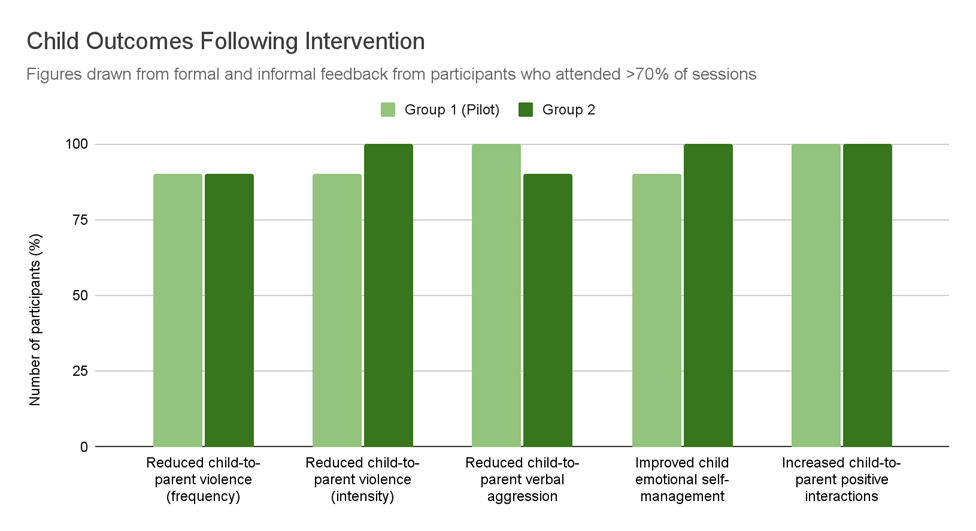
Furthermore, there was improved parent-child closeness, warmth, trust, respect (90- 100%), parent emotional self-management (90-100%), improved understanding of neurodiversity and trauma (100%), improved confidence in supporting complex needs (100%) and confidence to provide safety (100%).
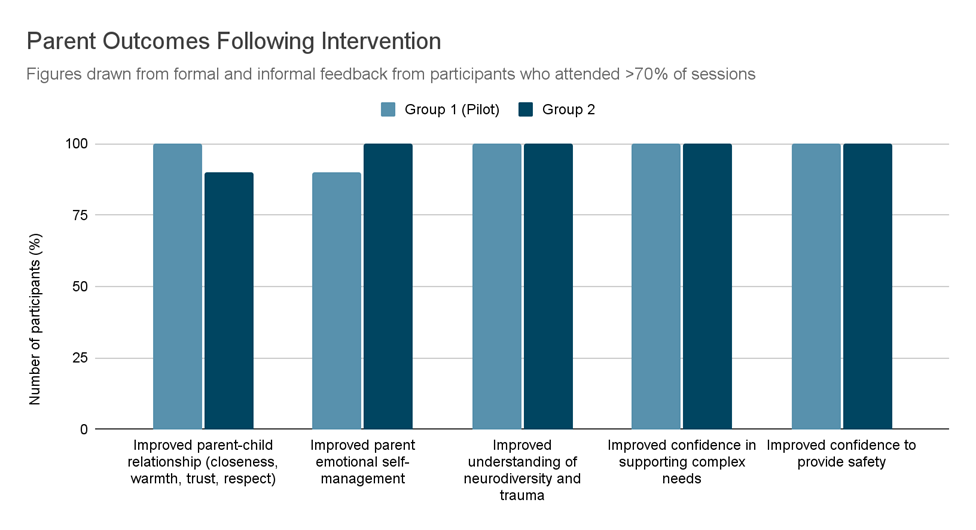
Participants described the course as “practical,” “empowering,” and “insightful,” praising the “empathetic commitment” of practitioners and their ability to create a “safe” space for collaboration and problem-solving. Parents reported improved self-awareness, with one commenting, “I’ve learned so much about myself and my son’s needs and strategies to use.” Another noted, “The violence has gone from 100% to 15%. This course has changed our lives.”
In Group 2, parents shared, “It has made me focus on the benefits of staying calm,” and “My relationship with my daughter has completely changed—she actually wants to spend time with me now.” Notably, this child recently stepped down from an 18-month Child Protection Plan to Child in Need, with professionals noting no concerns about the mother’s parenting.
Comparing Connective Parenting with previous courses (e.g., NVR), participants
indicated that it had a more significant impact on family functioning due to its tailored, practical approach
Practitioner Feedback
- CAMHS Psychiatrist: “Ideally, I would love every parent with ADHD children to access this. It would align with NICE guidelines and be a real resource for families.”
- School SENCO: “(4 y/o Child’s) behaviour at school has improved so much due to parents’ improved ability to respond to him.”
- Early Help Practitioner: “There are a million books that tell parents what to do; it’s the understanding that is missing, and that’s what makes this course so valuable
- Facilitators of the course benefit from the flexibility it offers, allowing for continuous refinement to meet the evolving needs of families. With no external paid training required, this cost-effective solution is able to meet the growing demand for support
Opportunities for learning and wider application
Participants have suggested that all practitioners in Children’s Social Services would benefit from completing this course to enhance their understanding of neurodiversity and child-to-parent violence. Our Director of Social Care is in support of a wide range of practitioners being trained and supporting the delivering.
One parent highlighted the importance of supportive structures, commenting, “When a professional comes and just tells you to put boundaries in without the support of something like this course, it can do more damage than good.”
Additional training for Social Workers, Support Workers, Early Help Practitioners, and Family Hub staff could enhance their skills in supporting families with neurodiverse children and those experiencing child-to-parent aggression. Resources from the course, particularly those on de-escalation and trauma-informed parenting, offer potential for targeted training, ensuring more effective, inclusive support for families.
London Borough of Haringey – Stop and Search Safeguarding Project
Summary of project: The project aims to consider the information obtained by the police in using their power of stop and search and, where there are wider safeguarding concerns, how these young people can benefit from timely support and interventions.
Key Contact: Sarah Ayodele, HSCP Quality Assurance Improvement and Training OfficerSarah.Ayodele@haringey.gov.uk
Read more about this project
Team: Stop and Search Safeguarding Project
Partners: Metropolitan Police Service North Area BCU, London Innovation and Improvement Alliance (LIIA)
Main Submission:
Stop and Search through a Safeguarding Lens
Collaboration is the bedrock of effective child safeguarding. The London Borough of Haringey Children’s Services and the Metropolitan Police Service in North Area BCU have, since 2020, been working on a phased project to improve the safeguarding response to children who are stopped and searched. The project aims to consider the information obtained by the police in using their power of stop and search and, where there are wider safeguarding concerns, how these young people can benefit from timely support and interventions.
The learning from this project has been invaluable and has informed changes to systems and processes in Haringey including adjusting the screening within the Multi Agency Safeguarding Hub and requesting individualised child stop and search data to enhance risk prevention plans via Multi Agency Child Exploitation meetings.
Together with London Innovation and Improvement Alliance (LIIA) we are delivering this pan London project phase and have 29 Local Authorities and 12 BCUs participating. Galvanising the safeguarding body of professionals, we are working to strengthen the mechanism by which children at risk are identified through stop and search, how information is shared, and to ensure children are provided with better safeguarding support interventions. Our project builds on a child centred approach, serves to create safer communities and reduce trauma to children where this could occur. It aligns with the commitments made in a New Met for London and delivers on the priority set by the Association of London Directors of Children’s Services to build safety for young Londoners.
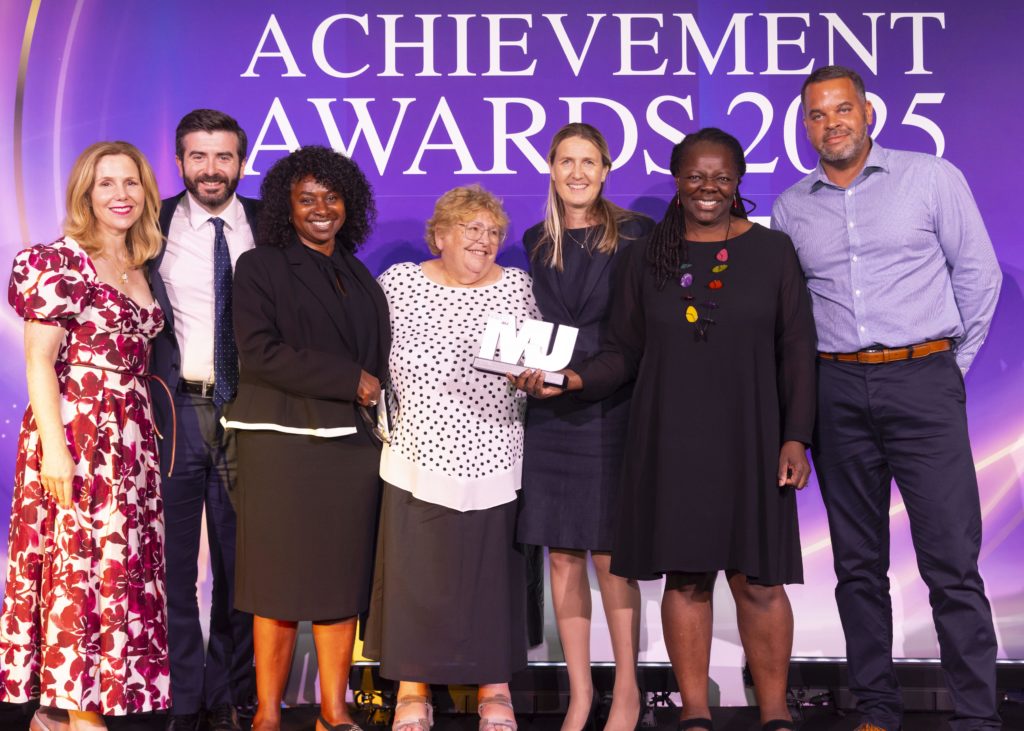
London Borough of Merton – Merton’s Portage Service for Families with Children with SEND
Summary of project: The Portage programme in Merton is a home-visiting service that offers personalised early intervention for children with SEND, providing one-on-one support to families, promoting developmental progress, and fostering collaboration between professionals to ensure comprehensive care and support
Key Contact: Allison Jones, Head of Early Years, Family Wellbeing and Early Help – Allison.jones@merton.gov.uk
Read more about this project
Team: Portage Parenting Team
Main Submission: Families of children with special educational needs and disabilities (SEND) in the London Borough of Merton often face significant barriers to accessing support. Families often feel overwhelmed, isolated, and unsure how to support their child’s development. These challenges can result in missed opportunities for early intervention, which is critical for long-term outcomes.
The Portage model was introduced in Merton to bridge this gap. This home-visiting educational service provides tailored, one-on-one support to families, helping children achieve milestones while empowering parents to support their child’s needs. Alongside home visits, the team runs group sessions, focusing on social interaction, communication, and sensory play, providing children with opportunities to practise key skills in a supportive setting while fostering peer connections among parents.
Primary aims of the initiative:
- Improve outcomes for children with SEND through personalised early interventions.
- Empower families to take an active role in their child’s development.
- Deliver a model of collaboration and partnership across services.
Best Practice Implemented
Portage delivers practical and emotional support tailored to each family’s needs. Key elements include:
- Individualised Support: Practitioners work collaboratively with families co- developing plans based on their child’s unique strengths and needs, focusing on achievable goals.
- Holistic Approach: Developmental needs spanning communication, motor skills, sensory processing, and social interaction addressed through play-based strategies
- Family Empowerment: Parents receive strategies to support learning into everyday routines.
- Group Sessions: Parents gain practical strategies and peer support, fostering collaboration and shared understanding of their child’s needs.
Collaboration and Overcoming Challenges
The success lies in its collaborative approach, working closely with health visitors, therapists and transitions into early years settings, to ensure consistency and continuity of care.
Initial challenges included misconceptions about the role of Portage and limited awareness among some professionals. We address this with key initiatives:
- Training Multidisciplinary Teams: Regular sessions were delivered to raise awareness of Portage’s model, role, and impact, leading to higher referral rates. For example, following a presentation to the Family Hub, referrals increased by more than 25%.
- Sharing Success Stories: Case studies highlighting tangible outcomes for children and families were shared in local forums and team meetings, building trust and confidence in the programme.
- Leadership and Resource Allocation: Senior leaders prioritised funding and resources, enabling the programme to expand its reach and meet the needs of underserved families.
Examples of Joint Working
- Collaboration with the Occupational Therapy (OT) Team: Sharing workshops, resources, and shadowing, practitioners gained deeper insights into the physical and sensory challenges faced by children. This joint approach enables families to receive tailored support.
- Health Visiting Partnership: The Portage team collaborates closely with the Health Visiting team, conducting joint home visits when necessary and sharing of practice across evidenced based parenting programmes, enhancing their ability to identify families needing referrals.
- Speech and Language Collaboration: Termly joint meetings with the Speech and Language team allow for updates, discussion of caseloads, and coordinated planning. Joint home visits with dysphagia/feeding therapists ensure families receive holistic and integrated care.
- Evidence that the best practice is having an impact; description of the effect on outcomes and how the best practice has made/is making a difference.
Improved Outcomes for Children
- Developmental Progress: 100% of children supported by Portage achieved key developmental milestones such as improved communication, motor skills, and social interaction.
- Transitions to Early Years Settings: Children experience smoother transitions into early years settings, supported by EHCPs where required.
Empowered Families:
Parent Feedback:
- 100% of parents reported increased confidence in meeting their child’s needs.
- One parent shared: “Portage has supported my child’s development by providing strategies, encouragement and also been invaluable in boosting our confidence.”
- 100% said they felt less isolated and better connected to resources. One parent shared: when asked what have you enjoyed about the about the Portage Parenting service “Meeting parents with children that have the same difficulties as mine and sharing experiences with them.
Voice of the Children Family and Staff:
Families’ experiences highlight the transformative impact of Portage. Families and staff shared:
- “The Portage staff, were wonderful. They were knowledgeable, friendly and supportive. Portage group provided us with the opportunity to meet other parents, giving a sense of support and community.
- “Having the home visits gave us access to information and resources we wouldn’t have had otherwise and having such a knowledgeable and kind Portage officer visiting regularly was reassuring to us as parents and carers. It helped us understand what we could do to help [my child] develop and gave us confidence in doing so. The support offered navigating the bureaucracy and support when things took longer or were more difficult than expected was invaluable.”
- “My child lights up when the Portage worker arrives. They love the activities and feel so proud when they achieve something new. It’s given them a way to communicate their joy, even without words.”
- “As a Portage officer, it’s rewarding to empower parents with strategies that help their children thrive. Each family’s journey is unique, and our work makes a real difference in both child development and family confidence.”
Broader Relevance and Transferability:
Portage offers a proven, adaptable model for other local authorities. Lessons learned in Merton include:
- Early Engagement: Reaching families soon after a child’s needs are identified maximises developmental outcomes.
- Interdisciplinary Collaboration: Working with health and education professionals ensures a joined-up approach to support.
- Flexibility in Service Delivery: Portage practitioners’ ability to adapt their interventions to the individual needs of each child and family, whether through in- home visits, group sessions, or online support, ensures that services are accessible and effective for diverse family situations
- Data-Informed Decision Making: Collecting feedback and evaluating outcomes enables ongoing improvements. Tracking developmental milestones and parent satisfaction demonstrates interventions effectiveness. While children’s development is tracked individually, there is scope to enhance the systematic collection and analysis of data to further refine approaches and demonstrate the programme’s effectiveness. Prioritising this improvement ensures interventions evolve in response to needs
These principles ensure Portage is impactful and replicable, providing a roadmap for local authorities to support their SEND populations.
Conclusion:
Portage in Merton has transformed the lives of children with SEND and their families through personalised support, strong partnerships, and a commitment to inclusion.
London Borough of Lambeth – SEND Young Inspectors Programme
Summary of project: The SEND Young Inspectors Programme is a paid opportunity for young people with SEND to inspect our local services and provide feedback and recommendations to ensure they are inclusive, accessible and child friendly.
Key Contact: Lulu Pinkney, SEND Youth Involvement Coordinator, lpinkney@lambeth.gov.uk
Read more about this project
Team: ‘Commissioning SEND’ and ‘Child Friendly Lambeth’
Main Submission: As part of the UNICEF UK Child Friendly Communities and Cities Programme, Lambeth aims to become a child-friendly community where the voices, needs, and rights of children and young people shape public policies and services. Child Friendly Lambeth has chosen ‘Child Friendly Services’ as one of its core priorities (badges) in which the views and experiences of children and young people are consistently used to inform the commissioning, design, development, delivery and review of services. Our SEND Young Inspectors Programme is a leading initiative within this framework. Our SEND Young Inspectors Programme aligns with our new SEND and Alternative Provision Strategy 2025-2030 which prioritizes amplifying the voices of children, young people, and families. The voices of young people with SEND are often marginalized in decision-making processes that directly affect them. Our goal is to provide these young people with a platform to actively influence services ensuring they are inclusive and accessible.
Introduction to the Initiative
The SEND Young Inspectors Programme recruits young people with SEND to evaluate council and commissioned services, both SEND-specific and universal to ensure they meet the needs of young people with SEND. The young inspectors assess services from their perspectives and provide actionable recommendations. Since launching the programme in June, we have piloted two inspections:
- The ‘I’m a Young Person’ section of the SEND Local Offer website.
- Our commissioned short break service providers
Our next inspection will focus on assessing the universal Active Lambeth offer, further expanding the programme’s reach and impact.
To date, we have recruited inspectors by partnering with schools who put forward students who were keen to engage in the pilot sessions. The first inspection involved six students aged 11–15 from Dunraven School, with diverse SEND including speech, language, and communication needs, hearing loss, visual impairment, ADHD, and autism. The short breaks inspection involved four students from Dunraven School and London Nautical School. These students were chosen due to the quick turnaround between the inspection and the end of the academic year. We prioritized schools with established relationships and a strong willingness to participate. For future inspections, we will be exploring more equitable recruitment strategies to ensure diverse representation.
Local Offer Inspection:
- The inspection was conducted as a three-hour session during the school day.
- The inspectors used Chromebooks and guided worksheets to evaluate website navigation, accessibility, and content quality.
- Their feedback was collated and a report identifying eight key themes was drafted, reviewed, and signed-off by the young inspectors. The report was presented to our Local Offer Communications Coordinator and published on the Local Offer.
Local Offer Inspection:
- The young inspectors joined quarterly commissioning monitoring visits, evaluating our four short break service providers.
- The inspectors used structured checklists to assess the providers on criteria like activity range, interactivity, and accessibility.
- The inspectors shared their findings in a feedback session which were included in official monitoring documents and relayed to the service providers.
Buy-in and Collaboration
- Inspections were welcomed by Local Offer stakeholders and short breaks providers, who have demonstrated a strong commitment to integrating recommendations.
- Inspectors were paid London Living Wage (£13.15/hour at the time of inspection), reflecting the time and effort required to complete their work. This payment underscores the value placed on their insights and empowers them to contribute meaningfully. Certificates of participation and refreshments were also provided, further supporting their engagement. The initiative also aims to upskill young people by improving their analytical skills and confidence to contribute to decision making.
Impact and Outcomes
Ensuring Accountability
- Local Offer: We have been able to update the inspectors on actions which are already being taken in line with their recommendations. They have been pleased to hear that their recommendations are being taken seriously. A ‘You Said, We Did’ style response paper is being drafted to ensure that each recommendation is addressed and that the young people are informed about what changes can and cannot be made and why. This will be presented to the young inspectors.
- Short Break Providers: Recommendations from the young inspectors were relayed to service providers during contract management meetings and have led to tangible changes. During our following monitoring visits, our SEND YI Coordinator was able to see implemented changes for example enhanced staff training and better engagement from service users. These updates have been shared with the young inspectors.
Impact for Young People Involved
A key benefit of youth participation is personal development, when young people are involved in decision making, they gain a sense of ownership and empowerment and are able to make more effective contributions.
Our young people have expressed pride and satisfaction in their roles. Feedback has included:
- “This is great; I like that you want to include kids and help them.”
- “They listened to us well; no improvements needed—they were excellent.”
- “It was amazing. They were really kind.”
- Families have also expressed gratitude for the opportunity:
- “Thank you for giving [my child] the opportunity to be part of this project. Wider Impact
Service-level participation benefits both the individual and other service users. We hope the recommendations from our young inspectors will continue to enhance the accessibility and inclusiveness of our services for young people with SEND. Future updates to the Local Offer must be assessed by service users to ensure improvements align with their needs. Feedback from short breaks users has been consistent with young inspector findings, therefore users must also be consulted again to measure improvements to the service. Our SEND YI Coordinator observed increased engagement among service users during follow-up visits though this remains difficult to measure due to a variety of influencing factors. The inspections have also strengthened trust and partnerships between young people, the council and service providers.
Challenges and Reflections
- Inspections have included young people who attend mainstream schools, significant resources and adaptations are needed to involve those with higher levels of need. For the next Active Lambeth inspection, we aim to include this cohort.
- As a paid opportunity, equity in recruitment is vital to ensure inclusivity and avoid repeatedly involving the same participants. Developing a robust recruitment strategy will be essential as the programme evolves.
Transferable Practices
- Partnership Working: Collaboration with schools, service areas and service providers is needed to ensure diverse representation and buy-in.
- Youth Empowerment: Budget is needed to pay young people for their work and to recognize their contributions and ensure meaningful engagement.
- Feedback and Accountability: Transparent reporting processes are crucial to this initiative in order to empower young people and to encourage continuous improvement.
The SEND Young Inspectors Programme is a creative approach to embedding the voice of young people with SEND in service design and development. The programme demonstrates how empowering young people can lead to meaningful service improvements. Through emphasising collaboration, inclusivity and accountability, the initiative will improve outcomes for the inspectors, services users and their families and sets a replicable standard for other local authorities.
Supporting Information:
London Borough of Southwark – SpeakerBox and The Innovation Project
Summary of project: When you are younger, SpeakerBox is a group where you do activities. As you get older, you realise that it is so much more than that. It is a movement. A collective. SpeakerBox amplifies the voices of children and young people with care experience. (quote from care experienced young person).
Innovation Project Ekta and Jacqui founded the Innovation Project which is a grass roots approach to changing the way we practice and how senior managers make decisions about services for young people. It is a collaboration of care experienced young people, parents with experiences of children’s services, social workers, team managers and independent reviewing officers. The group votes on which ideas to take forward and involves other areas to help create change.
Key Contact: Helen Woolgar, Assistant Director – Helen.woolgar@southwark.gov.uk
Read more about this project
Team: Children’s Rights and Participation Team,
In Southwark, one of London’s most vibrant and diverse areas, there is a special project called SpeakerBox. SpeakerBox is Southwark’s Children in Care Council (CICC) and gives young care experienced people the chance to speak up, share their stories, and make a real difference. This project is all about helping young people feel heard and valued in their community. SpeakerBox is run by young people, for young people aged 5 to 25 in Southwark. It’s a place where they can develop new skills, get creative, and talk about things that really matter to them. Whether it’s making podcasts, videos, or blogs, SpeakerBox gives young people a chance to share their opinions and have their voices listened to. It’s all about helping them get involved in their community and show others what they care about.
Partners: Speakerbox, the Family Council, Parent Advocates and Staff Members
Main Submission:
Speakerbox began 21 years ago and has continued to evolve over time. There are now 2 children’s rights and participation officers (CROs), Dechaun Malcolm – who works primarily with the 13 – 25 age group and Ekta Gupta who works with the under 13s and young people with special educational needs. In 2023/24 there were 1005 episodes where young people engaged in SpeakerBox.
We initially built SpeakerBox membership through activity based events and consultations with young people but what was missing was young people’s voices consistently being heard by senior managers and meaningful change to practice and services occurring as a result. When changes were made they weren’t always communicated back to young people so they weren’t always clear how their voices were heard and acted upon. Having two CROs has enabled space to recalibrate how we work together with young people, we have a stable membership of around 35 young people and we have made the decision to reduce the amount of activities we offer and focus on SpeakerBox being an intentional space with a strategic focus and strong links to senior managers across Southwark Council and not just within Children’s Service. The messaging is that ‘Corporate Parenting’ is the responsibility of everyone who works for Southwark Council.
Young people have voted to move away from having one chair and they have organised themselves into groups based on different themes and interests with each one having nominated representative. One challenge we have faced is how we use young people’s voices without re-traumatising them. We were initially involving young people in a variety of in-person training sessions but we were concerned that they were having to re-live their often very traumatic experiences through re-telling their stories. So we have now moved towards using other methods such as films, podcasts, music, newsletters and artwork.
We enhanced the engagement with senior leaders across Southwark through having a group of young people attend the Director’s Forum and present their top priorities as young people in care and care leavers. This helped departments to think about what they could offer as a Corporate Parent and young people felt seen and heard. We have now had offers from many Directors including Housing, Environment and Leisure and our call centre to work in partnership. As a result young people have been offered ring-fenced employment opportunities and free leisure activities and opportunities.
Innovation Project Ekta and Jacqui founded the Innovation Project which is a grass roots approach to changing the way we practice and how senior managers make decisions about services for young people. It is a collaboration of care experienced young people, parents with experiences of children’s services, social workers, team managers and independent reviewing officers. The group votes on which ideas to take forward and involves other areas to help create change. One of the projects young people voted as most important was around equity across teams and services when it comes to finances and understanding financial rights and entitlements. The finance service have been meeting with young people to explain their entitlements and are co-designing an information sheet with young people, parents and social workers. Young people have taken the lead with pitching for innovation money funds for specific projects and are awaiting an outcome. The innovation project report in regularly to senior managers to ensure that there is buy in to the project and learning from it.
Shaping Services: Young people have been involved from the very beginning of Southwark setting up their own Children’s Homes. They were involved in building and garden design, furnishing, naming the home, designing artwork, the documentation for Ofsted registration and creating the young person’s guide. They also sat on the recruitment panel for the residential manager and all of the staff.
Funding has been provided to furnish and decorate a section one of our buildings so young people have a space they can call their own and it is part of our new CareLeavers Hub. Young people were consulted about how the space should look and a cartoonish captured their vision for the hub in a beautiful piece of art which has been framed and displayed. Young people are regularly given paid opportunities to be part of consultation groups both within and external to Southwark. Some recent opportunities include meeting with the CLA nurses to design materials to promote health assessments and how they can encourage greater attendance and dispel myths and fears; meeting with sexual health services to think about how to design the Careleavers Hub, meeting with another borough to give feedback on setting up services for UASC.
Cooking Group for young people with Special Educational Needs
Ekta has been running a cooking group for 14-25 year old care experienced young people who have an Education and Health Care Plan (EHCP) or are in the process of being assessed for one. We collaborate with Bread Ahead Bakery and support 10 young people every fortnight during term time to engage in a 2 hour cooking session. Young people have made pizza, brioche, focaccia and various other delicious things. The session helps young people to develop new skills, become more independent, to follow along with instructions and to meet other young people in a relaxed setting. It is absolutely joyful watching their faces as
they marvel at what they have created! The feedback has been incredibly positive and we always have a waiting list for each session. Young people who have attended the cooking group have grown in confidence and gone on to present at corporate parenting committee.
There was a SEND consultation and young people undertook a workshop regarding ECHPS – see feedback in the last section. Young people and practitioners benefited greatly from this. This has also led to our care leavers going into schools to facilitate conversations with students and film this. We have some incredible talented young people who are aspiring photographers and film makers and instead of hiring professionals in to capture events we have been employing our care leavers.
Young people write a staff newsletter to update the social work services about what SpeakerBox have been up to. Within this there is a section in tips for social workers and advice from young people about what has worked well and not so well for them. They also share poetry and lyrics. There is an “Ask A” column where social workers can write to a care leaver for advice on a matter.
Learningfest
We have a quarterly event which has a different theme each time. Young people have led sessions around writing for and about children and young people and been involved in co-facilitating training around care planning and permanence. Foster carer recruitment and training – Young people directly and films they make are involved in foster carer recruitment and training.
Creative Collective
We’ve run a fortnightly session with a singer/songwriter called creative collective where young people come together to sing and create music. It’s been a great way for young people to get to know each other and learn a new skill
Podcasting: We have collaborated with Camden Roundhouse and young people have learnt all about Podcasting. Southwark Council have pledged to fund the podcasting equipment and young people are looking forward to sharing their views.
Fundraising: Young people are raising money, ideally for a trip to Disneyland Paris. They have attended screen printing workshops and have designed and printed their own t-shirts, we have been selling them via a donation to make money and young people have raised close to £2500.supports.
Celebrating:
SpeakerBox love celebrating and coming together! The care and permanence service has made this possible through funding events such as our Summer Cook Out, Yearly Big Celebration and our Winter Ball. We finished off the year with a chef gifting her time to come and cook and incredible meal for SpeakerBox members. This really helped them feel valued and part of a community at a time of year which is often quite tricky.
Residential
We took a group of young people away on our first residential in many years in Summer 2024. The theme of the residential was around conflict management and over the space of 4 days young people engaged in sessions around how they experienced conflict and how they could effectively navigate it. A very talented aspiring film maker who is one of our care leaver has made a film of their experiences across the week.
Supporting Information:
SEN consultation feedback from young people:
“At the beginning of the consultation, I felt intimidated by all the adults there because I have social anxiety and I am shy. As I got to know them I opened up more and I found it inspirational. The lady that spoke to me was very funny and made me feel comfortable sharing my experiences. She never judged me. The department listened and took what we said into consideration. I could see them trying their best to help us in every way they can”
“After the session, I felt I got a lot off my shoulder and felt that the department would use my opinions to help us in the future”.
I think other departments should do this to help young people in care. I think if young people and departments work together young people will get the help they need and feel more comfortable sharing their view and vision of the care system. I appreciate the time and effort the SEND department put into coming to see all the young people including myself”.
Quotes from YP – “Speakerbox for me brings me to be a part of something bigger to make a difference, but to also have fun, experience and experiment” – (YP 21). “SpeakerBox has made a great impact on my life and shaped a lot of how I think about things nowadays. SpeakerBox really has an amazing community which continues to grow throughout all of the activities which I take part in and really appreciate. I love coming to SpeakerBox and having a great community around me” – (YP 16)
Home:
Young people in SpeakerBox voted to focus on the theme ‘Home’ this year. Their intention was to help social work staff, managers and foster carers understand how they could best support and care for young people. We engaged the 5-12 year old group in a collaboration with The Roundhouse with a DJ and music producer. Young people wrote lyrics and recorded a track about Home. We had a second group of 13+ young people who also did the same. It was a powerful representation of their views. The 13+ age group also made a film with ‘The Mouth that Roars’ to highlight how foster carers can think differently about young people and help young people feel like they are ‘home’ by being included within the foster family and ways carers can hold them in mind. The film will be used as a training resource for foster carers and social workers. Later in the year young people will be recording an album together with the same DJ and producer.
We engaged the younger cohort with the theme of ‘We Run the World’ to get their views on how they want to be cared for and what they would want to be different in life. We worked alongside a cartoonist who created a comic strip with our children and their super powers. We printed the comic strip and they absolutely loved seeing themselves in what looked like something you’d buy in a comic book shop. Some of their comments about what they wanted to be different in the world/their life were “I would want to get rid of false hope and despair (YP aged 8), “I would want to get rid of lying” (YP aged 9), “I would want to get rid of fighting” (YP aged 6). We hope that by engaging the younger cohort in these activities we will hear their voices and also encourage them to be an active part of SpeakerBox in the future.
London Borough of Merton – Meeting the Needs of Pupils with Autism in Mainstream Classrooms
Summary of project: Merton Abbey Primary School are working together with Merton Autism Outreach Service (MAOS) to develop and enhance the provision for pupils with Autism – to ensure that these pupils’ needs are fully met within our mainstream classrooms – replicating, as far as possible, the provision available in Specialist settings.
Key Contact: Ashleen Browne, SENDCo, awhite@mertonabbey.merton.sch.uk
Read more about this project
Team: Merton Abbey Primary School
Main Submission: As the number of children with Special Educational Needs continues to rise, the issue of inclusive practice has become of critical important to schools and local authorities. Funding constraints, along with the growing demand for placements within ARPs and Specialist schools, means that mainstream primaries are increasingly striving to meet the needs of more high needs pupils.
Many parents, over the years, have voiced that they would like their child to be educated within their local mainstream school, alongside friends from their local community, but that they are aware that mainstreams schools are often not funded adequately or that they may not always be ‘set-up’ to meet the needs of pupils with very high needs. Parents know that Specialist schools offer classrooms which are designed to meet their child’s unique needs, that there are specialist resources and equipment which might not be available in mainstream schools, and that staff in special schools will have received vast amounts of training on SEND. There is a very important role, and place, for Specialist schools and ARPs. But, with the often-long wait times for placements, and an increasing number of pupils attending mainstreams with high needs, it is crucial that mainstream schools draw on the expertise of specialist teachers and leaders to develop their offer to pupils with high needs.
Merton Abbey Primary School is one of growing number of mainstream primaries in London that have an increasing percentage of pupils with high needs. Most of the children who have EHCPs are children with autism, matching the national picture. Many of these pupils have needs which are frequently met very successfully through careful planning, close partnership with external professionals and with strong relationships with families. However, for a number of pupils very significant adaptations to provision are required – and this presents both exceptional challenges and, more importantly, fantastic opportunities for inclusive practice.
With the aim of meeting these growing high needs, Merton Abbey Primary are currently working in close collaboration with MAOS (Merton Autism Outreach Service) to develop the provision for and support the inclusion of pupils with Autism. Drawing on the expertise of this advisory team has been an easy and very-much welcomed process. After initial discussions with parents, the school Headteacher, school SENDCo, Class Teacher, Educational Psychologist and the MAOS Advisor met and agreed the project aims. Joint observations, followed by further discussions led to refinement of the project plans. Over a number of visits, MOAS shared examples of resources, modelled teaching and trained key staff, explained core principals and facilitated visits to observe best practice in specialist provisions. Ongoing feedback and support is in place. The cost of the collaborative project has been minimal and, where required, a very small amount of EHCP funding has used. For the children, access to a broad and balanced curriculum, alongside mainstream peers fully remains – and specialist teaching and learning takes place within the mainstream class.
The project is still within in the early stages – but the impact of this collaborative work has been overwhelmingly positive. School staff feel empowered, knowledgeable and skilled to plan the required provision, the classroom environments are suitably adapted and, in line with the project aims, children with Autism are working confidently and independently with much less dependence on key adults. As a result, the pupils are making even better progress across all areas of their learning, too.
Although the aims of the project naturally differ for each pupil – much of the new practice is highly replicable across the school and will, in time be implemented as a whole-school project and then embedded as a core part of our general teaching and learning. It is exciting to consider where else the project will lead. Undoubtedly, for mainstream schools to fully develop inclusive practice continued training and increased funding, along with the development of local and national policies, are urgently required. Further opportunities for mainstreams to work collaboratively with expert advisory outreach teams, alongside the continued development of our shared vision of inclusive practice, are paramount.
London Borough of Newham – Access Newham Project
Summary of project: Co-producing a digital, accessible, inclusive, and SEND friendly young people’s guide to Newham, by and for young people.
Key Contact: Alana Lukens, Senior Youth Participation Worker (SEND)Alana.Lukens@newham.gov.uk
Read more about this project
Team: Newham SEND/Transformation and Newham Youth Empowerment Service
Partners: Newham Youth Empowerment Service, UEL Connected Environments, Department for Education (funder)
Main Submission: The “Access Newham Project” was initiated as part of a grant funded project focusing on building confidence and independence in young people with special educational needs and disabilities in Newham. With feedback provided by both young people, parents and carers, it was identified that we could do more to promote independence in SEND young people and that we needed to draw more attention to inclusive and accessible spaces in the borough. The aim of this guide was to create a resource that supports SEND young people, their peers, parents and guardians, along with the wider community in finding inclusive and enjoyable environments within Newham. We wanted to build the confidence of young people to explore more in the borough, and to review and identify areas that SEND young people found welcoming and fun.
The primary motivation was to empower young people by providing them with a platform to share their experiences and insights, thereby promoting independence and confidence.
This project was a collaboration between the Youth Participation Team from Newham’s Youth Empowerment Service, who led the co-production work, and Newham’s SEND Transformation Services, in partnership with UCL Connected Environments who provided the digital platform for what became the host for the Access Newham Project.
The project involved a group of 10 SEND young people who worked over the summer co- produce this project. Co-production was central to this piece of work, and it was entirely led by the young people in terms of what they wanted the guide to look like and to include. In line with Newham’s reward and recognition policy, the young people were paid for their work and time in creating this council resource. The group worked together with the participation team to decide how they wanted to approach this project, devise the criteria for how they would be reviewing places, choosing and visiting different locations and how to express their feedback and insights which feature on the interactive map.
We partnered with UCL Connected Environments to utilise the Newham Memory Mapper tool, which had been previously developed in a youth participation project. Staff provided their expertise and guidance to educate and support young people to update the map with their new reviews.
The project culminated in the development of a digital map that highlights inclusive and accessible spaces in Newham, recommended by the young people themselves and accompanied by their reviews.
We launched this project with the young people delivering a presentation at our SEND ‘Local Offer Live’ Event in October, and holding a stall for young people and parents/families to visit. The launch was a huge success, with many feeding back that the Access Newham Project and presentation was the highlight of the event!
The commitment and creativity from the young people involved, as well as excellent leadership and co-ordination from the Youth Empowerment Service, facilitated the project’s success, with a huge amount of work going into the October launch.
The “Access Newham Project” has had a notable impact, covering:
- Increased awareness: The project has raised awareness about SEND supportive spaces in Newham
- Empowerment: Young people involved in the project reported increased confidence and a sense of ownership.
- Social and emotional learning for young people
- Meaningful co-production work
- Community resource: The interactive map serves as a valuable resource for SEND young people, their families, and carers, helping them find supportive environments.
Feedback from participants and their families has been really positive, with many expressing appreciations for the practical and insightful nature of the guide.
“Working on a SEND (Special Educational Needs and Disabilities) project has been a truly rewarding experience for me. It has deepened my understanding of the challenges faced by individuals with diverse needs and has reinforced my commitment to making a positive impact. Throughout the project, I’ve worked closely with a team of dedicated professionals to create inclusive solutions that empower and support these individuals. This experience has honed my skills in empathy, problem-solving, and communication, and has given me a greater appreciation for the importance of accessibility and tailored support in all areas of life. I am proud of the progress we’ve made and excited to continue working on initiatives that promote inclusion and equality.”
-CH (Young Person)
“The Access Newham project means making and giving back to my community that has done a lot for me as a teenager to becoming a full adult. I took part in the project to meet and socialise with my peers from Newham and to know more about the diversity in Newham”
– KO (Young Person)
We believe the “Access Newham Project” exemplifies best practice in supporting SEND young people and represents a true example of co-production. While we have created and launched the site, we now hope that it becomes a resource owned by young people and something that is regularly used and added to. Our next steps are working with young people and UCL to further develop the site to be more accessible with more images, digital art, voice recordings and to upskill a larger group of young people to be able to edit the webpage independently.
By sharing this project, we hope to contribute to a broader movement towards more inclusive communities and improved outcomes for all young people.
Supporting Information:
- Access Newham Project website (please follow link and then filter the map with the layer ‘Access Newham Project’): https://newhamyouthmap.memorymapper.org/

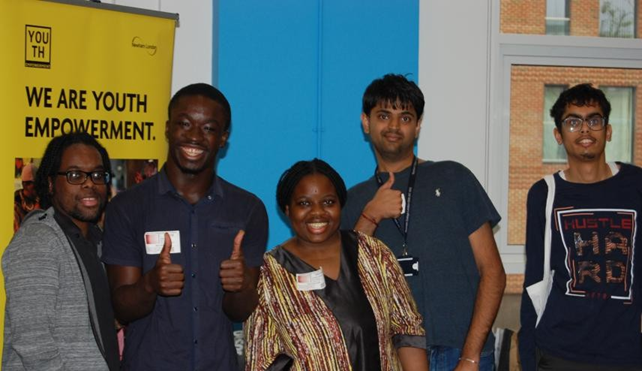
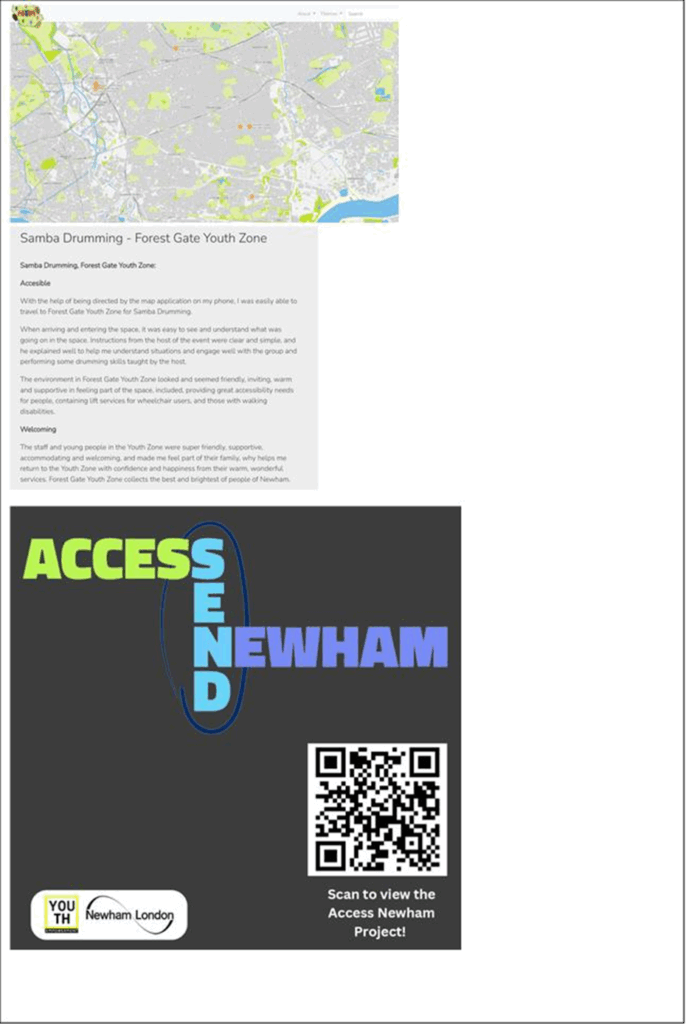
London Borough of Redbridge – Rhythm and Wellbeing (RAW)
Summary of project: RAW (Rhythm and Wellbeing) is an innovative project designed to support children and young people with social emotional and mental health needs to build emotional literacy through music and movement.
Key Contact: Marco Temes Serrano, Educational Psychologist marco.temesserrano@redbridge.gov.uk
Read more about this project
Team: Redbridge Educational Wellbeing Team
Main Submission: Created in 2018, REWT are an ambitious, creative and fast-paced team of Specialist Senior Educational Psychologists, Educational Psychologists (EPs) and Assistant Educational Psychologists (AEPs).
REWT supports schools through evidence-based training packages, delivering targeted interventions and signposting and raising awareness within the community. REWT are innovative and unique and the leadership and drive of the team has led to a highly successful service for the Local Authority.
REWT have a clear strategy for all projects, following a regularly reviewed development plan. All work is underpinned by policies and guidance from the Association of Educational Psychologists (AEP), the British Psychological Society (BPS) and the Department of Education (DfE). Management has been excellent and has led to the growth of the team from 3 people to 12 people. Management has also secured funding and grants which has enabled the growth and depth of the team’s work.
Over the past three years, the Redbridge Educational Wellbeing Team (REWT) has passionately developed Rhythm and Wellbeing (RAW), an intervention centred around music to bolster emotional literacy among children and young people (CYP) facing social, emotional and mental health (SEMH) needs. RAW was developed as a response to the rise in SEMH needs observed nationally in CYP, particularly in the wake of the COVID-19 pandemic. The intervention aims to have a positive impact on the mental health of young people through providing early intervention.
Furthermore, the group nature of the intervention allows for efficient deployment of support.
The intervention not only directly benefits students by addressing their SEMH needs, but it also acts as a valuable resource for training Emotional Learning Support Assistants (ELSAs) and other school staff, supporting and strengthening the workforce in educational settings. Through RAW, school staff are empowered to independently implement the intervention, while also gaining transferable skills that can enhance the broader school environment. This approach is particularly timely given the strain on external services and the long waiting lists young people often face for specialist support. Additionally, REWT hosts termly RAW networking events, providing practitioners with the opportunity to learn new skills, exchange best practices and gain insights from one another. In the summer of 2024, REWT hosted our first-ever RAW showcase, bringing children across schools together to share the work they have done in their RAW sessions.
The RAW programme initially received funding from the LTP partnership to pilot in nine Redbridge schools, including eight primary schools and one SEN secondary school. The SEN school adaptations allow the program to be accessible to pre-verbal students’ helping to address the co- morbidity of SEMH needs with other special education needs. RAW consequently became part of REWT’s traded offer in 2023 and continues to grow its reach. RAW has since been adapted to run in mainstream secondary schools. Focus groups were conducted with young people from two secondary schools who suggested adding the emotions of anxiety and confusion and adaptations to some of the activities to better suit the older audience.
REWT is working hard to increase the reach of the RAW program outside of Redbridge. REWT has directly delivered the RAW program to two schools in Brent and trained ten schools in Bicester through our new train-the-train model. REWT has also been invited to present RAW at the ELSA National Conference in Birmingham in November ’22, the NAPEP (National Association of Principal Educational Psychologists) Conference in June ’23, the annual AEP (Association of Educational Psychologists) in October ’23 and the North Wales ELSA Conference in June ’24. At present a research paper is being drafted to be published in Educational Psychology in Practice and other professional publications.
The RAW project uses aspects of the Play Acceptance Curiosity Empathy (PACE) model, Emotion Coaching and the Zones of Regulation to create a fun and safe space for CYP to explore emotions. Using musical provocations, CYPs are supported to develop interoception (the sense of the body’s internal state, including awareness of physiological processes like hunger, thirst, heart rate, and emotions), build their emotional awareness and develop self-regulation strategies. RAW sessions follow a repetitive structure to promote feelings of predictability and safety within the group. Each session focuses on one emotion, sessions are split into six psychologically informed sections; the “hello song”, musical games, an emotional provocation, reflection, relaxation and the “goodbye song”. Provocation games and activities are used to elicit different emotions. To increase interoception and emotional awareness CYP are then encouraged to reflect on the bodily sensations associated with each emotion through the use of body maps. Students are then supported to explore strategies for self-regulation to manage different emotions.
The gathered evidence strongly suggests that this intervention has proven effective in nurturing emotional awareness and self-regulation. Moreover, it has demonstrated promising outcomes for children with a range of special educational needs developing social skills, self-esteem, self- confidence, and even communication skills among participants.
The thematic analysis suggests that the RAW intervention was very well-received by the young people involved, with students particularly valuing the opportunities for musical engagement, emotional expression, and relaxation. Across multiple schools, students consistently rated their experiences highly, often giving scores of 9 or 10, with feedback like “it was an amazing experience”, capturing the uplifting and positive impact that RAW had on their emotional wellbeing. When asked which activities they found most useful, students repeatedly highlighted musical components as a favourite, particularly playing instruments, singing, and engaging in rhythmic activities. Additionally, activities focused on expressing emotions.
The program was similarly well received by the members of staff training to deliver the program. The feedback from staff across multiple schools illustrates a strong appreciation for the RAW training programme. Staff members highlighted how the programme’s structured approach, incorporating activities like body mapping and targeted music sessions, supported children in understanding and managing their emotions in a meaningful way. Comments emphasised the value of using music to facilitate emotional exploration. Furthermore, the data indicates a general increase in staff confidence across schools in applying music to support emotional well-being, running the RAW intervention, and perceiving their impact on children and young people’s emotional development.
Supporting Information:
YouTube videos:
The Data:
The data analysis across schools participating in the RAW intervention shows a general trend of improvement in children’s emotional regulation, as evidenced by reductions in scores for Difficulty Controlling Emotions and Frequency of Emotions post-intervention (Figure 1).
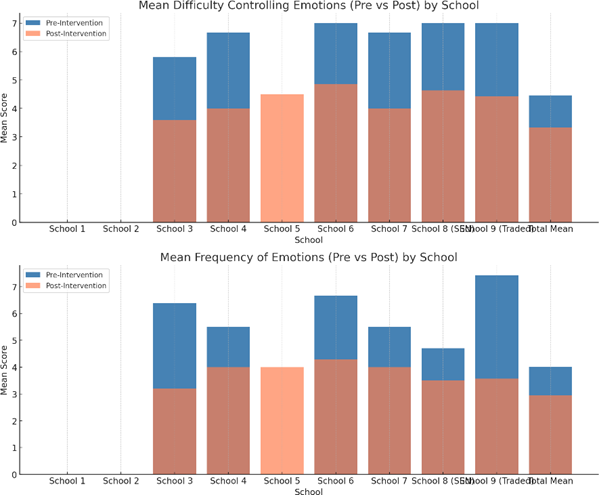
Staff Confidence:
The data indicates a general increase in staff confidence across schools in applying music to support emotional wellbeing, running the RAW intervention, and perceiving their impact on children and young people’s emotional development. This is evidenced by positive mean deviations in confidence scores (Figure 3), showing the intervention’s effectiveness in boosting practitioner confidence. Schools with staff who began with lower initial scores, such as School 7, School 9 (SS), and School 4, demonstrated substantial increases in confidence (+2.0, +2.0 and +1.75 respectively), highlighting the RAW intervention’s effectiveness for practitioners who initially felt less prepared to use music for emotional wellbeing.
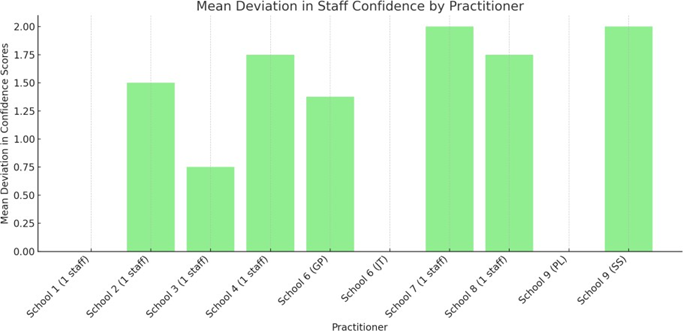
London Borough of Merton – Co-production of Merton’s ‘Our Merton Family Hub’
Summary of project: collaborative exercise involving consultation with young people, parents, local community groups, commissioned service and statutory partners to develop a shared vision of how Family Hubs in Merton will be experienced by those who use or work with them.
Key Contact: Allison Jones, Head of Early Years, Family Wellbeing and Early Help
Read more about this project
Team: Family Hub Transformation team.
Partners: Merton Connected, Keystone Marketing, KidsFirst (parent/carer forum)
Main Submission:
In late 2021, Merton applied for transformation funding to support borough wide implementation of the DfE Family Hub programme. Since November 2022 Merton has, alongside 12 other successful LA’s worked diligently to initiate and embed widescale change in the way that Early Help services are accessed and experienced by babies, children, young people and their families.
Moving to a place-based delivery model with strong focus on ‘Access, Connections and Relationships’ has been achieved with careful planning, navigation and engagement across a wide stakeholder landscape. The need to talk with, hear and respond to the views of local families has remained front and centre of early development work. Embedding the ‘Family Hub’ brand and a shared understanding of the concept has taken time. The evolution of ‘Our Merton Family Hub’ was driven by a need to develop simple language and messaging about how Family Hub services would be experienced by those who use and deliver them.
The development of ‘Our Merton Family Hub’ (or visual pledge as it is often referred) was an iterative process, drawing initially, from insights and feedback gained through engagement and consultation activity. This included:
1) Discussions with parents who had joined ‘Merton Family Voice’ (a parent/carer forum where feedback on various aspects of transformation has been sought).
2) Conversations with young people and families who attended the Family Hub launch event in August 2023.
3) Feedback shared by VCFSE partners in a series of workshops aimed to build relationships with third sector organisations (many of whom represent the views/experiences of lesser groups within our local communities).
4) Structured activity held during a Partner Engagement Day (19.01.24) where views were sought on the shaping of a visual pledge.
A visual illustrator was drafted in to translate words into pictures. This was considered important to ensure that the messaging about Merton Family Hubs is understood and accessible to a diverse audience, including younger children, families with SEND, people with learning needs and those with English as an additional language. Young people also told us that any information needed to be easy to both read and understand.
Five versions of ‘Our Merton Family Hub’ were drafted before landing a final product. Each draft was consulted on, and feedback drawn from several sources (including the audiences has allowed Merton to be fully assured that the inception of ‘Our Merton Family Hub’ is truly informed by co-production and collaborative working, supporting a sense of borough wide ‘ownership’ regarding the programme and its aspirations.
This mode of engagement and consultative approach has enabled families and delivery partners to contribute to the shaping of Merton’s Early Help/Family Hub offer. We recognise that for many families, the support provided through Our Merton Family Hub has made a huge difference when managing very challenging circumstances and whilst waiting for specialist health interventions. This has been of particular significance to parents of children with SEND, who have told us how Family Hub services have really helped them to better care for their children when they become dysregulated. The interface with ‘Kids
First’ has helpfully shaped the framing of Merton’s approach to better reflect and respond to the lived experience of families with SEND and work towards improving outcomes through an effective support offer.
Using the strapline ‘Our Merton Family Hub’ and displaying this widely across buildings, promotional material, websites, presentations and communications has also promoted a sense of collection and belonging. Families told us that they wanted Family Hubs to be somewhere with more opportunities to ‘drop in to’ and meet other parents when the opportunity arises. This is reflected in various ways within both the visual pledge and through the developing Family Hub service offer. As a direct result of feedback, we have increased drop-in sessions across our Family Information and Support Hubs, Open Garden Sessions, MIASS and delivered more open access ‘on off’ events for Families to attend. This has been well received with over 100 family members attending a recent open garden session at one of our Family Hub network delivery locations.
Children young people and parents each contributed to the shaping of this work. Parents of children with SEND shared helpful feedback on use of colours and imaging to support greater full accessibility. Whilst efforts were made to reduce the amount of text within the visual for ‘Our Merton Family Hub’ some parents shared that the visual had too many images and not enough information. Based on this feedback, a decision was taken to develop a separate booklet for parents which explains Family Hub services and the support available. These have been shared at various engagement events with parents reporting that the information contained within these booklets has been a useful source of reference.
We are planning to revisit the effectiveness of our FH brand (including our visual pledge) as part of ongoing review and evaluation activity. This will involve the development of a practitioner resource tool kit which partners will be invited to use in their engagement with families and young people to gauge feedback on perception and experience of support through Merton Family Hub.
Supporting Information:
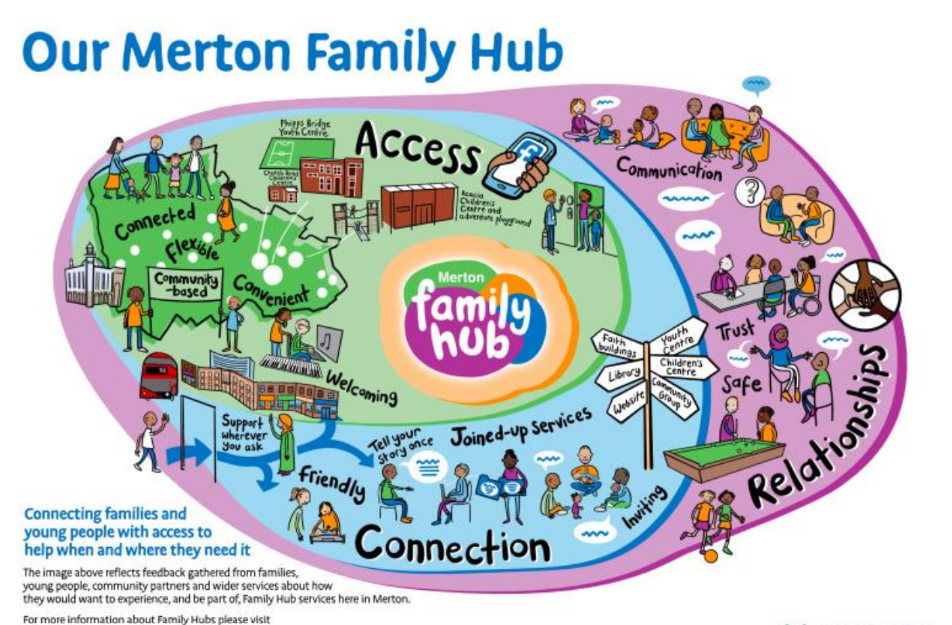
Royal Borough of Kensington and Chelsea – SEND Inclusive Education Team
Summary of project: It has demonstrated a significant positive impact on outcomes for children and young people with special educational needs and disabilities, showcasing best practices and effective partnership working with various stakeholders.
Key Contact: Steph Baiardo, Principal Manager for SEND steph.baiardo@rbkc.gov.uk
Read more about this project
Team: SEND Inclusive Education Team
Main Submission: The SEND Inclusive Education Team is a new team that was established in September 2023, to ensure outstanding and inclusive specialist practice happens in our schools for our most vulnerable learners. Their aim is to support more pupils with SEN remain in local mainstream schools and nurseries schools through increased parent confidence in local schools and improve outcomes for our Children C Young People with SEND through review and evaluation of the SEN practices and provision, which will in turn ensure value for money. The aim increase skills within schools so that schools can deliver provision confidently and effectively which in turn means less children moving into independent or specialist settings when their needs can be met in their local mainstream school.
The team spend most of their time in schools observing children, working with SENCOs, support staff and class teachers to see what is working well for the learner as well as identifying any barriers to inclusion.
Together they then look at how these barriers can be broken down via modelling, training, sign posting to other services.
The model works best with multi agency working as the team have established strong relationships not only with schools but also with Educational Psychology, Speech and Language, OT, School standards, Autism Advisory service. One of the most significant working relationships is between the team and SEN Case Coordinators, this ensures any concerns about inclusion or delivery of provision are quickly managed through a supportive school visit.
Team attends meetings with other teams to share patterns, emerging areas of work and to ensure join up working is as effective as possible.
Impact is shown in several ways
- Evaluations from schools identifying visits and follow ups were impactful in supporting and improving their inclusive practice and delivery of provision.
- Return visits from teachers or practitioners show where strategies are implemented and embedded and the improvement in inclusive practice, for example children more regulated and spending more time in their mainstream classroom.
- Increase in parental confidence following on from visits as notes and actions are shared directly with them.
- Via feedback from other professionals who are seeing best practice in place and can identify and share impact.
As part of all visits a follow ups we seek to gather the voice of the child and ensure this is reflected in our actions and notes of visits. Parents and schools are also always asked for their views prior to a visit to ensure a collaborative approach.
Evaluation Criteria:
- Originality: a new or creative improvement or innovation that demonstrates uniqueness. This was new team designed to meet needs locally. It is a unique service it’s approach working closely to establish best practice for learners with a wide range of SEND across all ages ranges from nursery to the end of year 11.
- Making a Difference: impact of the initiative on improving identified outcomes and contribution to common themes. In the short time the team has been in existence the impact has been large as shown by evaluations from schools, feedback from parents, observations from wider professional networks.
- Measurable: data and evidence that clearly demonstrates the impact of the initiative. Data has been gathered termly and highlights proven impact on inclusive practice across our schools.
- Transferable: initiatives and ideas that can be shared, adopted or scaled for use by others. We have shared the approach with other professionals.
The vision was developed to give a clear message for everyone on what they hope to achieve, and peer assess each other to ensure everyone is working consistently, but also to share best practice. They have evolved from their original purpose where needed, such as supporting schools to set up new specialist resource provisions, evaluating the effectiveness of our existing enhanced provisions and working with the Education Psychology service to identify gaps in school staff knowledge and develop some intense joint support around it.
Supporting Information:
Testimonies:
“It was good to have expert feedback on how staff are supporting X, especially with his communication. It was good to have an in depth observation over a longer period of time. Her feedback on the note of visit were detailed. It is good for parents to receive reassurance from an independent advisor. It is useful as a school to have the evidence to present to inspectors. It is good to have someone to ask advice in terms of EHCPs and overall provision for a child.”
“L gave practical steps which were manageable to implement. It was useful that she spoke to both myself, the Class Teacher and LSA. Speaking directly to the LSA allowed L to broach subjects that we could then follow up on. I found that Lilly did listen to our views and what was feasible and possible within a mainstream school.”
“Helpful that she saw him over a range of lessons. Nice to hear what is going well and the agreed actions list helped focus in on what we need to do. It felt manageable, achievable and not overwhelming.”
“Useful for E to have time in the classroom observing and especially speaking to the child. The discussion with Ellie, class teacher, LSA and myself was useful. Report was good to look at what we are doing well and what else could be put into place to further support the child”
“The visit was positive and feedback was supportive. The school were listened to and the visit felt very much like it was in the best interests of the child”
“S is now in the Y5 classroom for the majority of the school day. He is having many more moments of being regulated.”
“Useful for E to have time in the classroom observing and especially speaking to the child. The discussion with Ellie, class teacher, LSA and myself was useful. Report was good to look at what we are doing well and what else could be put into place to further support the child”
“The visit was positive and feedback was supportive. The school were listened to and the visit felt very much like it was in the best interests of the child”
“S is now in the Y5 classroom for the majority of the school day. He is having many more moments of being regulated.”
London Borough of Sutton – The A Plan
Summary of project: Cognus Clinical Psychology conducts Autism assessments for young people between 5-18 years old.
Key Contact: Dr Anneline Flood, Principal Clinical Psychologist, Anneline.flood@cognus.org.uk
Read more about this project
Team: Cognus Clinical Psychology
Main Submission: Cognus Clinical Psychology conducts Autism assessments for young people between 5-18 years old. In an innovative enhanced experience for the young person in their autistic journey, after ASD assessment, we offer The ‘A’ Plan. This is an individualised post diagnostic initiative offering education, support/interventions for the newly diagnosed young people regarding autistic and mental health related concerns.
At inception in 2018, our Clinical Psychology Service initially began by solely conducting autism assessments with minimal post diagnostic support provided. Post Covid-19 made it very apparent that there was a gap in service provision with regards to extended post diagnostic support, especially with autistic young people with additional mental health concerns (mental health concerns of autistic young people can be given very limited focus and just be considered as ‘part of being autistic’). This gap in service provision extended beyond our service as we had no place to sign post our newly diagnosed young people to for further support. From these observations and limitations, the innovative ‘A’ Plan was developed.
Service Provision
The ‘A’ Plan is our service’s post diagnostic initiative attached to the autism assessment process and is all individualised for the young person. This includes;
- Follow-up discussion/session post assessment to further explore specifics ascertained from the assessment and to develop a plan of further support for the young person and family.
- Understanding diagnostic sessions. This is considering the young person/family’s understanding of autism and considering this within a autistic strengths and challenges framework. Many families on their journey towards a diagnosis focus on the differences/challenges of being autistic. However, during the ‘Understanding Diagnosis’ sessions, we are very keen to emphasise the strengths and joys of being autistic such as being experts in their given interests. We emphasise many successful autistic people who are autistic to challenge the dominant view that being autistic is a negative attribute.
- Following this, we provide a maximum of 5 support/intervention sessions focusing on the need of the autistic young person. This can be support/interventions with challenges such as social skills or mental health concerns such as anxiety, depression, trauma, self confidence.
- We also work with families and carers; at times it is more useful and valuable to work with the family system rather than the young person. We offer parenting advice and support for challenges such as sleep, routine hygiene or understanding their autistic young person further.
- Liaise with schools, SENDCo and other professionals regarding the young person in question. We may attend family meetings to inform informing of what we have learnt about the young person and how it help them thrive in school
Outcomes, Impact and Feedback
Since funding approval in 2022, we have seen 100 young people on The ‘A’ Plan for social skills support, anxiety, low mood, emotion regulation, attachment difficulties, trauma, self-esteem, self-harm and suicidal ideation. Some of our outcomes have included 100% reduction in serious self harm, reduction in anxiety 90% . However, there is more beyond the numbers.
Below is some of the lived impact of The ‘A’ Plan for some of the autistic young people and their prior concerns.
Autistic Young People
- Young persons have reported re-engagement in social activities, e.g., boxing, cadets, attending theatre shows, increase in seeing friends outside of school, trying to get a part-time job, taking public transport on their own/with friends, transitioning to new schools.
- Young people have reported that using the self-soothing techniques and resources discussed in sessions has helped decrease anxiety.
Parents/families Feedback
Parents/ Families have also reported the positive impact of The ‘A’ Plan.
‘Thank you so much for all of your help. It’s been such a relief for **** and the rest of the family to talk to you about his autism and some of the impact of that and I know it has helped him a lot’.
‘**** mentioned some of the strategies you’ve been doing with him and he opened up for the first time (at school) about his autism. He told his teacher that your sessions have been really helpful for him. **** seemed more settled after this and has been in school every day. Thank you for your work with him and see you next week.’
**** is sad that it’s going be to last session with you. He likes you and asked me if I can extend the sessions…I wish
Within our service, we do not just see identity as well as need. With our ASD assessment and The ‘A’ Plan provided as an individualised, holistic, complete package, we help impact positively the direction of life travel for young people within Sutton.
Royal Borough’s of Westminster and Kensington and Chelsea – Enhancing our Short Breaks offer for families in Westminster and Kensington and Chelsea
Summary of project: This year we have continued to invest in and evolve out Short Breaks Offer, to better support families across Westminster and Kensington and Chelsea.
Key Contact: Isabella Jewell, Head of Business Intelligence, Strategy and Children’s Workforce Development
Read more about this project
Team: Bi-Borough Short Breaks Service
Main Submission: Bi-borough Children’s Services Short Breaks Service
An Overview of Our Service
Short breaks enable disabled children to have time away from their carers, explore new opportunities, have fun and broaden their social networks whilst promoting independence.
The Bi-Borough Short Breaks Service operates after school, on weekends, overnight and during the school holidays. It is flexible to the needs of our families so much so, that during lockdown it continued to take children during the daytime. The service supports any disabled child aged 5-18 years old across the two boroughs, whilst also providing an early years support offer for those under 5 years old. We have four in-house centres across both boroughs, which link with health and education partners. We utilise relationships with parent-carer forums to provide regular updates on the offer and what is available.
Investment
Recognising an increase in demand for services for SEND children, in 2024 Westminster City Council invested nearly £4 million into dedicated facilities for children and their families with SEND;
- In the north of the borough, £1.9 million of council funding has been invested in significant refurbishment and expansion of our popular Tresham North Short Breaks Centre. This investment has greatly improved our existing centre and provides more spaces for children, as well as more varied opportunities for play. This includes a dedicated space for our children with complex health needs, a youth zone, an outside cinema, two soft plays, and two kitchens. It also includes a permanent base for our Parent/Carer Forum ‘Full of Live’ who are co-located on site. The Centre opened for families in September 2024.
- In the south of the borough, £1.8 million has been spent on our brand-new College Park Special School satellite and co-located Short Breaks Tresham South in Pimlico. The new Short Breaks centre contains two main activity rooms that cater for lots of different types of free-flow play: one for older children and one for younger children. It also features arts and crafts spaces and a main hall for larger group activities. The school’s facilities include a sensory room, occupational therapy suites and seven classrooms to provide an additional 50 school spaces for SEND children. Our expanded Short Breaks service addresses our desire to increase provision in the south of the city in response to feedback from parents and carers, and extensive co-design with them. It offers eligible children a local place where they can socialise, enjoy activities and learn in a safe and nurturing environment.
In Kensington and Chelsea, there already exists a purpose build Short Breaks centre, St Quintin’s which has been operating for the last 15 years. This year we invested £100,000 to create a cinema and dedicated youth area at the centre. St Quebe Cinema was opened by Cllr Catherine Faulks and gives older children with SEND a space dedicate for them.
In the south of the borough, St Quintin’s South, opens during holiday periods and on Saturday’s from 10am-4pm, meaning there are now options in both north and south of Kensington and Chelsea for 52 weeks of the year or children with SEND and their families.
Whole family support
These services allow children the opportunity to experience and explore in a safeguarded and secure environment. Sessions in the centre can include invited guests, such as zoo animals or might include a drum jam and there are chances to explore activities in the community from London museums to trips to the theatre. The centres also offer Sunday drop-ins, many families live in flats and struggle on a wet Sunday for places to go. In the school holidays, we arrange family days out to local sites or a larger trip on a coach to the beach or theme park. Going together as a group gives families a chance to meet other parents and having a shared group enables parents and carers to enjoy the day with other families who have similar lived experiences. We also arrange family fun days in the holidays where the whole family can come and join in the activities on offer.
We support siblings with monthly events giving them a space to talk about their caring responsibilities and enjoy time away from their family in a safe environment. We also provide training for families with groups such as Early Bird and Early Bird Plus as well as a range of short-term advice and guidance relating to specific areas such as sleep and toileting.
In 2025 we are moving our centres towards a Family Hub model for families with a disabled child. They will be a one-stop with help with wheelchairs, OT support, speech and language therapy groups, housing and social welfare assistance and on-site social workers and short breaks practitioners.
Feedback
Parents on Tresham North –
‘There’s nothing (else) actually like this to include children with learning disabilities into the community.’
‘This kind of place is good for the parents, we can have a break and then at the same time, we know they are happy, enjoying and in a lovely environment with people who understand their needs.’
Parents on St Quintin’s:
‘The centre provides such an invaluable service for so many different reasons, it provides (child’s name) with a safe, engaging and inspiring place to attend, where we know that she is well looked after….and
Supporting Information:
Practice Spotlight Navigation Panel:
Does your submission information need updating?
Each submission included within the Practice Spotlight Digital Area has been approved by the relevant local authority DCS and Practice Leader prior to inclusion, However, if you spot something in your submission that needs updating such as a change in key contact or a supplementary resource of video that you’d like included then please reach out to LIIA colleagues below;